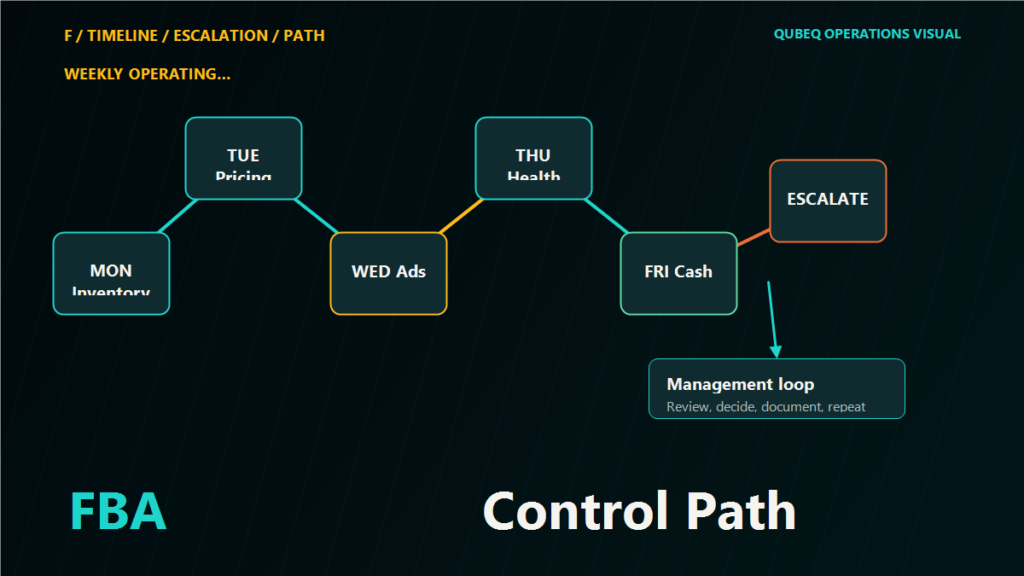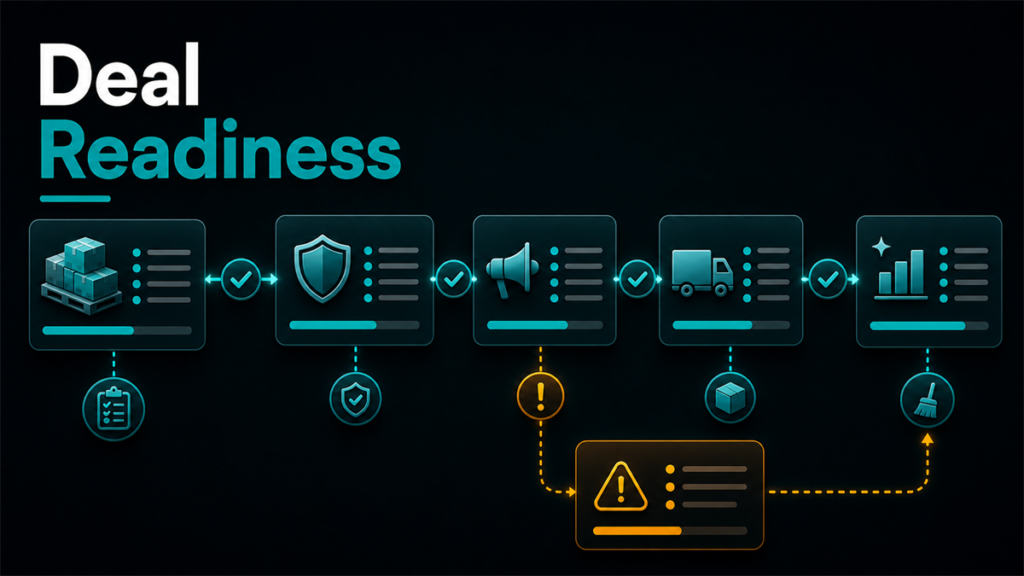
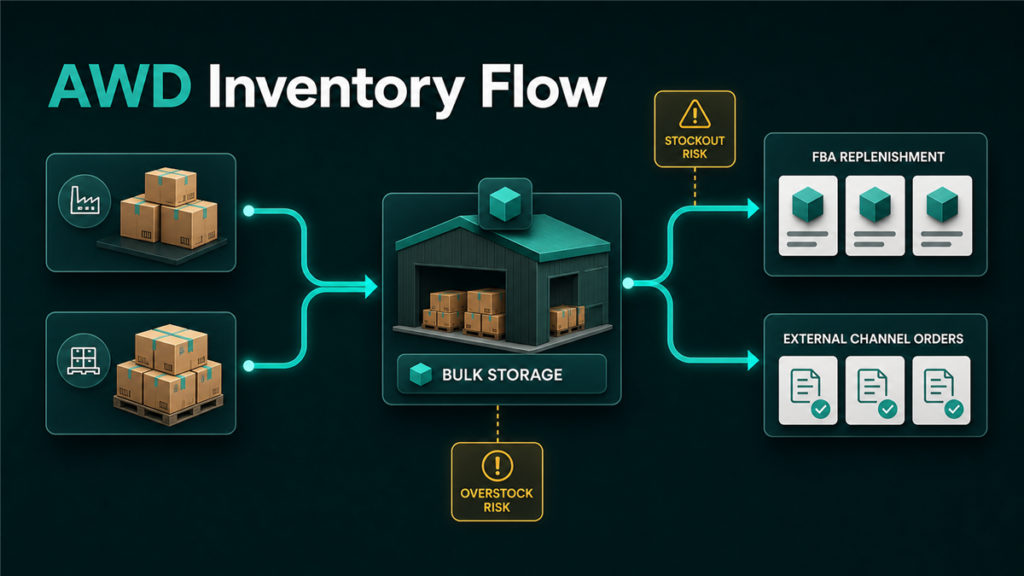
Amazon AWD inventory planning is about deciding what inventory belongs in bulk storage, what should move to FBA, and what should stay outside Amazon's network. AWD can simplify replenishment, but only when sellers treat it as part of a larger inventory system instead of a place to send everything.
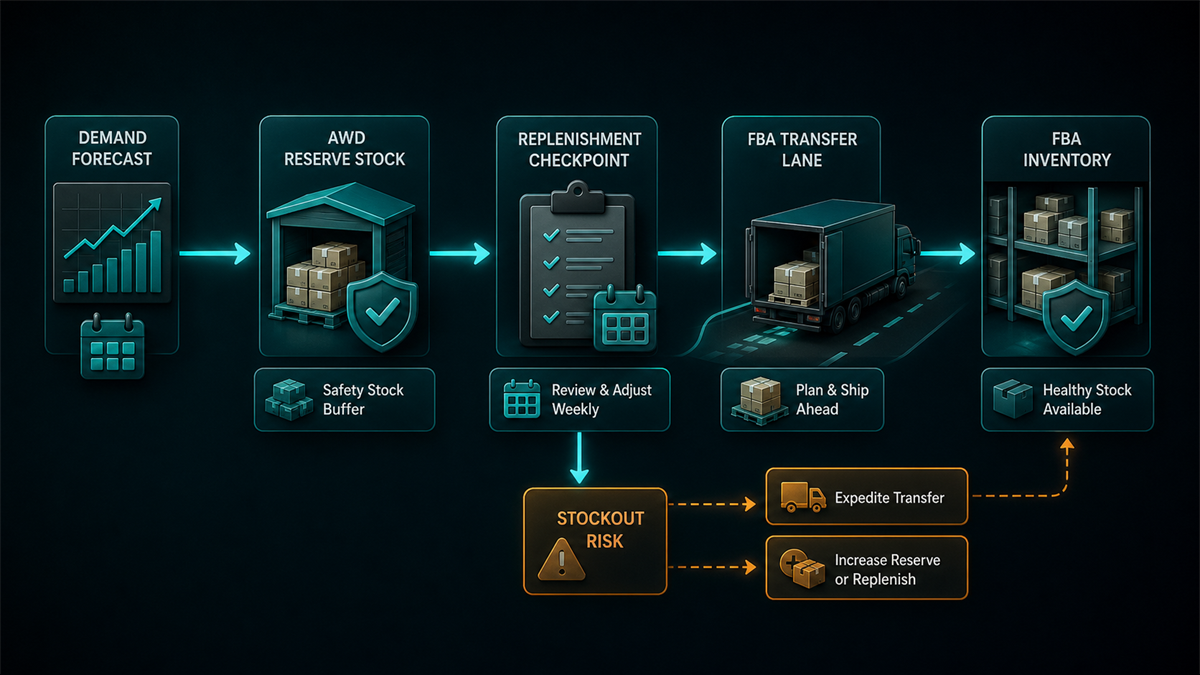
Key Takeaways
- Amazon Warehousing and Distribution, or AWD, is designed for bulk storage and replenishment into Amazon and non-Amazon channels.
- AWD can help sellers keep FBA inventory stocked, but it does not replace SKU-level demand planning.
- Poor forecasting can still create overstock, stranded inventory, or slow-moving storage costs.
- Sellers should review product velocity, dimensions, seasonality, margin, and channel plans before moving inventory into AWD.
- The best AWD workflow uses a clear replenishment calendar, exception review, and weekly inventory checks.
What Is Amazon AWD?
Amazon AWD is Amazon's bulk storage and distribution program for sellers that need a place to hold inventory before it moves to FBA or other channels. Amazon describes AWD as a low-cost bulk storage solution that can distribute inventory to the Amazon store and non-Amazon sales channels.
For an operator, the useful way to think about AWD is simple:
| Inventory stage | Main question | Example decision |
| Supplier or 3PL | What is ready to move? | Ship full pallets or cartons after inspection |
| AWD | What should be stored in bulk? | Hold replenishment inventory for stable SKUs |
| FBA | What should be available for Amazon orders now? | Move enough units to cover near-term demand |
| Non-Amazon channels | What should support DTC or marketplace orders? | Route eligible inventory to another channel |
AWD is not a magic fix for every FBA problem. It helps most when a seller already has predictable replenishment needs and wants a cleaner bridge between upstream inventory and FBA availability.
When AWD Makes Sense For Amazon Sellers
AWD makes the most sense when a seller has repeatable inventory movement and enough operational discipline to keep replenishment clean. A seller with one test product, weak forecasting, or irregular supplier timelines may not get the same benefit as a brand with steady SKU velocity.
Good AWD candidates often have:
- Stable selling SKUs with predictable demand.
- Bulk inventory that does not need immediate FBA placement.
- Repeated replenishment needs into FBA.
- Seasonal inventory that should be staged before demand spikes.
- A need to support both Amazon and off-Amazon channels from a more centralized supply chain.
Riskier AWD candidates often include:
- Products with uncertain demand.
- Slow-moving or bulky items with weak margin.
- Products with frequent compliance or listing interruptions.
- Inventory that changes packaging, bundle structure, or catalog setup often.
- SKUs where the seller does not know the true landed cost and storage tolerance.
The decision should start with unit economics. If a SKU has thin margin, bulky dimensions, unpredictable demand, and messy listing status, AWD may only move the problem to a different part of the operation.
AWD vs FBA Storage: The Operational Difference
AWD and FBA storage solve different jobs. FBA storage is for inventory positioned to fulfill Amazon customer orders. AWD is for bulk inventory that can replenish FBA or support other channels.
| Question | AWD | FBA |
| Primary use | Bulk storage and distribution | Customer order fulfillment |
| Best fit | Replenishment inventory | Sellable inventory ready for Amazon orders |
| Planning horizon | Medium-term stock staging | Near-term sales availability |
| Operational risk | Over-sending slow inventory | Stockouts, placement limits, long-term storage |
| Seller focus | Replenishment flow | Buy box readiness and order fulfillment |
If FBA is the front shelf, AWD is the back room. The back room needs labels, counts, reorder points, and movement rules. Otherwise, it becomes another place where inventory goes quiet.
How To Build An AWD Inventory Planning Workflow
A practical AWD workflow starts before inventory leaves the supplier or 3PL. Sellers should not wait until inventory is already in motion to decide where it belongs.
- Segment SKUs by velocity.
Group products into fast-moving, steady, seasonal, slow-moving, and uncertain demand. AWD usually works best for fast-moving, steady, or planned seasonal products.
- Check listing and compliance status.
Do not stage bulk inventory for a SKU with unresolved suppression, missing compliance documents, broken variations, or unstable listing contributions. The listing needs to be sellable before the replenishment system matters.
- Estimate FBA coverage needs.
Calculate how many days of FBA inventory you want on hand. The right number depends on lead time, sales velocity, margin, and seasonal risk. Avoid copying a generic days-of-cover rule across every SKU.
- Decide what moves to AWD.
Send inventory that supports the replenishment plan. Do not use AWD as a dumping ground for aged inventory unless the economics still make sense.
- Set replenishment triggers.
Use thresholds that tell the team when to move units from AWD to FBA. These triggers should consider current FBA units, inbound units, recent sales, upcoming promotions, and supplier lead time.
- Review exceptions weekly.
Every week, check which SKUs are below target coverage, above target coverage, blocked by listing issues, or moving slower than expected. AWD works best when the team catches exceptions early.
AWD Planning Checklist
Use this checklist before adding a SKU to an AWD plan:
| Check | Pass condition | Risk if ignored |
| Listing status | Detail page is active and accurate | Inventory arrives but cannot sell properly |
| Variation structure | Parent-child setup is stable | Traffic, reviews, or child placement may be confusing |
| Demand history | Sales velocity is known | Replenishment becomes guesswork |
| Margin | Storage and movement costs fit unit economics | More sales can still mean weaker profit |
| Packaging | Cartons, labels, and case packs are consistent | Receiving or transfer errors increase |
| Seasonality | Demand curve is documented | Inventory arrives too early or too late |
| Channel plan | Amazon and non-Amazon needs are clear | Stock gets routed to the wrong channel |
Common AWD Mistakes
The most common AWD mistake is treating the program as a storage shortcut instead of a planning workflow. Sellers still need SKU discipline.
Common issues include:
- Sending inventory before checking whether the listing is suppressed or detail page content is broken.
- Moving too much slow inventory into bulk storage because the storage rate looks attractive.
- Forgetting to update replenishment targets after a promotion, price change, or listing change.
- Ignoring carton-level accuracy and then losing time during receiving or downstream transfer.
- Planning AWD in isolation from FBA capacity, supplier lead time, and off-Amazon demand.
For established brands, the question is not simply "Should we use AWD?" A better question is: "Which SKUs deserve an AWD workflow, and what rules will control movement?"
Mini-Scenario
A brand sells a replenishable kitchen accessory with steady weekly demand. The team sends a large purchase order directly to FBA, but the product sells unevenly and the account runs into storage pressure before the seasonal peak.
A cleaner setup would separate inventory into active FBA coverage and AWD bulk stock. The operator sets a weekly review: FBA coverage, AWD balance, inbound transfers, recent sales, and any listing issues. When sales velocity rises, the team moves inventory before the stockout risk becomes urgent. When velocity slows, the team pauses replenishment instead of pushing more units blindly.
The product did not need a more complicated strategy. It needed a controlled inventory flow.
FAQ
Is Amazon AWD the same as FBA?
No. AWD is used for bulk storage and distribution, while FBA is used to fulfill Amazon customer orders. The two can work together, but they serve different parts of the inventory flow.
Should every FBA seller use AWD?
No. AWD is most useful for sellers with repeatable inventory movement, predictable replenishment needs, and enough SKU volume to justify a bulk storage workflow.
Can AWD help reduce Amazon stockouts?
AWD can support better replenishment, but it does not prevent stockouts by itself. Sellers still need accurate demand planning, clear transfer rules, and regular exception checks.
What should I review before sending inventory to AWD?
Review listing health, demand history, margin, packaging accuracy, product dimensions, seasonality, and channel plans. If the SKU has unresolved catalog or compliance problems, fix those before building a replenishment plan around it.
Does AWD replace a 3PL?
Not always. Some sellers may still need a 3PL for inspection, prep, kitting, custom packaging, returns, or non-Amazon workflows. AWD should be compared against the full operation, not only the storage line item.
Build AWD Around A Real Inventory System
AWD can be useful when the seller already knows how inventory should move. It becomes risky when it is used to hide poor forecasting or unresolved catalog issues.
Qubeq helps Amazon sellers clean up catalog structure, FBA workflows, replenishment exceptions, and backend operations so inventory decisions are tied to real execution. If AWD is becoming another dashboard your team does not trust, the first step is to map the flow from supplier to sellable FBA stock.