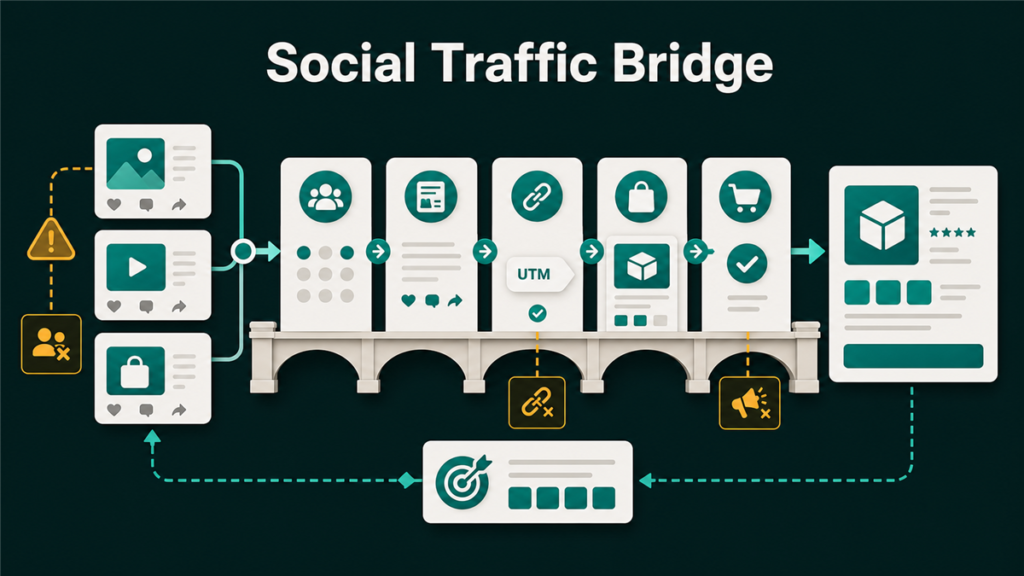
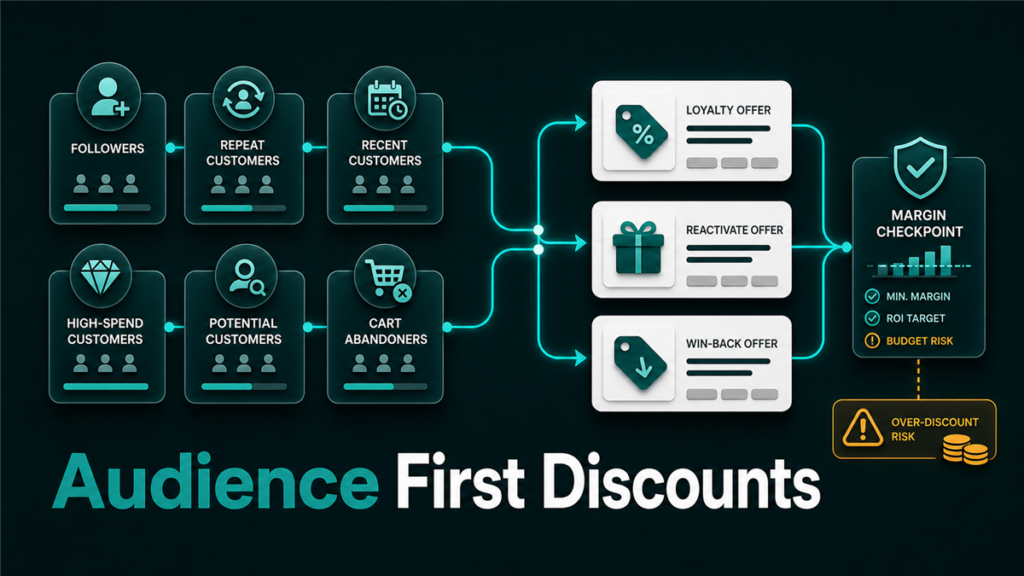
Amazon Brand Tailored Promotions let eligible brand owners create promotional discounts for specific customer audiences instead of offering the same discount to everyone. The tool can support customer acquisition and retention, but sellers need a clear audience plan, margin guardrails, and catalog readiness before launching.
Key Takeaways
- Brand Tailored Promotions are designed for brand owners enrolled in Brand Registry.
- Amazon's announcement describes audience groups such as brand followers, repeat customers, recent customers, high-spend customers, potential new customers, and cart abandoners.
- The discount should match the customer segment and business goal.
- Sellers should check margin, inventory, listing health, and promotion overlap before launch.
- A promotion is not successful just because orders increase. Contribution margin and repeat behavior matter too.
What Are Brand Tailored Promotions?
Brand Tailored Promotions are Amazon promotions that let eligible brands offer discounts to specific customer groups. Amazon introduced the tool as a way to help sellers acquire new customers and build brand loyalty through tailored promotional codes.
The useful shift is audience control. Instead of applying a broad discount across all shoppers, the seller can choose a segment that matches a specific goal.
Examples:
- Win back cart abandoners.
- Encourage repeat customers.
- Reward high-spend customers.
- Convert potential new customers.
- Engage brand followers.
Match The Audience To The Goal
The best promotion starts with the goal, not the discount.
| Goal | Possible Audience | Operator Question |
| Acquire new buyers | Potential new customers | Is the first-order discount worth the margin tradeoff? |
| Recover abandoned carts | Cart abandoners | Is the offer strong enough to overcome purchase hesitation? |
| Build loyalty | Repeat customers | Are we rewarding customers who already show intent? |
| Increase customer value | High-spend customers | Should the offer point to bundles or higher-value products? |
| Activate brand followers | Brand followers | Do these shoppers need a launch or limited-time reason to buy? |
| Reengage recent customers | Recent customers | Is the next product a logical follow-up purchase? |
This is where many sellers go wrong. They choose a percentage first, then look for a reason to run it. Better operators decide the audience and business objective first.
Promotion Readiness Checklist
Before launch, check:
- Is the brand enrolled and assigned correctly?
- Are the target ASINs active and accurate?
- Is inventory deep enough for the promotion period?
- Is the discount still profitable after fees, fulfillment, coupons, and ad spend?
- Are any other promotions or coupons overlapping?
- Is the product detail page strong enough to convert the traffic?
- Is the team tracking sales, margin, and customer behavior after the campaign?
If the listing is weak, fix the listing before discounting it. Promotions can amplify a good offer, but they rarely fix a confusing detail page.
How To Choose A Discount
The discount should be tied to margin and intent. A cart abandoner may need a different offer than a repeat buyer. A high-margin consumable may support a stronger discount than a bulky product with expensive fulfillment.
Use this quick filter:
- Low margin: test a smaller discount or fewer ASINs.
- High inventory risk: avoid promoting slow inventory without checking storage and demand.
- Strong repeat-purchase product: consider customer-retention audiences.
- New product launch: consider potential new customers or brand followers if eligible.
- Hero SKU with weak conversion: audit the listing before discounting.
The campaign should have a stop condition. If the promotion is spending budget but not producing the intended behavior, pause and diagnose.
What To Measure After The Promotion
Track more than revenue.
Review:
- Units sold.
- Net sales.
- Discount cost.
- Gross margin after discount.
- Inventory drawdown.
- New-to-brand or repeat behavior where available.
- Ad spend during the promotion.
- Organic ranking or conversion side effects, if monitored.
- Review or return patterns after the promotion.
If the campaign creates a sales spike but weak margin, poor repeat behavior, or inventory strain, the next campaign needs different guardrails.
Mini-Scenario
A brand wants to run a broad discount because a product is sitting on too much inventory. The listing has weak images, low review count, and unclear variation choices. A broad discount may move some units, but it may also train shoppers to wait for lower prices.
A better first move is to audit the listing, choose a narrower audience, and set a discount that protects margin. If cart abandoners are the target, the team can test whether a focused offer converts shoppers who already showed intent.
FAQ
Who can use Brand Tailored Promotions?
Amazon's announcement describes Brand Tailored Promotions for brand owners enrolled in Brand Registry. Sellers should verify current eligibility in Seller Central before planning a campaign.
Which audiences can sellers target?
Amazon's announcement lists brand followers, repeat customers, recent customers, high-spend customers, potential new customers, and cart abandoners.
Should I use the same discount for every audience?
No. Match the discount to the audience, margin, and business goal. A win-back campaign and a loyalty campaign should not automatically use the same offer.
Can Brand Tailored Promotions fix a weak listing?
Not reliably. If the detail page is confusing, suppressed, or poorly merchandised, fix the listing before sending discounted traffic to it.
What is the biggest risk?
The biggest risk is treating revenue as success while ignoring discount cost, margin, promotion overlap, and inventory impact.
Plan The Audience Before The Discount
Brand Tailored Promotions are most useful when the seller knows who they want to move and why. The discount is only one piece of the campaign.
Qubeq helps Amazon sellers connect catalog health, listing quality, promotions, and Seller Central execution so campaigns do not create backend cleanup later. If your promotion calendar feels busy but unclear, start with the audience map.