Walmart seller returns policy affects customer experience, refund handling, item-condition review, operational workload, and account risk. Sellers should verify current Walmart return rules and Seller Center settings before making return decisions or publishing internal SOPs.
Key Takeaways
- Walmart sets Marketplace return standards, while seller settings and item categories can affect the operational workflow.
- Exact return windows, exceptions, and refund rules should be verified from current Walmart sources before publishing.
- WFS returns, seller-fulfilled returns, Enhanced Returns, and API workflows can create different operations needs.
- Return policy management is not only customer service. It affects refunds, inventory, reviews, and performance risk.
- Qubeq treats returns as a marketplace operations workflow with settings, evidence, and reconciliation.
What is Walmart seller returns policy?
Walmart seller returns policy is the set of customer-facing rules, seller settings, return workflows, and operational requirements that determine how Marketplace returns are requested, approved, refunded, received, and reviewed. Exact policy values can change, so sellers should verify current Walmart policy and Seller Center settings before acting.
Sellers need to separate four layers:
- Walmart's customer-facing return policy.
- Seller Center return settings.
- WFS return handling for Walmart-fulfilled items.
- API or operations workflows used to manage return orders and refunds.
Mixing those layers can create bad SOPs.
What sellers should verify in return settings
Sellers should verify return windows, item-category exceptions, return addresses, refund handling, WFS rules, and customer communication settings. The return workflow should match both Walmart policy and the seller's operational capacity.
| Return area | What to verify | Why it matters |
| Return window | Current minimums and category exceptions | Prevents invalid denial decisions |
| Return method | Mail, carrier, store-assisted, or program-specific flow | Affects customer experience |
| Return address | Correct warehouse or processing location | Prevents lost returns |
| Refund handling | Timing and approval workflow | Affects cash flow and customer complaints |
| Item condition | Sellable, damaged, used, wrong item | Affects reimbursement and resale decisions |
| WFS handling | Walmart-fulfilled return process | Different workflow from seller-fulfilled |
| Exceptions | Category, hazmat, oversized, final-sale-like restrictions | Must be verified from current policy |
Do not rely on an old PDF or old internal SOP without current verification.
Walmart returns operations workflow
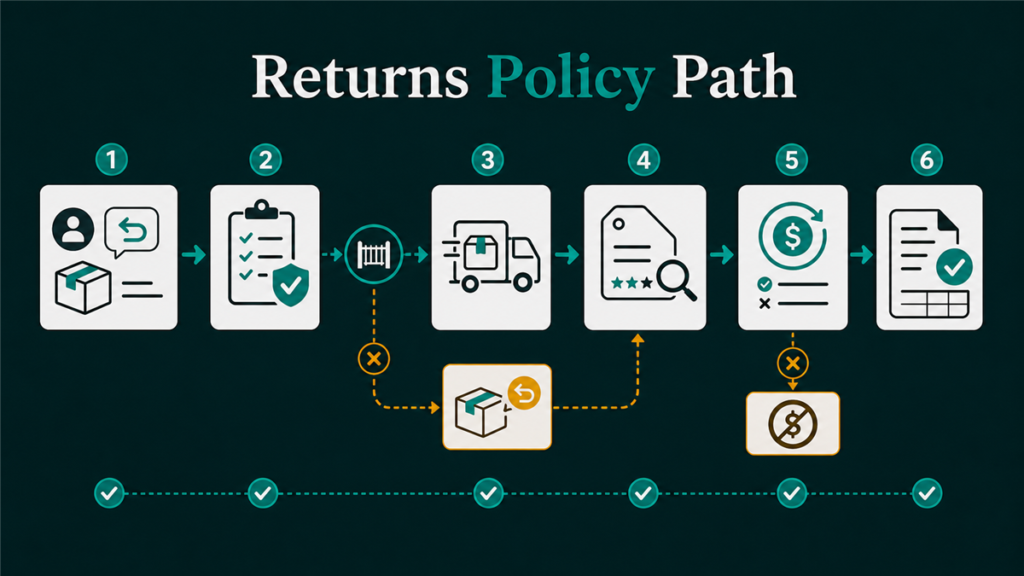
A Walmart returns operations workflow should connect the customer request to seller settings, return condition, refund decision, and reconciliation. Use this as a practical operating map.
- Confirm the return request and order record.
- Check current Walmart policy and seller settings.
- Identify whether the item is seller-fulfilled or WFS.
- Review the return reason and item category.
- Track the return shipment or return event.
- Inspect condition when the item is received, if seller-controlled.
- Process or verify refund handling.
- Reconcile inventory, fees, refunds, and customer feedback.
The exact workflow depends on the return method, fulfillment type, and current Walmart tools.
How returns affect marketplace operations
Returns affect marketplace operations because they connect customer experience, inventory accuracy, refunds, listing quality, and account health. A weak return process can hide product issues until reviews, refunds, or performance metrics expose the pattern.
Watch for:
- High return rates on specific SKUs.
- Repeated "not as described" complaints.
- Return-address errors.
- Refunds issued before condition review.
- WFS return patterns that differ from seller-fulfilled returns.
- Customer messages that reveal content gaps.
- Inventory not reconciled after returns.
The return reason is often a listing-quality clue. If buyers keep returning an item because dimensions were unclear, the fix may be content and imagery, not only return handling.
What not to do with Walmart returns
Sellers should not reject returns, delay refunds, or change settings based on assumptions. Return decisions should follow current Walmart policy and the visible order record.
Avoid:
- Denying a return without checking current policy.
- Treating all categories as if they share the same return rules.
- Ignoring WFS-specific workflows.
- Using customer-facing help pages as the only seller SOP source.
- Forgetting to update return addresses.
- Failing to reconcile returned inventory.
- Treating return abuse claims as fact without evidence.
If the return is policy-sensitive, verify the current rule before replying.
Mini-scenario: return setting mismatch
A seller changes warehouse locations but forgets to update return routing. Customers continue sending returns to the old address, and the operations team cannot reconcile returned units. Refunds appear in reports, but physical inventory is missing.
The fix is not just asking support for help. The seller needs to audit return settings, confirm the active return address, reconcile affected orders, and update the return SOP so future warehouse changes trigger a return-settings check.
FAQ
What is Walmart seller returns policy?
Walmart seller returns policy includes Walmart Marketplace return standards, seller settings, customer return workflows, refund handling, and item-condition review. Exact values should be verified from current Walmart sources.
Can Walmart seller return policies differ from Walmart's policy?
Marketplace seller policies may differ in some ways, but Walmart sets minimum standards and platform rules. Sellers should verify current policy before changing settings.
How are WFS returns different?
WFS returns may follow Walmart-fulfilled workflows rather than seller-fulfilled processes. Sellers should verify current WFS return handling before publishing SOPs.
What should sellers monitor after returns?
Sellers should monitor return reasons, refunds, item condition, inventory reconciliation, customer feedback, listing content gaps, and repeated SKU-level return patterns.
Can Qubeq help with Walmart returns operations?
Yes. Qubeq can help audit Walmart return settings, SKU-level return patterns, listing content gaps, and cross-marketplace reconciliation workflows.
Treat returns as an operations signal
Walmart seller returns policy is not just a customer-service page. Returns show where item content, fulfillment, warehouse routing, and refund workflows are working or breaking. If your Walmart operations are getting messy around returns, Qubeq can help organize the settings, evidence, and reconciliation process.