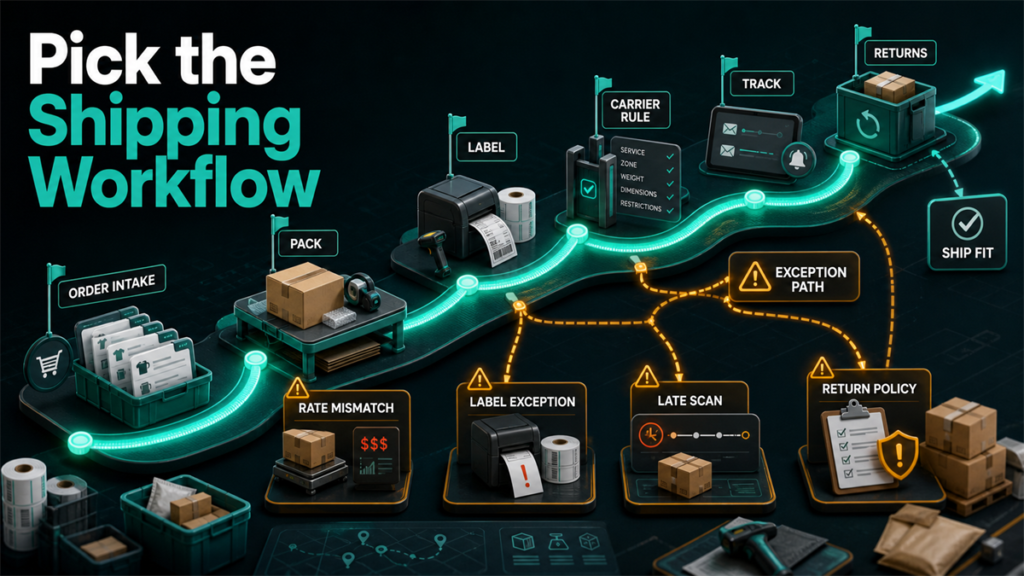
ShipStation and Veeqo both solve the same surface problem: orders arrive from several channels and need to become labels, picks, and shipments without a human retyping addresses. They diverge underneath. Choosing between them is less about a feature scorecard and more about your fulfillment model, your marketplace mix, and how you want pricing to scale. This comparison is built to help you decide, not to crown a winner.
Key Takeaways
- Both are mature multichannel shipping platforms; the right pick depends on your fulfillment model and channel mix, not a single feature.
- ShipStation is widely adopted as a carrier-rate and label engine with broad integrations and a large connector ecosystem.
- Veeqo leans toward integrated inventory and warehouse workflows and is positioned as Amazon-owned (verify ownership and current terms before publish).
- Pricing models differ in structure; treat any specific tier, rate, or shipment-volume claim as something to confirm at the source.
- Decide on three axes: where your orders originate, how your warehouse actually picks and packs, and how each pricing model behaves as you grow.
What Each Tool Is Built Around
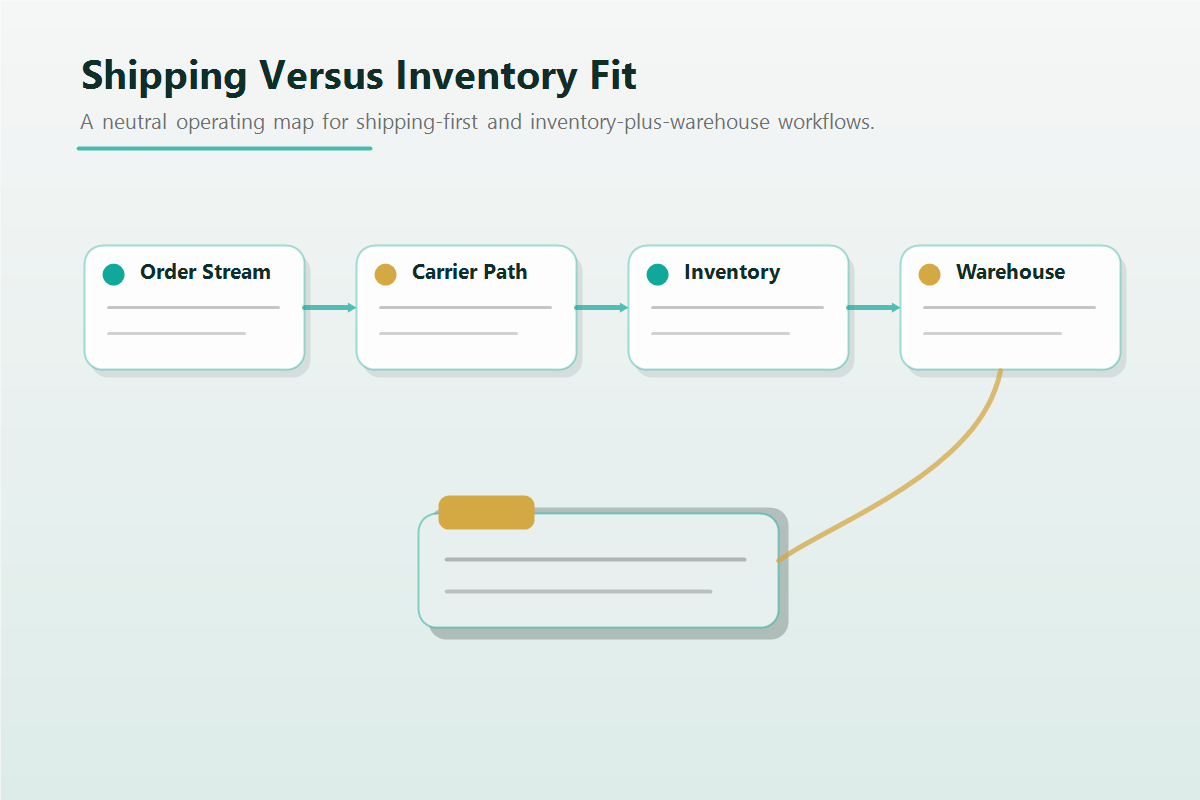
ShipStation is best understood as a shipping and label hub. It pulls orders from many storefronts and marketplaces, applies automation rules, and pushes labels across a wide set of carriers. Its strength is breadth of integrations and granular control over how orders become shipments.
Veeqo combines shipping with inventory and order management and emphasizes a connected warehouse workflow: stock levels, picking, and shipping as one loop. Veeqo is positioned in the market as an Amazon-owned product, which matters for sellers weighing platform alignment and data considerations (confirm current ownership, terms, and any Amazon-seller benefits before publishing).
Neither is a profitability tool, a repricer, or a listing tool. Keep those questions in their own tools.
Decision Axis 1: Marketplace and Channel Mix
If most of your volume runs through a wide spread of storefronts, marketplaces, and a custom cart, the deciding factor is integration coverage and how cleanly each platform maps your specific channels. Confirm that your exact channels are supported natively rather than through a workaround.
A seller concentrated on Amazon, plus a couple of secondary channels, should weigh how each tool treats the Amazon relationship specifically, including any platform-alignment considerations that come with an Amazon-owned product.
Decision Axis 2: Fulfillment Model
The sharper question is what happens after the order lands.
Map your real warehouse steps before choosing. The tool that matches how your team already moves stock will be adopted; the one that demands a new process often will not.
Decision Axis 3: Pricing Model Logic
Pricing structures in this category change frequently and differ in how they scale, so this section stays at the level of what to evaluate rather than quoted numbers.
Ask: Does cost scale with shipment volume, user seats, channels, or features? Where does the next tier trigger, and does that trigger line up with your growth curve? Are carrier rates marked up, passed through, or negotiated? A plan that looks inexpensive at your current volume can invert at scale, and vice versa. Confirm all current pricing directly with each vendor.
Who Should Pick Which
Mini-Scenario: The Switch That Was Really an Inventory Fix
A home-goods seller running Amazon plus two storefronts blamed their shipping tool for chronic oversells and late dispatch. On review, the labels were never the problem; stock counts drifted between channels because inventory lived in a spreadsheet beside a shipping-only tool. Their real decision was not "faster labels" but "one inventory truth feeding shipping." That reframed the choice toward an integrated inventory workflow, and the oversells, not the label speed, drove the move. The lesson: name the actual bottleneck before comparing feature lists.
FAQ
Is Veeqo owned by Amazon?
Veeqo is positioned in the market as an Amazon-owned product. Confirm current ownership status and any associated terms or seller benefits directly before relying on it for a decision.
Which is better for Amazon sellers, ShipStation or Veeqo?
Neither is universally better. An Amazon-concentrated seller may value platform alignment and integrated inventory; a broad-multichannel seller may value integration breadth and label control. Match the tool to your channel mix and fulfillment model.
Do these tools handle inventory or just shipping?
They differ here. One leans shipping-first with inventory as a lighter layer; the other emphasizes integrated inventory and warehouse workflow. Verify each tool's current inventory depth against your needs.
How do the pricing models compare?
They are structured differently and change often. Evaluate how cost scales with your volume, seats, and channels, and confirm current numbers with each vendor rather than relying on remembered figures.
Can I migrate from one to the other later?
Migration is possible but carries setup cost in reconnecting channels, rebuilding automation rules, and retraining staff. Factor switching cost into the first decision rather than treating it as free.
Choosing With Confidence
The honest answer to "ShipStation or Veeqo" is "depends on your fulfillment model and channel mix," and that is exactly the analysis worth doing before you commit a warehouse process to either. If your team wants the comparison run against your real order data, channel list, and growth plan, Qubeq can map your fulfillment workflow and recommend the fit.