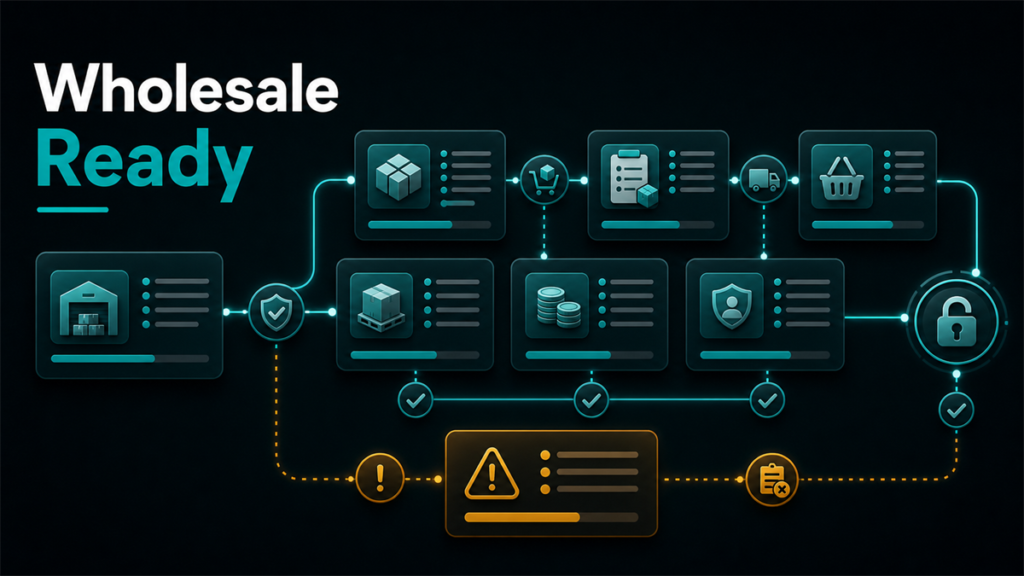
Faire Direct can make wholesale ordering easier, but the link only works well when the brand behind it is ready. If your catalog is thin, your order minimums are awkward, or your shipping logic feels confusing, sending more buyers to the wholesale website can create friction instead of conversion.
Key Takeaways
- Faire Direct gives brands an easier wholesale ordering path, but it still needs setup discipline.
- Catalog clarity, order minimums, and shipping logic shape whether retailers convert confidently.
- A wholesale website should be treated like a selling surface, not like a passive backup link.
- Faire Direct works best when the shop page, order settings, and brand-side workflow already make sense.
- Driving traffic before those basics are clean often creates weaker results than expected.
What Faire Direct Actually Changes
Faire Direct is not just a link-sharing feature. Faire describes it as a suite of order-taking tools for brands, including a personalized wholesale website, invoicing tools, and brand-side order-taking support. That matters because it turns Faire from only a marketplace-discovery channel into a more direct conversion path for leads and repeat buyers.
For many brands, that is useful. A buyer met at a trade show, a reorder customer, or a lead from outbound outreach can be sent into a smoother purchase path that still uses Faire's systems.
But that convenience does not make readiness automatic. If the wholesale site experience is confusing, the buyer still feels it.
The Three Areas Brands Should Check First
1. Catalog clarity
A retailer landing on the wholesale site should understand quickly:
If the catalog feels cluttered or incomplete, the convenience of Faire Direct does not solve the core problem.
2. Order minimums
Faire's own help guidance makes clear that brands control order minimums and can set first-order and reorder minimums differently. That means minimums are part of the conversion experience.
Minimums that are too high for the current buyer profile can discourage first orders. Minimums that are too low can create loss-making small orders. The goal is not to chase one "best" number. It is to use a minimum that supports the economics of the brand and the reality of the buyer.
3. Shipping logic
Shipping is not a detail. It changes how attractive the order feels. Faire Direct guidance and shipping-help materials show that free-shipping rules, flat-rate choices, and retailer benefits all influence the final experience.
If the brand does not understand how its settings interact with retailer expectations, the site may technically work while still converting poorly.
What Readiness Looks Like
A Faire Direct setup is usually more ready when:
This is especially important if the brand wants to use Faire Direct proactively through email, QR codes, trade shows, or a website link. Once that traffic arrives, the wholesale website becomes part of the sales process.
Common Mistakes
Sharing the link before the storefront feels complete
If the assortment still feels rough, the buyer sees that immediately.
Using order minimums copied from another channel
Wholesale minimums should fit the economics and buyer profile of this channel, not just mirror a different system.
Ignoring the brand-side workflow
The website may be easier to use than manual wholesale ordering, but orders still need a clean internal response path.
Assuming retailer benefits will overcome weak presentation
Retailer-facing benefits help. They do not make a weak catalog feel strong.
A Practical Pre-Launch Checklist
Before promoting your Faire Direct link more broadly, review:
- your current assortment and featured products
- first-order and reorder minimums
- shipping settings and any free-shipping logic
- whether the shop page tells a clear brand story
- how inbound orders will be processed by your team
This checklist is simple, but it prevents the common mistake of treating the wholesale website like a technical setup step instead of a conversion surface.
Scenario: The Brand With a Good Link and a Weak Landing Experience
A small home-goods brand started sharing its Faire Direct link after trade events and in follow-up emails. Traffic was arriving, but first orders were softer than expected.
A quick review showed the real issue was not lack of interest. The assortment was hard to scan, the first-order minimum felt high for cold buyers, and the team had not thought through how the storefront looked to someone who did not already know the line.
Once the catalog presentation was cleaned up and the order settings were revisited, the link became easier to convert from.
FAQ
What is Faire Direct?
Faire Direct is Faire's set of tools that lets brands take wholesale orders more directly, including through a personalized wholesale website and related order-taking tools.
Do order minimums matter on Faire Direct?
Yes. They shape whether the buyer can convert comfortably and whether the order works economically for the brand.
Is Faire Direct only for new buyers?
No. It can also support reorders and brand-driven wholesale outreach.
Does a better link guarantee more wholesale orders?
No. The storefront and order setup still need to feel ready for the buyer.
What should a brand review before promoting the link?
Catalog clarity, order minimums, shipping settings, and internal order-handling workflow.
The Wholesale Website Still Needs Selling Logic Behind It
Faire Direct is useful because it reduces friction in how buyers place wholesale orders. But a lower-friction path only performs well when the underlying catalog and order settings are ready. The best brands treat that wholesale website like a real selling surface, not just a technical convenience.
If your wholesale channel is growing and the setup feels harder to trust than it should, Qubeq can help think through that broader marketplace and wholesale operating logic through other marketplace operations. If you want help pressure-testing whether your Faire Direct setup is actually conversion-ready, contact us here.