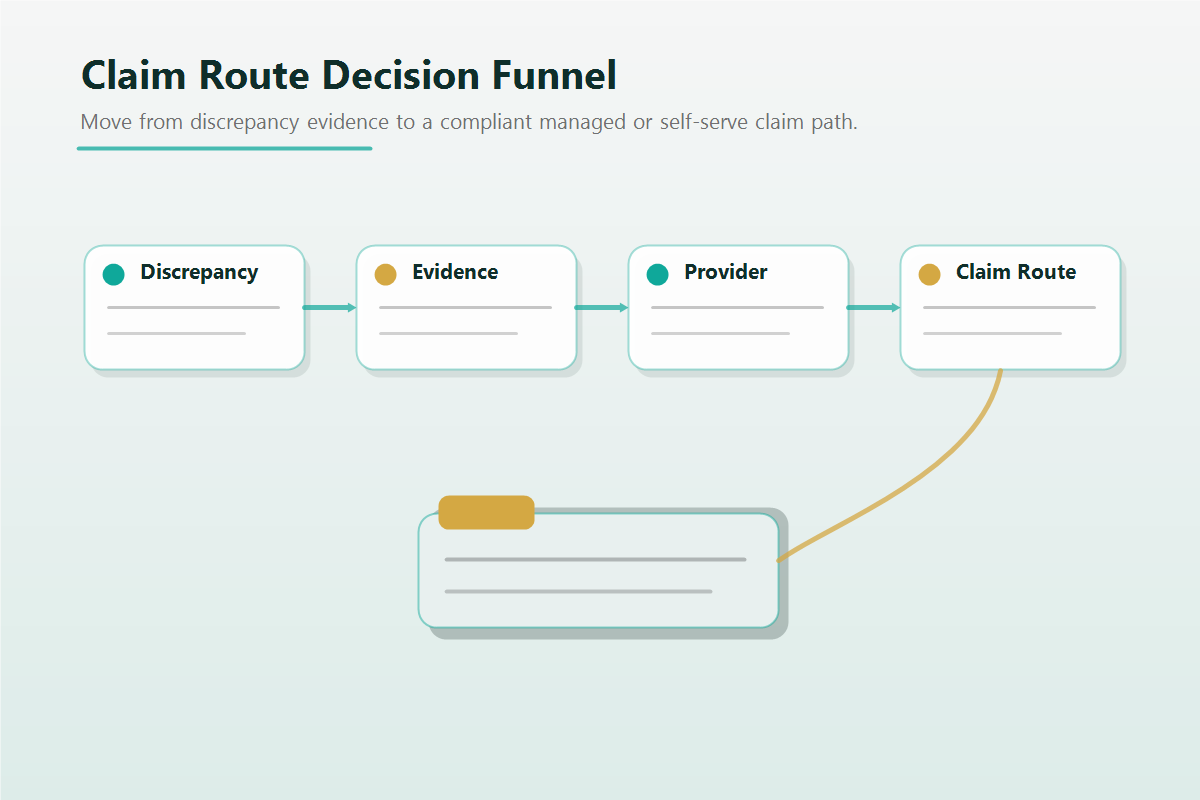
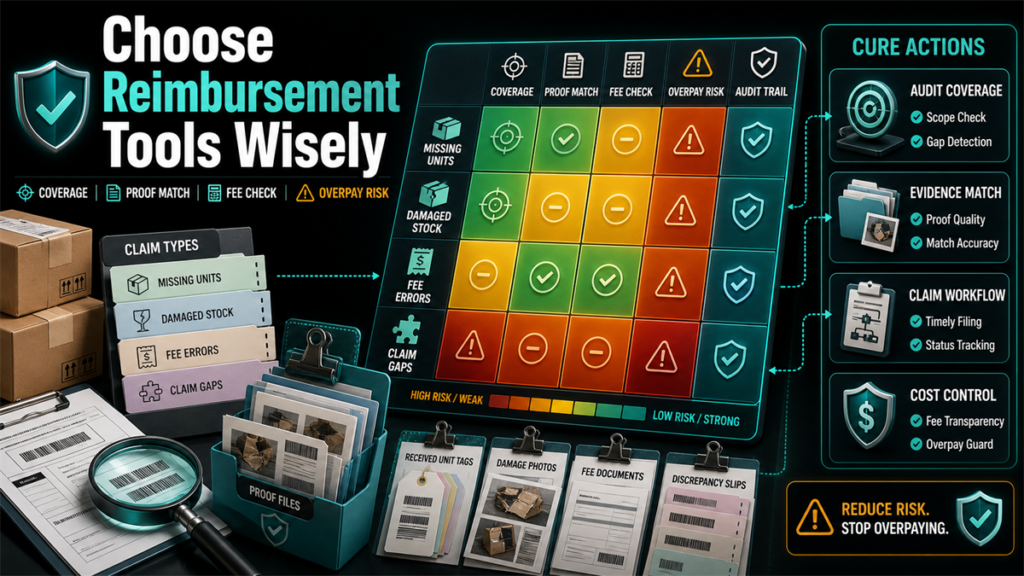
Inventory gets lost, damaged, and miscounted inside FBA, and Amazon's policies allow sellers to file for reimbursement when that happens within the rules. The category of reimbursement tools and services exists because finding every eligible discrepancy by hand is tedious and easy to neglect. The hard part is not whether to audit; it is choosing between a managed service and a self-serve tool, and understanding the fee model you are signing up for. This comparison is a buyer's framework, not a recovery promise.
Key Takeaways
- Reimbursement tools surface potentially eligible FBA discrepancies; recoverable amounts vary by account and are never guaranteed.
- The first fork is managed service (a team files for you) versus self-serve software (you file, the tool finds and tracks).
- Fee models differ: commission on recovered funds versus flat or subscription pricing. Each suits different account sizes.
- Audit scope varies by tool  lost, damaged, customer returns, fee overcharges, removal errors  so match scope to where your losses actually occur.
- Policy compliance is non-negotiable: claims must follow Amazon's current reimbursement rules and case-filing policies, which change over time.
What These Tools Actually Do
A reimbursement tool reconciles your FBA transaction and inventory records to flag events where Amazon's records and the physical reality appear to diverge in your favor under policy: units lost in the warehouse, damaged in fulfillment, not returned to you after a customer return, or fee and weight overcharges. Managed services then prepare and file the cases; self-serve tools hand you the evidence to file, or assist filing, within Amazon's rules.
What they cannot do is promise a number. Recoverable amounts depend entirely on your account's history and Amazon's adjudication. Treat any "average recovery" figure you see as an unverified marketing claim, not a forecast for your account.
The Players, at a Category Level
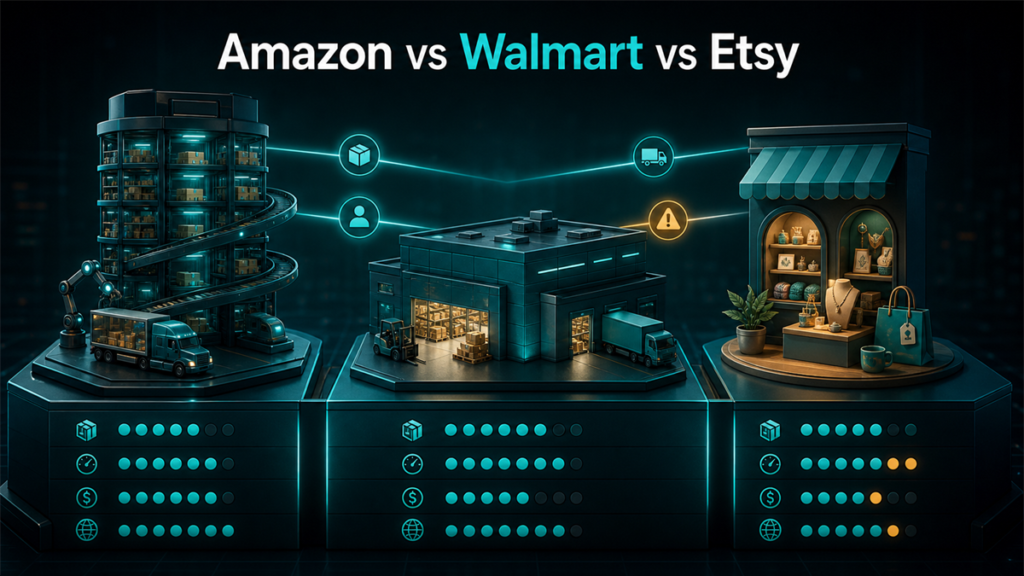
- GETIDA is widely known as a managed reimbursement service operating largely on a commission model.
- Refully, Seller Investigators, and AMZRefund are commonly cited alternatives spanning managed and software-assisted approaches.
Each vendor's exact service model, fee structure, and scope shifts over time, so the descriptions below stay general and every specific should be verified at the source before you commit.
Decision Axis 1: Managed Service vs Self-Serve
A managed service does the discovery, case preparation, and filing, and typically charges a share of what is recovered. It suits sellers who lack the time or staff to file cases and want a hands-off process, accepting a commission as the cost of convenience.
A self-serve tool puts you in control of filing and usually costs less per recovered dollar at higher volumes, but it asks for your time and attention to Amazon's case rules. It suits sellers with operational capacity who want to keep more of the recovery.
Decision Axis 2: Fee Model
The fee model often matters more than the feature list to your net outcome.
- Commission (share of recovered funds): low friction, aligned incentives, no cost when nothing is recovered, but a recurring cut of every recovery.
- Flat or subscription: predictable cost that can be cheaper at high recovery volumes, but you pay regardless of outcome.
Run the math on your own recovery volume. Commission is gentler for occasional or smaller recoveries; flat pricing can win once recoveries are large and regular. Confirm current fee terms directly, since they vary and change.
Decision Axis 3: Audit Scope and Policy Compliance
Tools differ in which discrepancy types they cover and how current they keep their logic with Amazon's policy. Two checks matter:
Scope fit: do the tool's covered categories match where your losses concentrate (lost units, damaged, returns not restocked, fee or dimensional overcharges, removal errors)?
Compliance posture: does the provider file within Amazon's current reimbursement and case-filing policies? Aggressive or out-of-policy filing can create account risk. Favor providers that emphasize policy-compliant claims.
Who Should Pick Which
- Pick a managed service (GETIDA profile) if: you want hands-off recovery, lack staff time for case filing, and accept a commission for convenience and aligned incentives.
- Pick a self-serve or software-assisted tool if: you have operational capacity, want to minimize cost per recovered dollar, and are comfortable owning case filing within policy.
- Compare two providers head to head if: your account is large enough that the fee-model difference is material, or your losses are concentrated in a scope some tools do not cover.
Mini-Scenario: Commission vs Flat at Scale
A growing supplements brand started with a commission-based managed service and was happy; recoveries arrived with zero effort. As FBA volume tripled, the recurring commission on a now-large monthly recovery stream became a noticeable line item. They modeled a flat-fee alternative against twelve months of actual recoveries and found a crossover point past which flat pricing kept more in the business, at the cost of bringing case filing in-house. The decision was not about which tool found more; it was about where their recovery volume sat relative to the fee crossover. Smaller sellers should not assume the same answer.
FAQ
How much can FBA reimbursement tools recover for me?
It depends entirely on your account's discrepancy history and Amazon's adjudication under current policy. No tool can guarantee an amount, and published averages should be treated as unverified marketing claims rather than forecasts.
Is using a reimbursement service against Amazon's policy?
Filing for legitimate, policy-eligible reimbursements is allowed; the risk lies in out-of-policy or aggressive filing. Favor providers that emphasize policy-compliant claims, and confirm current case-filing rules, which change over time.
Commission or flat fee  which is cheaper?
Neither universally. Commission is gentler for smaller or occasional recoveries; flat pricing can win at high, steady recovery volumes. Model it against your own recovery history.
Do I still need to do anything with a managed service?
Less, but not nothing. You typically grant access and may need to approve or supply information. Self-serve tools ask considerably more of your time.
How is GETIDA different from Refully, Seller Investigators, or AMZRefund?
They span managed and software-assisted models with differing fee structures and audit scopes. Compare each on service model, fee, and covered discrepancy types using current vendor information rather than a fixed ranking.
Recover What You Are Owed, Within the Rules
The right reimbursement tool is the one whose service model and fee structure fit your account size and your tolerance for hands-on filing, all inside Amazon's current policy. If you would rather have your discrepancy history reviewed and the options modeled against your real recovery volume, Qubeq can run a policy-safe audit and help you choose.
—