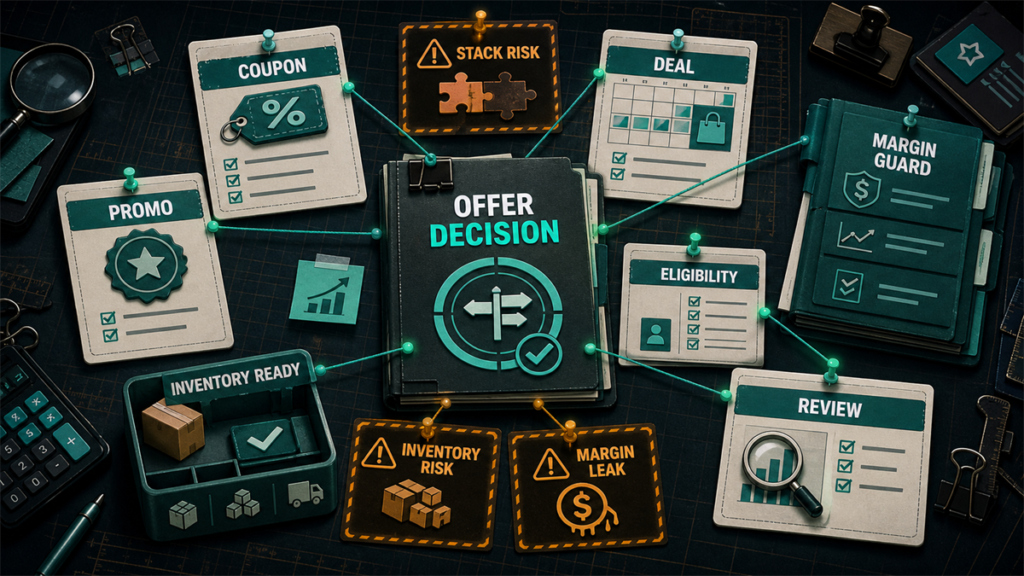
Amazon gives you several ways to discount, and they are not interchangeable. A coupon, a Lightning Deal, a Prime-exclusive discount, and a percent-off promotion each do a different job, cost a different amount, and signal a different thing to the shopper. The expensive mistake is reaching for whichever tool is handy, stacking a few of them by accident, and watching margin disappear with little to show for it. This is a decision guide: what each promo type actually does, when to choose which, and how to avoid the stacking traps that turn a sale into a loss.
Key Takeaways
- The promo types are not interchangeable; each serves a different goal and carries different costs and eligibility.
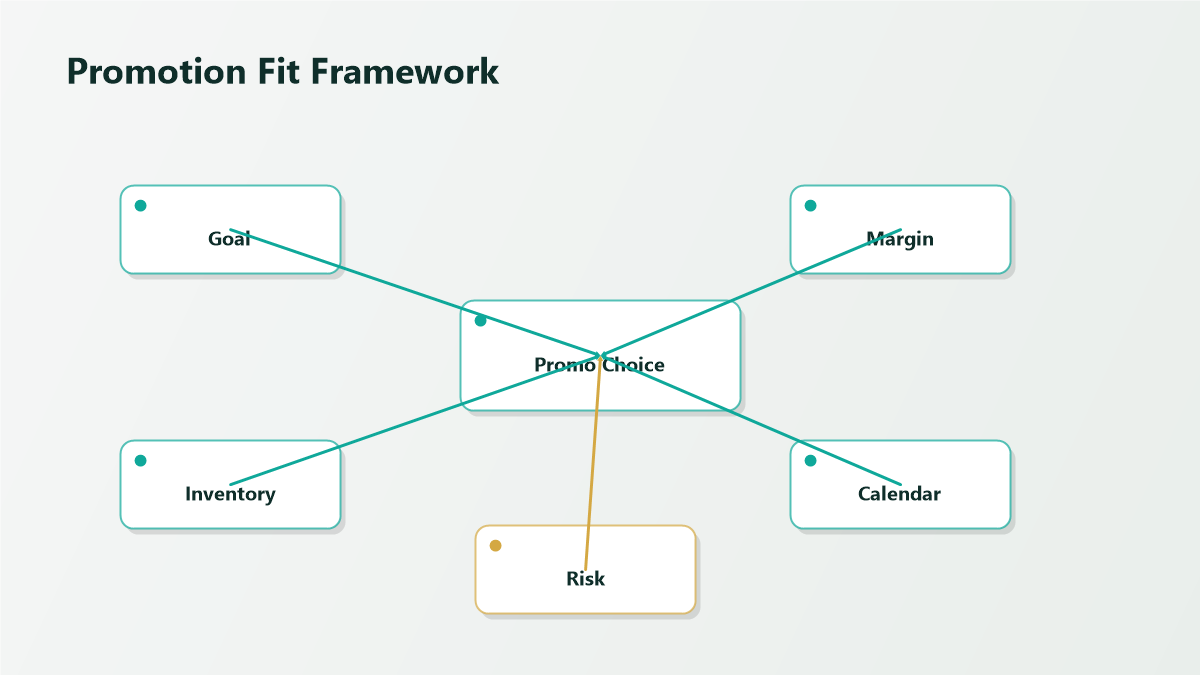
- Start from the goal  visibility, conversion lift, inventory clearance, member loyalty  and let the goal pick the tool.
- Coupons add a visible badge and a small nudge; deal events buy a burst of visibility; Prime-exclusive discounts target the member audience; percent-off and BOGO promotions shape basket behavior.
- Stacking promotions unintentionally is the fastest way to destroy margin  always model the worst-case combined discount before launching.
- Specific fees, eligibility rules, and event mechanics change over time and by program, so confirm current details before you commit.
First, Start From the Goal
Before choosing a tool, name the job. Are you trying to win visibility on a crowded search page, lift conversion on a listing that already gets traffic, clear aging inventory, reward Prime members, or push a higher basket size? Each goal points to a different instrument. Discounting without a goal is just giving away margin and hoping.
Coupons: The Visible Nudge
A coupon attaches a discount the shopper claims, and its quieter value is the badge it can place on the listing and in search results  a visibility and trust cue that says "deal here." Coupons suit listings that get traffic but need a small conversion nudge, or new products buying early momentum. They are generally lighter-touch than a full deal event. Watch the combined effect of the coupon discount plus any associated program cost, and confirm current fee and eligibility specifics before running one.
Best for: a steady conversion nudge, a visible badge, modest discounts on traffic you already have.
Deal Events: The Visibility Burst
Lightning Deals, Best Deals, and event-window deals trade a deeper, time-boxed discount for a burst of placement and visibility, often concentrated in high-traffic windows. They suit products that can convert hard during a short spike, inventory you want to move in volume, and launches timed to a shopping event. The trade is real: deeper discount, possible fees, and eligibility requirements that vary. Use them when the visibility burst is worth the margin you are spending to buy it  not as a routine discount.
Best for: short, sharp volume and visibility pushes; event-timed launches; inventory clearance at scale.
Prime-Exclusive Discounts: The Member Play
A Prime-exclusive discount targets the member audience specifically and can carry its own badge signaling member value. It suits brands that want to reward and convert the high-intent Prime shopper, or to align with member-focused shopping windows. The audience is narrower than an open coupon, which can be exactly the point. Confirm current eligibility and any minimum-discount or fee conditions before relying on it.
Best for: courting the Prime member specifically, member-event alignment, loyalty-flavored discounts.
Percent-Off and BOGO Promotions: Shaping the Basket
Percent-off, buy-one-get-one, and tiered promotions shape behavior rather than just lowering a price: buy more to save more, add a second unit, bundle the family. They suit multi-unit products, bundles, and efforts to lift average order value rather than just discount a single sale. The risk is in the mechanics  a generous tier or BOGO can discount far more deeply than intended once shoppers optimize their carts.
Best for: raising basket size, moving multi-packs, bundling, and structured "buy more save more" offers.
The Stacking Trap
The margin killers usually are not single promotions; they are combinations. A coupon running at the same time as a percent-off promotion, on top of an event discount, can compound into a total markdown far below your floor. Before launching anything, model the worst-case combined discount: assume every active promotion that can apply, does, on the same order. If that combined number breaks your margin, change the plan before, not after.
A simple discipline: keep a single calendar of every active and scheduled promotion per ASIN, set a hard discount floor per product, and check any new promotion against what is already live on that item.
A Decision Shortcut
- Need a visible badge and a gentle conversion nudge on existing traffic -> coupon.
- Need a short, sharp burst of visibility and volume -> deal event.
- Want to reward and convert Prime members specifically -> Prime-exclusive discount.
- Want to lift basket size or move multi-units -> percent-off / BOGO promotion.
- Running more than one at once -> model the combined worst-case discount first.
Mini-Scenario: The Compounded Discount
A brand scheduled a coupon for a steady seller, then layered a percent-off promotion the same week to "push a bit harder," forgetting the coupon was live. A subset of orders claimed both. The combined markdown dropped below the product's margin floor, and the extra volume the promotions generated lost money on every unit. Nothing was wrong with either tool individually; the failure was running them blind to each other. A one-page promotion calendar with a discount floor per ASIN would have flagged the overlap before launch.
FAQ
Which promotion type is cheapest to run?
It depends on current program fees and your discount depth, which change over time, so confirm specifics before committing. As a rule of thumb, coupons tend to be lighter-touch than full deal events, but verify the current costs for your case.
Can I run a coupon and a promotion at the same time?
Often yes mechanically, which is exactly the risk. Model the combined worst-case discount before doing so and confirm current stacking rules, because overlap is the most common margin mistake.
When are deal events worth the deeper discount?
When the burst of visibility and volume is worth the margin you spend to buy it  typically short pushes, event-timed launches, or inventory clearance, not routine discounting.
What is the difference between a coupon and a Prime-exclusive discount?
A coupon is generally open to shoppers and carries a claimable badge; a Prime-exclusive discount targets the member audience specifically. Choose based on whether you want a broad nudge or a member-focused play. Confirm current eligibility for each.
How do I avoid destroying margin with promotions?
Set a hard discount floor per ASIN, keep one calendar of all active promotions, and model the worst-case combined discount before launching anything new on an item.
Discount With a Plan, Not a Reflex
The promo tools are powerful when matched to a goal and dangerous when stacked blindly. Start from what you are trying to achieve, pick the one instrument that fits, and never launch a second promotion on an ASIN without modeling the combined discount. If you want a promotion calendar, per-product floors, and a tool-to-goal playbook built for your catalog, Qubeq can map your promotional strategy and guard the margin while you run it.