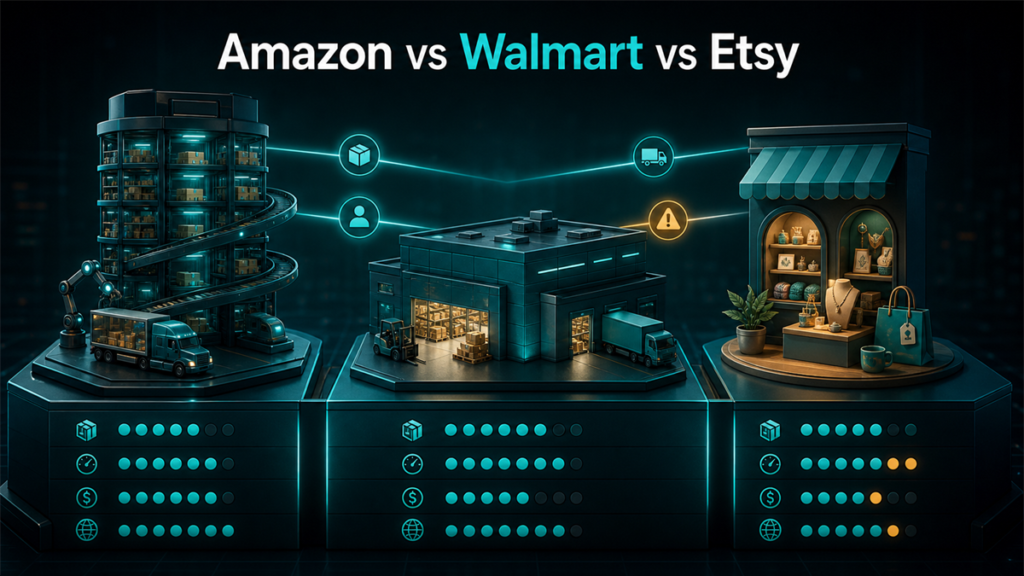
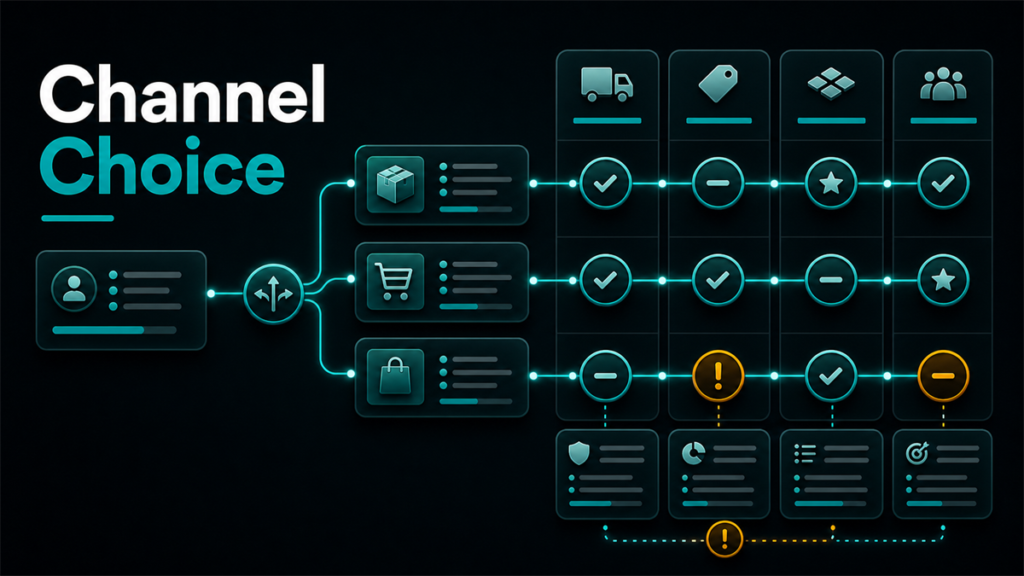
Amazon, Walmart, and Shopify are not three versions of the same thing. They solve different distribution problems. Amazon gives access to massive marketplace demand. Walmart offers a lower-density marketplace with its own operational logic. Shopify gives the seller more brand and checkout control, but also more responsibility for traffic and conversion.
Key Takeaways
- There is no universal best first channel.
- Amazon is strongest for immediate marketplace demand capture.
- Walmart can be a useful second marketplace or a strategic first move for certain catalogs, but it still requires serious marketplace operations.
- Shopify is best when the business wants more brand control and can support its own traffic and conversion work.
- The right decision depends on your product, margin structure, and operating capacity more than on trend language.
Start With the Real Question
Do you need demand that already exists, or do you need more control over how demand is captured?
That question splits these channels quickly.
Sellers often get stuck because they compare these channels at too high a level. A better approach is to compare them by job-to-be-done.
How Amazon Fits
Amazon is strongest when the product can benefit from an existing marketplace audience and the seller is ready for marketplace competition, fees, catalog rules, and account-management discipline.
Amazon is often a good first channel when:
Amazon is a weaker first channel when the brand is not ready for marketplace pressure, Buy Box competition, fee exposure, or catalog-control tradeoffs.
How Walmart Fits
Walmart Marketplace can be attractive for sellers who want another major marketplace with lower competitive density than Amazon in some categories. But it still requires marketplace readiness, including catalog quality, fulfillment capability, and operational discipline.
Walmart is often a stronger choice when:
Walmart is weaker as a first move when the seller still does not understand marketplace catalog or fulfillment discipline at all.
How Shopify Fits
Shopify is not a marketplace. That is its strength and its challenge.
It gives the business:
But it also requires:
Shopify is a better first move when the business has a real reason to own the storefront experience and enough capability to bring shoppers in.
The Five Decision Filters
1. Demand source
Do you need an existing marketplace audience now, or can you generate your own traffic?
2. Margin structure
How much room do fees, paid traffic, or marketplace competition leave?
3. Brand control
How important is it to control the full customer experience?
4. Operational maturity
Can the team actually support the channel cleanly?
5. Catalog behavior
Does the product behave better as a marketplace item, an owned-store item, or both?
Which Sellers Usually Start Best on Each Channel?
Amazon-first
Often best for sellers with marketplace-suitable products, operational discipline, and a need for ready-made buying intent.
Walmart-first
More selective, but can work when the assortment is a strong fit and the seller wants a marketplace route with different competitive conditions.
Shopify-first
Often best for brands that need control, storytelling, bundle logic, or owned checkout more than they need marketplace discovery.
Scenario: Same Product, Different First Channel
Imagine three sellers with similar products but different strengths.
One has no real audience but a product that fits marketplace demand well and the discipline to run marketplace ops. Amazon likely makes the most sense first.
One already has marketplace skill and wants diversification away from Amazon concentration. Walmart may be the smarter next move.
One has a strong brand, creative capability, and repeat-purchase logic that benefits from owned-store control. Shopify may be the stronger first foundation.
The product matters. But the operating model matters just as much.
FAQ
Is Amazon always the best first channel?
No. It is often the fastest for demand capture, but not always the best fit for brand control or operational reality.
Is Shopify better than marketplaces?
Not inherently. It solves a different problem.
When does Walmart make the most sense?
Usually when the business is already comfortable with marketplace operations and wants another meaningful marketplace path.
Can a brand use all three?
Yes, but the sequencing matters. Most businesses should not try to master all three at once.
What is the biggest mistake in channel selection?
Choosing based on hype instead of product fit, margins, and operating capacity.
The Right First Channel Is the One You Can Actually Operate Well
The smartest selling path is not the channel with the loudest reputation. It is the one that matches your current product, margin reality, and team capability. Amazon, Walmart, and Shopify all work well in the right context. The real job is knowing which context you are actually in.
If your team is choosing between marketplace-first and store-first growth paths, Qubeq can help think through the operational side of those decisions through other marketplace operations. If you want help pressure-testing the right next channel for your product, contact us here.