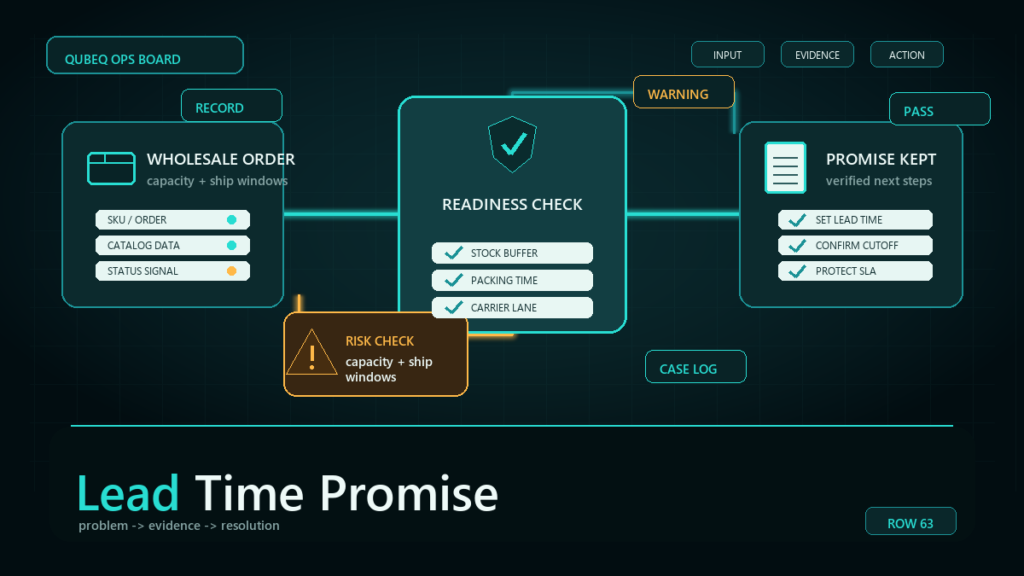
Faire lead time tells retailers how long your brand normally needs to fulfill an order. It is different from the expected ship date on a specific order, but both shape retailer expectations. If the lead time is too short, your team may look unreliable. If it is too long, retailers may choose a faster supplier.
Wholesale fulfillment is different from direct-to-consumer fulfillment. Order sizes are larger, packing is more structured, and buyers often plan around store launches, seasonal resets, or inventory gaps. That makes lead time a trust signal.
Freshness note: Faire lead time is the number of business days normally needed to fulfill an order, separate from the expected ship date, so brands should adjust lead time when late shipments become likely.
Key Takeaways
- Lead time should reflect normal business-day fulfillment capacity.
- Expected ship dates still matter on individual orders.
- Seasonal demand, backorders, scheduled orders, and production limits can change the right setting.
- Late shipments can damage retailer trust and operational metrics.
- Brands should review lead time before promotions, holidays, trade-show follow-ups, and product launches.
Lead Time Versus Expected Ship Date
Source note: Faire defines lead time and related shipping expectations in its current support guidance, so brands should verify current lead-time, expected ship date, and late-shipment guidance before changing settings or promising a retailer timeline.
Lead time is the general setting: how many business days it usually takes your brand to fulfill an order. The expected ship date is tied to a specific order. A healthy wholesale operation keeps both aligned.
If your lead time says three business days but most orders need seven, retailers will quickly feel the mismatch. If your lead time says two weeks but standard in-stock orders ship in two days, the brand may look slower than it really is.
Why Wholesale Lead Time Needs Extra Care
Retailers do not buy like consumers. They may be planning a shelf reset, boutique opening, local event, or replenishment cycle. A missed ship date can affect their own sales floor. That is why Faire brands should treat lead time as part of customer experience, not just back-office configuration.
Wholesale orders also create operational complexity. A single order may include multiple SKUs, case packs, fragile items, custom packaging, or inventory that needs to be produced before shipment.
How To Choose the Right Lead Time
Start with real history. Look at recent wholesale orders and measure the time from order placement to carrier scan or shipped status. Separate in-stock orders from made-to-order, backordered, or custom work.
Next, identify constraints. Do you pick and pack wholesale orders only on certain days? Do you need production batching? Are materials shared with retail orders? Are some products stored in another location?
Then set a conservative but honest promise. The right lead time should be achievable during normal operating weeks, not only on your best week.
When To Update Lead Time
Update lead time before holiday peaks, trade-show demand, staff vacations, warehouse moves, supplier delays, packaging shortages, or large wholesale promotions. It is better to reset expectations before orders arrive than to explain delays afterward.
If Faire offers automatic lead time adjustment based on shipping history, review whether that reflects your current operations. Automation helps only when the underlying history is representative.
Late Shipment Prevention
Use a daily order review. Identify orders approaching their expected ship date, confirm inventory, and resolve exceptions early. For scheduled orders, backorders, or split orders, make sure the team understands which date controls the shipment promise.
FAQ
What does lead time mean on Faire?
Lead time is the normal business time a brand needs to fulfill an order after receiving it. Sellers should confirm current Faire guidance before relying on a setting for operational planning.
Why should brands avoid overly aggressive lead times?
An aggressive promise can win short-term buyer confidence but create late shipment risk if production, packing, backorder, or seasonal capacity cannot support it.
When should a Faire seller update lead-time settings?
Update lead time when production capacity, staffing, seasonal demand, backorder status, or fulfillment workflow changes enough that the old promise no longer reflects reality.
Bottom Line
Faire lead time is a retailer trust setting. Brands should set it based on actual fulfillment capacity, review it before demand changes, and use it to make wholesale ordering predictable.