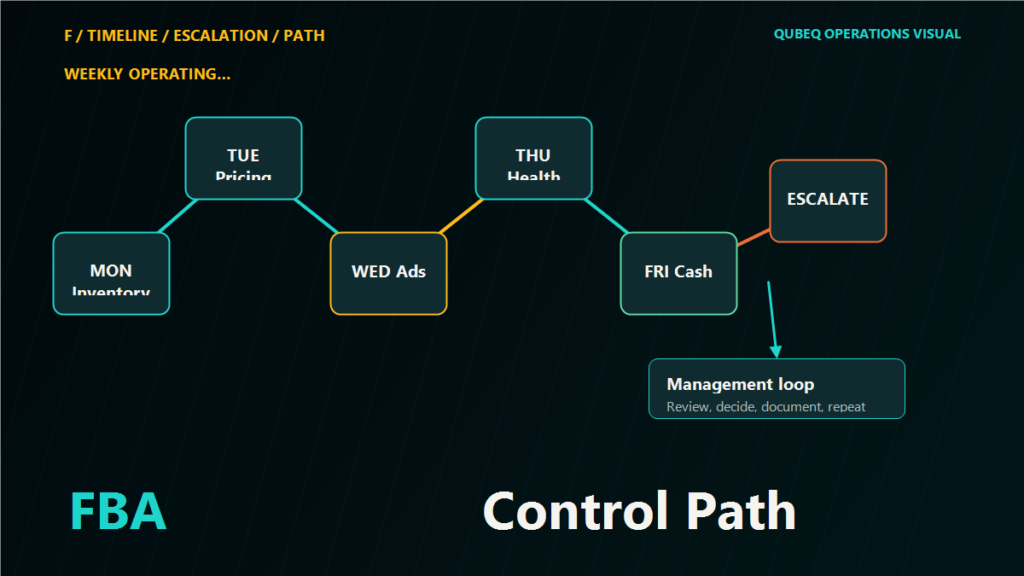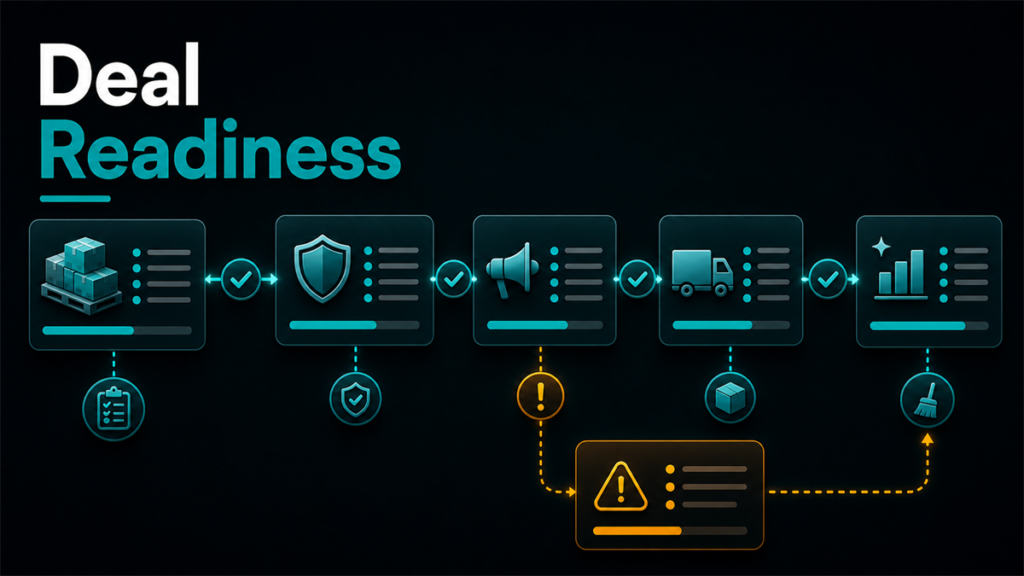

An FBA shipment discrepancy means Amazon's received quantity does not match the seller's shipment plan or internal records. The right next step depends on shipment status, receiving progress, box-content evidence, carrier proof, and whether Amazon has already adjusted the shipment.
Key Takeaways
- An FBA shipment discrepancy is a diagnosis problem before it is a reimbursement problem.
- Missing units, overages, FNSKU mismatches, and box-content errors need different evidence.
- Sellers should not open vague cases before checking shipment status and reconciliation readiness.
- Case language should be narrow, factual, and tied to one shipment record.
- Repeated discrepancies often point to upstream prep, label, carton, or warehouse process gaps.
What is an FBA shipment discrepancy?
An FBA shipment discrepancy happens when the units Amazon records do not match what the seller expected Amazon to receive. The discrepancy may involve missing units, extra units, damaged units, wrong FNSKUs, box-content mismatches, or shipment status confusion.
A discrepancy does not automatically mean Amazon owes reimbursement. The mismatch may be caused by delayed receiving, seller-side packing errors, carrier issues, labeling mistakes, or Amazon receiving adjustments. The seller should diagnose the cause before filing any case.
Common types of FBA shipment discrepancies
Common FBA shipment discrepancies include missing units, over-received units, FNSKU mismatches, box-content mismatches, damaged units, and delayed receiving. Each discrepancy type changes the investigation path.
| Discrepancy type | What the seller sees | First diagnostic question |
| Missing units | Amazon received fewer units than expected | Is the shipment still receiving or eligible for review? |
| Over-received units | Amazon received more units than expected | Was the shipment plan, box content, or label wrong? |
| FNSKU mismatch | Inventory is received under the wrong identifier | Were units labeled correctly before shipment? |
| Box-content mismatch | Carton contents do not match shipment records | Are box-level records available? |
| Damaged during receiving | Units become unsellable or adjusted | Is there a damaged inventory event or adjustment? |
| Status confusion | Shipment shows partial or unclear progress | Has receiving or investigation fully closed? |
The table should guide investigation, not replace policy verification. Current Seller Central labels and review timing should be checked before filing.
What to check before opening a Seller Central case
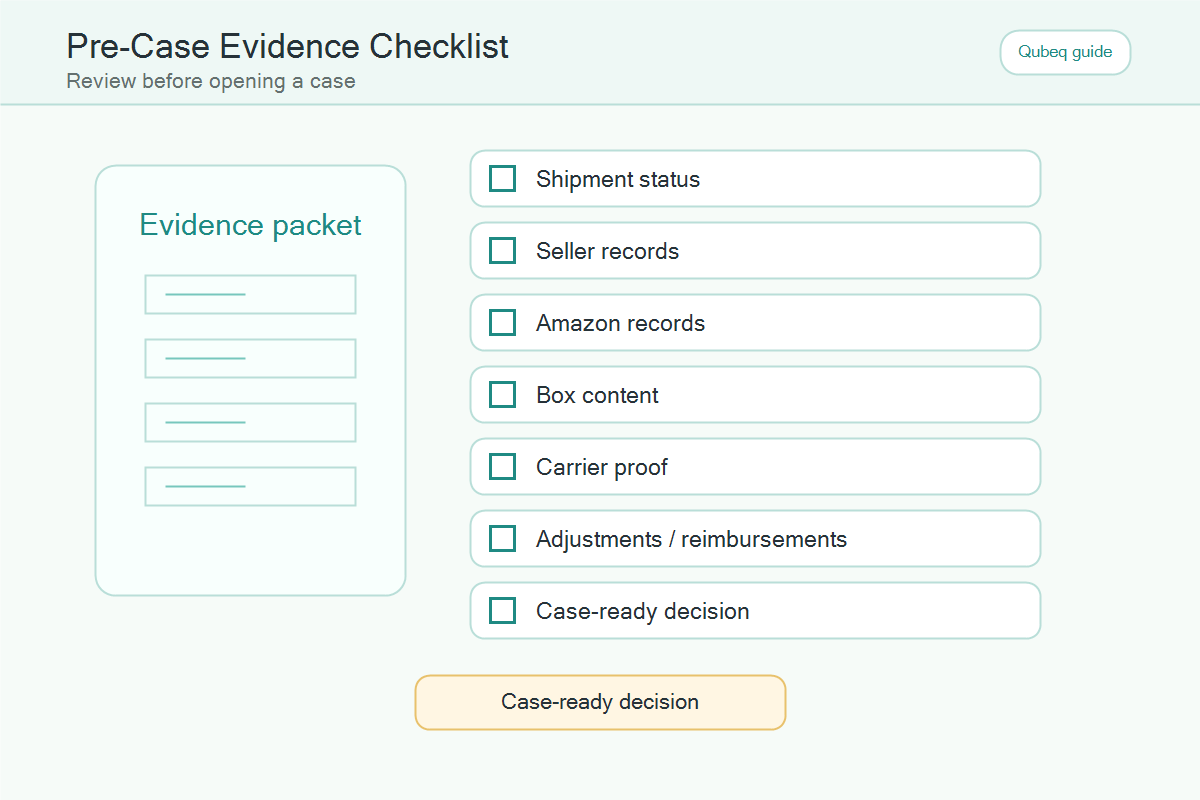
Sellers should check shipment status, quantity records, box content, carrier proof, reimbursements, and prior case history before opening a Seller Central case. The case should be the final step after diagnosis.
Check shipment status first
If the shipment is still being received, the discrepancy may change. Opening a case too early can produce a generic response or require the seller to restart later.
Confirm:
- Current shipment status.
- Received quantity by SKU/FNSKU.
- Any investigation or reconciliation status.
- Whether Amazon has adjusted the discrepancy.
Compare seller records to Amazon records
The seller should compare the shipment plan, warehouse pack records, box content data, and Amazon received quantities. If the seller's internal records are not reliable, the case becomes weaker.
Confirm:
- Expected quantity by SKU/FNSKU.
- Packed quantity by box.
- Carrier pickup or delivery record.
- Amazon received quantity.
- Quantity still in dispute.
Check automatic adjustments or reimbursement
Amazon may adjust shipment quantities or reimburse certain eligible events. Before opening a case, review reimbursement and adjustment records so the seller does not ask for a duplicate review.
Confirm:
- Reimbursements report.
- Inventory adjustments.
- Case history.
- Any related transaction credits.
How to prepare evidence for an FBA shipment discrepancy
Evidence for an FBA shipment discrepancy should prove the seller's expected quantity and connect that quantity to the shipment Amazon received. The cleaner the evidence, the easier the review.
Useful evidence includes:
- Shipment ID.
- SKU and FNSKU list.
- Expected quantity by SKU.
- Received quantity by SKU.
- Box content records.
- Carton labels or pallet records.
- Carrier tracking and proof of delivery.
- Warehouse pick, pack, or prep records.
- Reimbursement and adjustment checks.
Avoid dumping unrelated files into the case. A focused case with a clear quantity table is often easier to review than a long message with scattered attachments.
When to wait and when to escalate carefully
Sellers should wait when receiving is still in progress, the shipment is not eligible for review, or evidence is incomplete. Sellers can escalate carefully when the shipment is review-ready, the discrepancy remains unresolved, and the evidence supports a specific request.
Wait if:
- Shipment receiving is still active.
- Amazon's current workflow does not allow reconciliation yet.
- Box content or carrier evidence is missing.
- The discrepancy may be a seller-side count or labeling error.
- Amazon already asked for a specific document the seller has not supplied.
Escalate carefully if:
- The shipment is review-ready under the current workflow.
- The missing quantity is still visible.
- The seller has clear box-content and carrier evidence.
- Amazon's response does not address the specific discrepancy.
- The seller can reply with new or clearer evidence.
Escalation is not a magic word. The strongest escalation is a clearer record.
Case-writing framework for shipment discrepancies
A Seller Central case for an FBA shipment discrepancy should be short, factual, and tied to one shipment issue. The case should not include unrelated account complaints.
Use this structure:
- Identify the shipment ID.
- Identify affected SKU/FNSKU and quantity.
- State the expected quantity and Amazon received quantity.
- Mention that reimbursement or adjustment records were checked.
- List attached evidence.
- Ask for review of the specific discrepancy.
Example structure:
| Case element | What to include |
| Shipment | Shipment ID and current status |
| Affected item | SKU/FNSKU and quantity gap |
| Evidence | Box content, carrier proof, warehouse records |
| Prior checks | Reimbursement and adjustment check |
| Request | Review the unresolved quantity discrepancy |
Do not copy this as a universal template. Adapt the case to the actual shipment record and current Seller Central workflow.
Prevention checklist for future FBA shipment discrepancies
The best way to reduce FBA shipment discrepancies is to improve the shipment process before cartons leave the warehouse. Prevention starts with label accuracy, box-content accuracy, and evidence retention.
- Confirm SKU and FNSKU before labeling.
- Use a reliable box-content process.
- Keep carton-level records.
- Match shipment plan quantities to warehouse pack records.
- Photograph or document carton labels for high-risk shipments.
- Save carrier tracking and proof of delivery.
- Reconcile every shipment after receiving.
- Review repeated discrepancies by warehouse, SKU, carrier, and prep method.
Repeated discrepancies are usually a process signal. If the same SKU, warehouse, or prep step keeps appearing, fix the upstream workflow instead of only filing downstream cases.
Mini-scenario: missing units with weak box content
A seller sees that Amazon received 180 units instead of 220 units for one FNSKU. The operations team wants to file a missing-unit case, but the box-content records show only total carton counts, not carton-level SKU details.
The team checks the shipment status, carrier proof, warehouse pick sheet, and label records. They find that one carton was packed with a mixed SKU count that does not match the shipment plan. The final case is delayed until the team separates seller-side uncertainty from the remaining Amazon receiving discrepancy.
FAQ
What causes an FBA shipment discrepancy?
FBA shipment discrepancies can be caused by receiving delays, missing units, overages, FNSKU mismatches, box-content errors, carrier issues, damaged units, or seller-side packing mistakes.
Should I open a case as soon as units are missing?
No. Check shipment status, receiving progress, reconciliation eligibility, evidence, reimbursement history, and case history before opening a case.
What evidence does Amazon need for missing FBA units?
Evidence may include shipment ID, SKU/FNSKU quantities, box content records, carrier proof, warehouse packing records, and reimbursement or adjustment checks. Current requirements should be verified before filing.
Is an FBA shipment discrepancy always reimbursable?
No. A discrepancy may be resolved, adjusted, reimbursed, denied, or traced to seller-side error depending on the evidence and current policy.
Can Qubeq help with shipment discrepancy cases?
Yes. Qubeq can diagnose shipment discrepancies, organize evidence, improve case writing, and identify process issues causing repeated inbound problems.
Diagnose the discrepancy before filing
FBA shipment discrepancy work is evidence work. If your team is dealing with repeated missing units, unclear shipment statuses, or weak case responses, Qubeq can review the inbound shipment workflow and identify what needs to be fixed before the next case is opened.