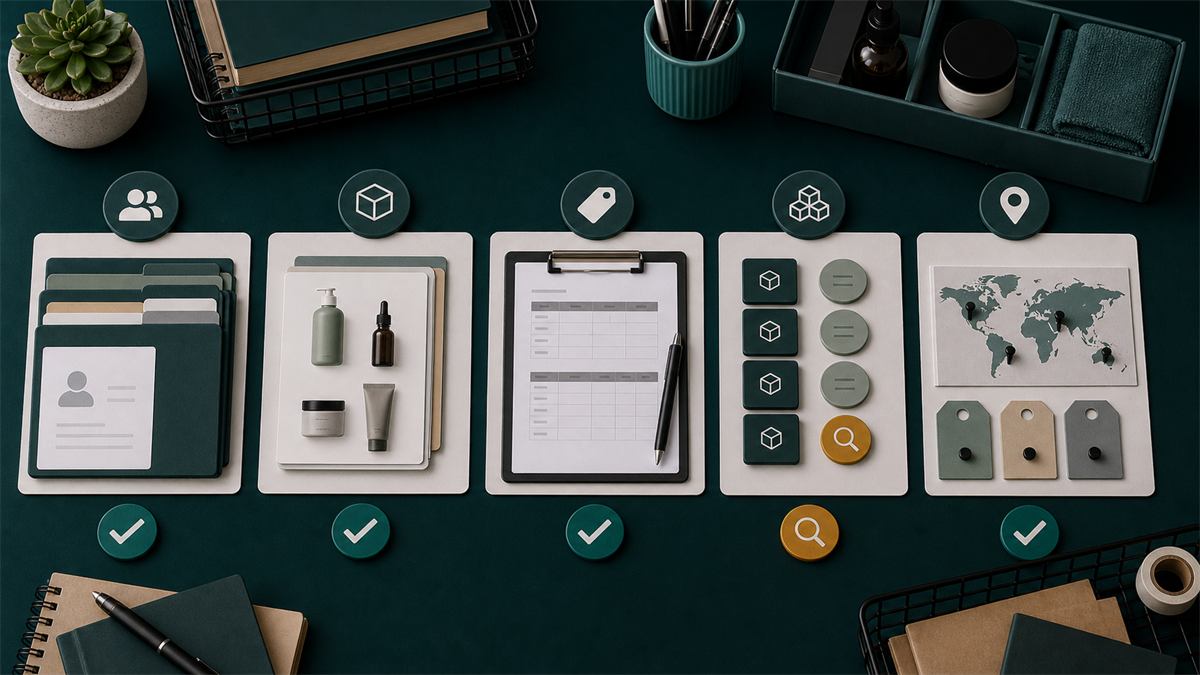
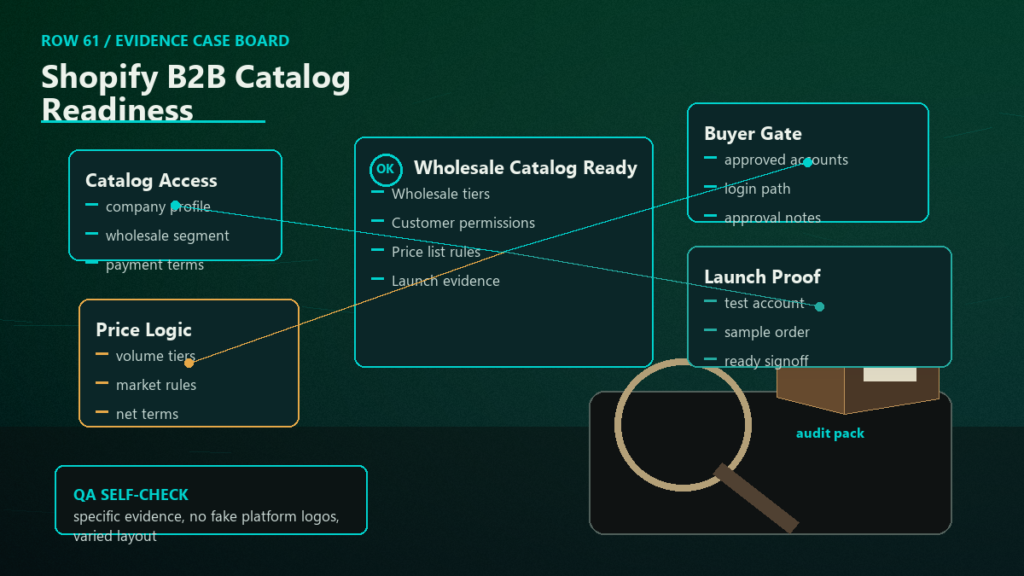
Shopify B2B catalogs control what wholesale customers can buy and what prices they see. That sounds straightforward until a brand has different customer tiers, product exclusions, regional rules, volume discounts, and company locations.
The setup work should begin before the first B2B customer logs in. A catalog is not just a price list. It is the operating model for wholesale access.
Shopify B2B catalog readiness means confirming which companies and locations can access which products, prices, quantity rules, and wholesale terms before buyers are allowed to order. Sellers should also verify current Shopify B2B plan and feature availability before treating a catalog structure as final.
Freshness note: Shopify B2B catalog availability, assignment limits, company or location assignment, and plan requirements vary by plan, so current Shopify plan constraints should be verified before quoting exact limits.
Key Takeaways
- B2B catalogs determine product access and pricing for wholesale customers.
- Catalogs can be assigned to companies and company locations.
- Volume pricing, quantity rules, and product exclusions should be planned before launch.
- Plan limitations can affect catalog structure.
- Wholesale catalog QA should include customer-view testing before inviting buyers.
Start With Customer Groups
Before creating catalogs, define the customer groups the business actually supports. Common examples include independent retailers, distributors, key accounts, regional buyers, and private-label partners.
Each group may need different product access, pricing, minimum quantities, or payment expectations. If every customer is forced into one catalog, the team may end up creating exceptions manually later.
Decide Product Access First
Not every retail product belongs in wholesale. Some products may have low margin, fragile packaging, limited inventory, brand restrictions, seasonal availability, or channel conflicts.
Create a wholesale-eligible product list before pricing. Then define exclusions. This prevents a buyer from seeing products the brand cannot support in B2B quantities.
Build Pricing Rules Carefully
Wholesale pricing should be clear enough for the team to explain. If different customer tiers receive different prices, document the rule behind each tier. If volume pricing is available, decide which products qualify and where the breaks start.
Also check whether multiple catalog assignments could produce unexpected pricing. The lowest visible price may apply in some configurations, so test with real customer scenarios.
Company and Location Planning
B2B buying often happens through companies with multiple locations. One retailer may have several stores, different ship-to addresses, or separate buyers. Catalog assignment should reflect how the customer actually purchases.
Before launch, map company records, locations, buyer permissions, and catalog access together. A clean B2B setup avoids sending internal staff into manual correction mode after buyers are invited.
Pre-Launch QA Checklist
Test at least three buyer scenarios: a standard retailer, a special-price account, and a location-based exception. Confirm visible products, hidden products, prices, quantity rules, discounts, checkout, shipping, and tax behavior.
Then document who can approve catalog changes. Wholesale pricing should not drift every time one buyer asks for a special arrangement.
FAQ
What is Shopify B2B catalog readiness?
It is the process of checking customer-specific product access, wholesale pricing, quantity rules, company assignments, and location settings before opening B2B ordering.
Why do wholesale catalogs need customer-specific checks?
Wholesale buyers may have different price lists, product access, minimums, or location rules. If those controls are wrong, the wrong buyer can see the wrong offer before the merchant catches the mistake.
What should merchants verify before opening B2B access?
Verify company records, company locations, assigned catalogs, product exclusions, price rules, quantity rules, and a test buyer path. Merchants should also check current Shopify documentation for plan and feature requirements.
Bottom Line
Shopify B2B catalogs work best when they reflect a clear wholesale strategy. Plan customer groups, product access, price rules, and company assignments first. Then build the catalog around that model.