Shopify Marketplace Connect can reduce a lot of repetitive marketplace work, but only when the store behind it is organized first. Real shopify marketplace connect readiness means checking catalog structure, order flow, fulfillment rules, and inventory behavior before listings start syncing across channels.
Key Takeaways
- Marketplace Connect helps centralize listings, orders, and inventory, but it does not fix weak product data on its own.
- Merchants should review supported marketplace scope, order-import behavior, and fulfillment workflows before activating the connector.
- Inventory sync is safer when one source of truth already exists inside Shopify.
- Shipping and tracking workflows matter because Marketplace Connect sends updates back to connected marketplaces.
- The best launches start with a smaller controlled catalog, not the full store on day one.
What Marketplace Connect Readiness Actually Means
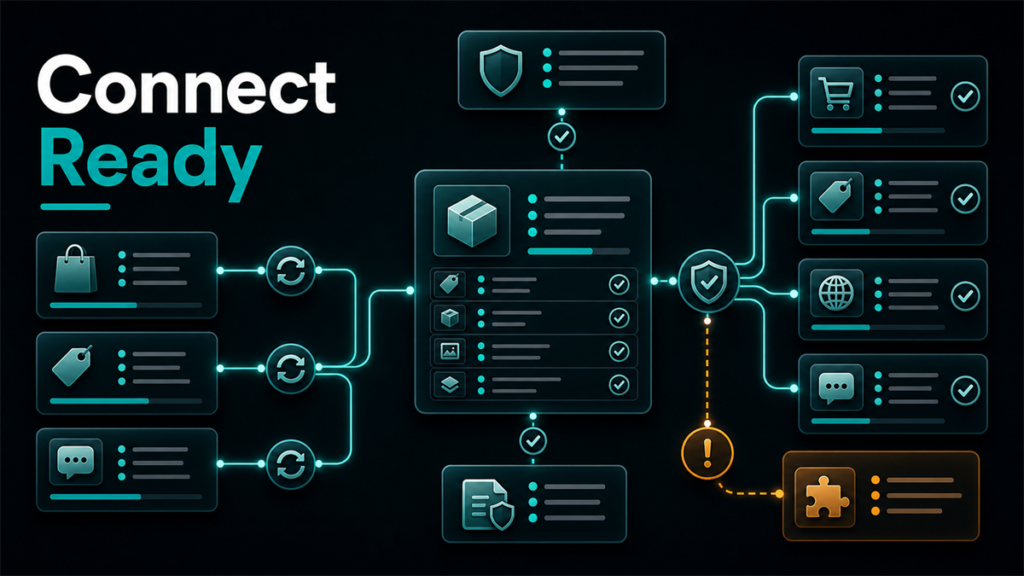
Shopify Marketplace Connect is meant to bring marketplace listings, inventory, and orders into Shopify admin. That sounds simple, but the connector sits on top of operational decisions you have already made. If product titles are inconsistent, variants are messy, or fulfillment rules differ by channel in ways the team has never mapped, the connector can expose those issues faster instead of solving them.
Readiness means a merchant can answer four practical questions clearly:
- Which products should be listed on which connected marketplaces?
- Which inventory quantity in Shopify is the source of truth?
- How will orders be fulfilled once they land in Shopify?
- What exceptions will the team watch during the first days of sync?
If those answers are vague, the connector will feel harder than it should.
The Four Control Points To Review First
1. Catalog quality
A connector works best when products already have clean titles, variants, SKUs, images, and stock logic inside Shopify. Marketplace Connect can move listings across channels, but it cannot invent missing discipline.
2. Marketplace scope
Shopify's help documentation is clear that Marketplace Connect supports specific marketplaces and that supported connections can change over time. A merchant should confirm the exact active channel list before planning a rollout around a marketplace that may have changed status.
3. Order import and fulfillment flow
Marketplace orders come into Shopify and then need a fulfillment workflow that makes sense. If the warehouse team, 3PL, or in-house operator is not ready to treat those orders like channel-specific work, confusion shows up fast.
4. Inventory ownership
A sync tool is safest when the merchant already trusts the inventory number in Shopify. If quantity decisions still live partly in spreadsheets, partly in marketplace dashboards, and partly in someone's head, oversells become much more likely.
Where Merchants Usually Get Stuck
They turn on too much catalog at once
A full-catalog launch is tempting, but a smaller pilot group is usually cleaner. It shows how the connector behaves with real orders and real inventory movement.
They assume all marketplaces behave the same
They do not. A listing sync is not the same as a fulfillment promise, and not every marketplace responds to missing data or delayed updates in the same way.
They forget the post-order work
Marketplace Connect does more than push listings. It also pulls order activity into Shopify. That means taxes, shipping, tracking, and customer-facing order updates need to be understood before launch.
A Practical Pre-Launch Checklist
Scenario: The Connector Was Fine but the Process Was Not
A merchant with a few hundred SKUs wanted to expand from Shopify into marketplaces quickly. Marketplace Connect looked like the shortcut. The installation itself went smoothly, but the team had never agreed on which products were marketplace-ready, which variants should stay hidden, or how imported orders would be routed between in-house fulfillment and a 3PL.
The connector was not the real problem. The merchant had skipped the operating model. Once the team limited the launch set, cleaned the product records, and documented order-routing rules, the same connector became much easier to trust.
FAQ
Does Marketplace Connect replace inventory management discipline?
No. It can sync inventory, but it still depends on clean inventory ownership and catalog rules in Shopify.
Should a merchant launch every product at once?
Usually no. A smaller pilot catalog reduces risk and makes issues easier to diagnose.
Do imported marketplace orders stay separate from Shopify orders?
They are brought into Shopify admin, but the team still needs to understand the channel source and downstream fulfillment flow.
Can Marketplace Connect remove all channel differences?
No. It can centralize workflows, but each marketplace still has its own expectations and constraints.
What is the biggest readiness mistake?
Treating installation as the main task instead of preparing product data, inventory ownership, and fulfillment rules first.
Centralized Workflows Only Help When The Store Is Ready
Shopify Marketplace Connect is most useful when it sits on top of a store that already has clean product data and a reliable fulfillment routine. If you want a faster way to evaluate the broader marketplace side of that decision, Qubeq can help map those other marketplace operations. If you want help pressure-testing the workflow before a multi-channel rollout, contact us here.