Yes, Walmart's Repricer can help you compete more consistently, but it is not a "turn it on and win" tool. It automates price movement inside the rules you set. If those rules are weak, your margins get sloppy. If the rest of the offer is weak, lower prices still may not create stable Buy Box results. The real job is to use Repricer as one part of a broader Walmart offer strategy that also includes in-stock reliability, clean item data, and competitive fulfillment.
Key Takeaways
- Walmart Marketplace offers a free Repricer tool that lets sellers automate price changes using rule-based strategies.
- Walmart positions Repricer as a way to stay competitive, preview logic, and monitor metrics such as Buy Box performance.
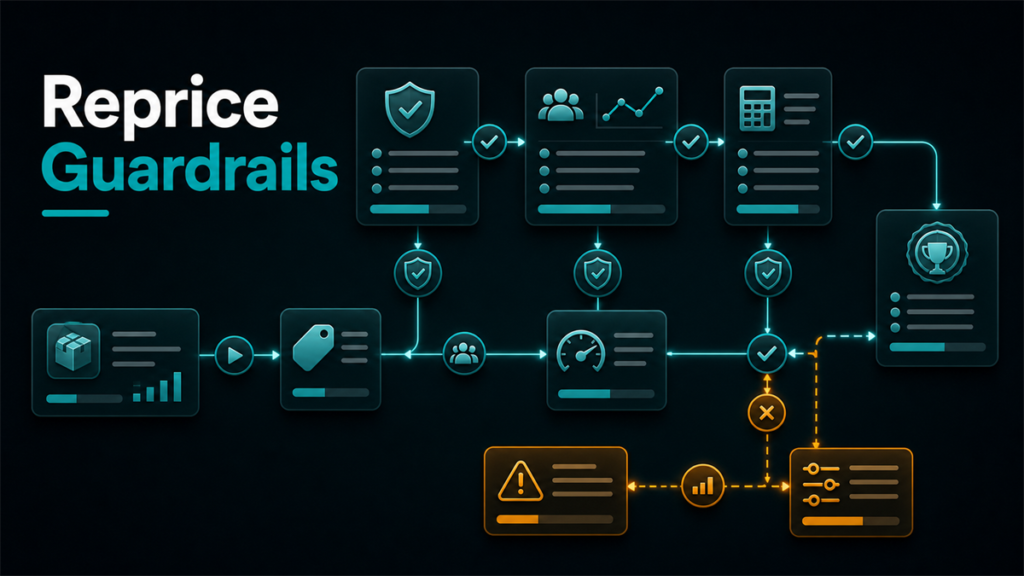
- Repricing should always sit inside clear floor and ceiling rules. Without them, the tool can protect sales volume at the expense of margin.
- Walmart Buy Box performance is not just a pricing question. Fulfillment speed, stock reliability, and listing readiness still matter.
- Amazon-first sellers often make two mistakes on Walmart: they either underuse pricing automation entirely, or they push price too hard without fixing the rest of the offer.
What the Walmart Repricer Actually Does
Walmart Marketplace's Repricer is a pricing automation tool inside the seller ecosystem. Walmart describes it as a way to automate pricing, stay competitive, and improve Buy Box performance without manually changing prices all day. The platform also highlights features such as strategy simulation, min/max suggestions, and centralized Buy Box performance visibility.
That matters because manual pricing usually breaks down once a seller has more than a small catalog or once competition starts changing throughout the day. On Amazon, sellers often solve that with automated pricing or third-party repricers. Walmart's native Repricer serves the same core purpose: reduce manual pricing work while helping offers stay eligible for competitive placements.
The important qualifier is this: automation only follows the rules you give it. If your minimum is too low, you can still price your way into thin or negative contribution. If your maximum is unrealistic, your offers may sit invisible for long stretches. Repricer is leverage, not judgment.
Why the Buy Box Matters on Walmart
If you already sell on Amazon, you understand the importance of being the preferred offer on a shared product page. Walmart has the same practical reality. A shopper usually buys from the offer that is surfaced most clearly and most competitively. That is why Buy Box competitiveness matters so much.
Walmart also ties other growth systems to offer competitiveness. Advertising performance, conversion rate, and overall item momentum work better when the offer is consistently in front of the shopper. If your item repeatedly loses competitiveness, you are not just missing orders. You are also creating noisy data for pricing, replenishment, and ad decisions.
The mistake Amazon-first sellers make is assuming the pricing lesson is identical across both channels. It is not. Walmart shoppers, category behavior, and marketplace density differ. A price that feels "safe" on Amazon may be too slow on Walmart. A discount that looks necessary on Walmart may be unnecessary if the real issue is stock reliability or weak listing depth.
Repricer Is a Tool, Not the Strategy
The strategy comes first. Repricer only executes it.
Here is the sequence that usually works:
- Define your floor. Know the lowest price that still protects your margin after referral fees, fulfillment cost, returns exposure, and any platform-specific costs.
- Define your ceiling. This is not just a fantasy MSRP. It should reflect what the category can realistically hold.
- Separate core catalog from tactical catalog. High-volume anchor SKUs may deserve tighter pricing logic than slower or more differentiated items.
- Confirm stock stability before aggressive repricing. Dropping price on a SKU you cannot replenish cleanly often creates worse downstream problems.
- Review Buy Box performance alongside conversion and stock position, not by itself.
That last point is where sellers often go wrong. They look at pricing automation as a single-metric tool: did Buy Box share go up or down? A better question is whether the pricing rule improved profitable competitiveness.
How to Set Repricing Guardrails Safely
The cleanest rule set usually starts with a small group of principles:
1. Never let price floors come from instinct alone
Use real cost inputs. That includes item cost, expected return rate, fulfillment cost, marketplace fees, and the margin buffer you actually need. If you are using WFS on some items and seller-fulfilled flow on others, your floor may differ by fulfillment path.
2. Do not assign one rule to every SKU
Commodity items, branded items, bundles, and exclusive assortments behave differently. Sellers lose margin when they use the same repricing logic across the entire catalog just because it is faster to set up.
3. Review stock health before pushing harder on price
If a fast-moving item is already close to a replenishment gap, winning more demand through aggressive repricing can backfire. Short-term order lift is not always good inventory strategy.
4. Check whether the item has a listing problem before forcing a pricing answer
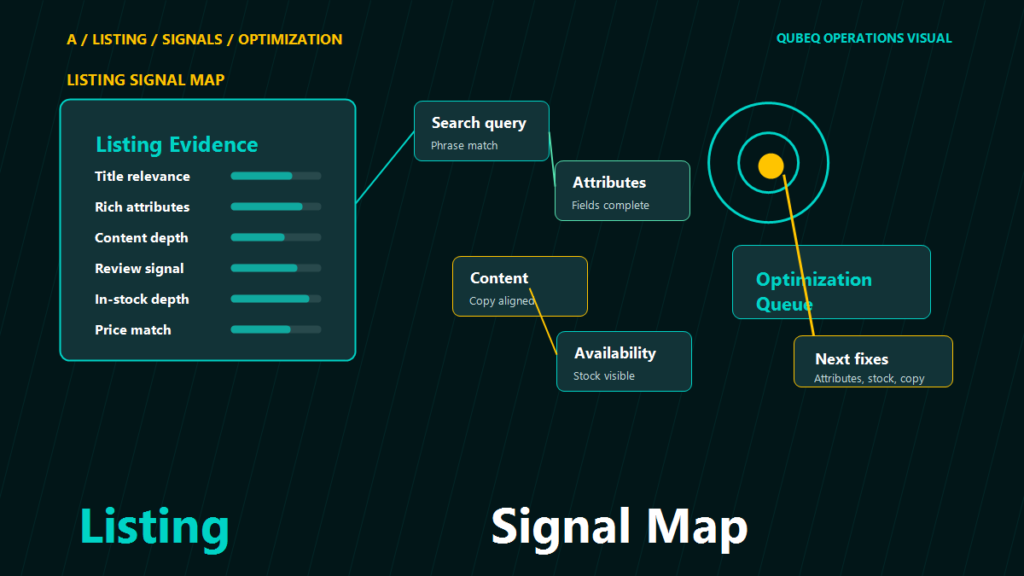
If the item has weak titles, incomplete attributes, or a thin image set, price may not be the true blocker. You can automate prices all you want and still underperform.
5. Revisit rules when the market changes
Walmart's own messaging around Repricer emphasizes flexibility and adjustment. That is the right mindset. The rule that made sense when a product had two comparable offers may not make sense when the assortment expands or when cost inputs change.
The Most Common Walmart Pricing Mistakes
Treating price as the whole offer
Competitive pricing matters, but it is not the only thing the shopper or platform sees. Fast delivery, in-stock reliability, and product-page quality still shape the result.
Copying Amazon price logic into Walmart
Amazon data can inform your instincts, but it should not automatically set your Walmart rules. Walmart categories often need their own pricing rhythm.
Running repricing without margin discipline
This is the most expensive mistake. Sellers automate first, then discover later that the "competitive" rule was slowly training the catalog into weak contribution.
Repricing unstable stock
If your inbound timing is inconsistent, price cuts can create avoidable stockouts and harder replenishment pressure.
Ignoring what happens after you win
Winning the Buy Box on a weak listing or on a product with poor return economics does not automatically create a good business result.
A Practical Weekly Review Routine
You do not need a massive pricing department to manage Walmart well. You do need a repeatable routine.
Each week, review:
- items with the largest price changes
- items where Buy Box performance improved but margin dropped
- items losing competitiveness despite aggressive pricing
- items with low stock where price pressure should be reduced
- items with weak conversion where the issue may be merchandising, not pricing
This routine keeps Repricer from becoming a black box. Good automation reduces manual effort, but it should not remove operator awareness.
Scenario: The Seller Who Solved the Wrong Problem
A seller moved a competitive household SKU onto Walmart and quickly noticed slow sales. The first instinct was to push price harder. Repricer was configured with a very tight floor and aggressive logic, and within days the item became more competitive.
Orders improved, but margin weakened more than expected. A deeper review found that the product had two separate issues. First, the listing itself was lighter than the Amazon version, with weaker attribute coverage. Second, the seller was already close to a replenishment gap. Repricing increased demand before the stock system was ready.
The fix was not to abandon Repricer. The fix was to use it correctly. The seller widened the floor, improved the item data, and aligned the rule with actual replenishment capacity. Competitiveness stayed healthier, and the item became easier to operate profitably.
FAQ
Is Walmart Repricer free?
Walmart positions Repricer as a native Marketplace tool. Sellers should still confirm current access and feature availability inside Seller Center because interface access can change.
Will Repricer automatically win the Buy Box?
No. It can help you stay price-competitive inside the rules you set, but it does not guarantee Buy Box control.
Should I use the same pricing floor on Walmart and Amazon?
Not automatically. Fees, fulfillment path, category behavior, and competitive density can differ by channel.
Is WFS part of Buy Box strategy?
It can support a stronger offer position because faster, more reliable fulfillment helps competitiveness. But WFS is not a substitute for sound pricing and stock control.
How often should I review repricing rules?
Review them whenever cost inputs, inventory position, or market conditions change, and run a weekly review at minimum for active SKUs.
The Better Goal Is Stable, Profitable Competitiveness
The best Walmart pricing strategy is not "lowest possible." It is controlled competitiveness. Repricer helps you move faster, but only if your guardrails are strong enough to protect contribution and your catalog is healthy enough to convert the demand you win.
If your team is expanding beyond Amazon and needs help turning pricing, catalog quality, and channel operations into one clean system, Qubeq can help with other marketplace operations and the broader handoff between catalog, fulfillment, and revenue decisions. If you want a second set of eyes on where pricing automation fits in your Walmart workflow, start here.