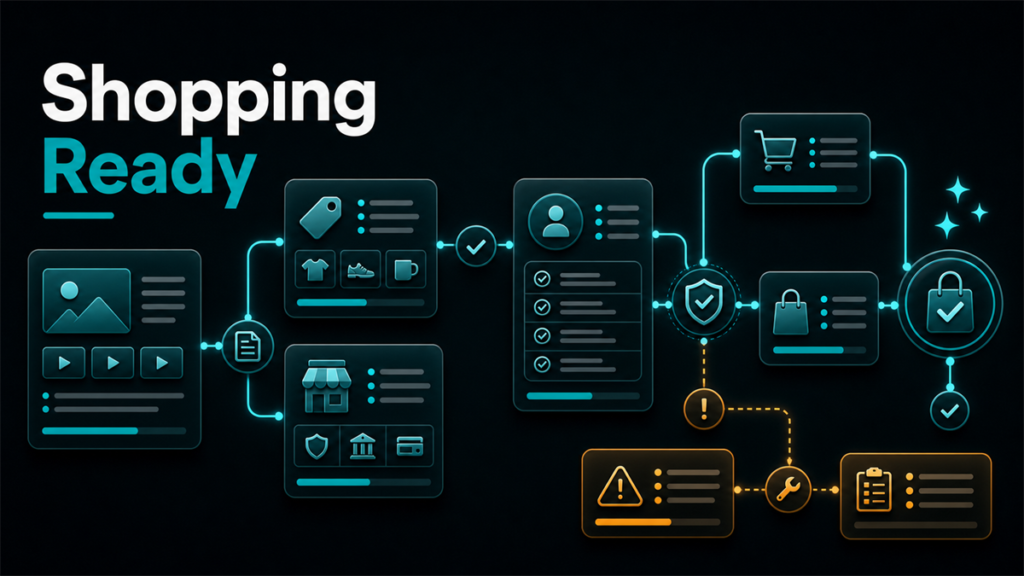
YouTube Shopping is easier to manage when the product system behind the content is already clean. Real youtube shopping readiness means product data, channel setup, tagging workflow, and landing pages are all stable enough that shoppable content does not create avoidable friction.
Key Takeaways
- Shoppable content works best when product data and store operations are already reliable.
- Product tagging is only one part of readiness; the customer path after the click matters just as much.
- Merchants should align catalog, merchandising, and content teams before pushing shopping deeper into videos.
- Weak landing pages and thin product detail can reduce the value of any shoppable surface.
- A limited initial rollout is usually safer than trying to make every product shoppable immediately.
What YouTube Shopping Readiness Means
At the surface level, YouTube Shopping looks like a content feature. In practice, it is a commerce system. A merchant is connecting product information, store setup, and content operations so viewers can move from interest to purchase with less friction.
That means readiness includes:
If one of those layers is weak, the shopping experience feels less intentional.
The Readiness Layers That Matter Most
Product selection
Not every product deserves to be tagged first. Products with clear value, stable inventory, and strong detail pages are usually better launch candidates than complex or unstable items.
Product data quality
If titles, images, variants, or pricing information are inconsistent, the shopping layer gets harder to trust. Shoppable surfaces do not make weak product records stronger.
Landing-page clarity
A customer who clicks from content into a weak product page often drops. The page has to match the promise made in the video or channel surface.
Team coordination
Someone has to decide which products are featured, who updates them, and what happens when stock changes. Without that discipline, content and catalog drift apart.
What Goes Wrong Most Often
Too many products are tagged too early
A broad launch can create avoidable mismatches between content and actual inventory.
Content and commerce teams are not using the same logic
One side is thinking about story and audience while the other is thinking about variants, inventory, and checkout. Both matter.
The merchant treats shopping tags like decoration
Tags should support buyer intent, not just sit on content because the feature exists.
A Practical YouTube Shopping Checklist
- Start with products that have strong detail pages and stable inventory.
- Confirm the channel connection and product eligibility are in place.
- Review whether tagged products fit the content naturally.
- Check the landing-page and purchase path before scaling.
- Build a routine for updating tags when products change.
Scenario: The Video Was Good but The Shopping Layer Was Loose
A merchant had a capable content team and started leaning into shoppable video quickly. The creative work was strong, but the tagged products were not chosen with much operational discipline. Some landed on thin product pages, some had shifting availability, and some did not fit the viewer intent of the content itself.
The problem was not YouTube Shopping. It was the missing bridge between content and commerce operations. Once the team narrowed the featured assortment and aligned tagging rules with stronger products, the channel felt more coherent.
FAQ
Is YouTube Shopping only a content feature?
No. It depends on connected commerce systems, product readiness, and purchase-path quality.
Should every product be tagged?
Usually no. Start with products that are stable, clear, and well-supported by the landing page.
Do landing pages matter if the content is strong?
Yes. The click still has to resolve into a convincing buying experience.
Is product data still important here?
Yes. Product data and content quality work together, not separately.
What is the main operational mistake?
Letting content and catalog decisions drift apart once shoppable tagging begins.
Shoppable Content Needs A Reliable Commerce Backbone
YouTube Shopping becomes more useful when it is supported by clean products, intentional merchandising, and a buying path that actually feels ready. If your team is balancing that work across several channels, Qubeq can help you think through the broader other marketplace operations. If you want a second set of eyes on the workflow, contact us here.