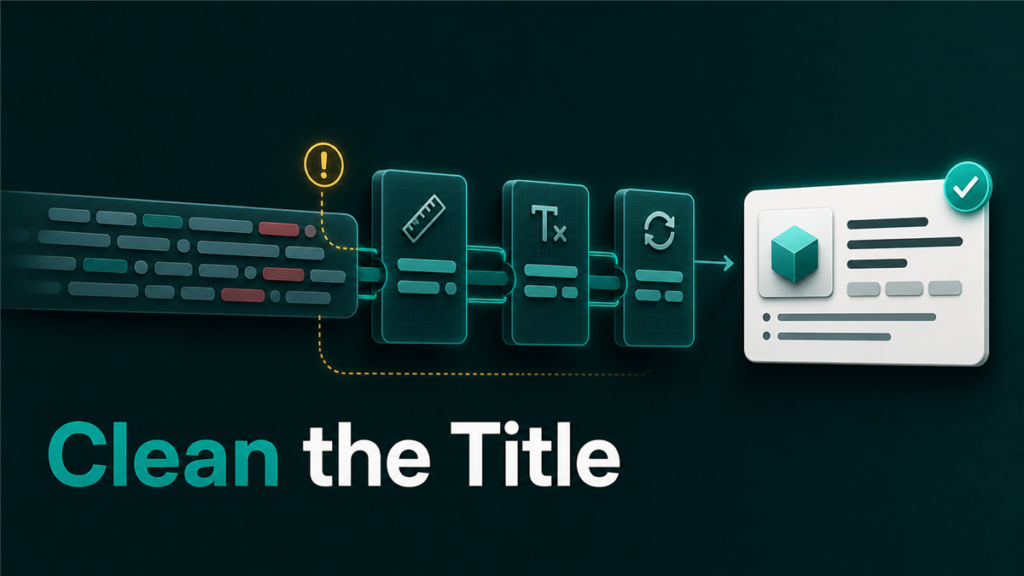
Amazon title suppression happens when a product title fails Amazon's listing quality or title requirement checks and the listing loses normal search visibility or title editability. Sellers should not fix Amazon title suppression by stuffing in new keywords. The safer fix is to identify the exact title rule, clean the title, verify category requirements, and update the listing through the correct catalog path.
Key Takeaways
- Title suppression is usually a listing quality problem, not only an Amazon SEO problem.
- Amazon title requirements can include length limits, character restrictions, repetition rules, and category-specific standards.
- A title change may be blocked by policy, contribution authority, product type, or locked catalog data.
- The best title fix is concise, accurate, customer-readable, and aligned with the product's category.
- Sellers should verify current Amazon rules before changing titles at scale.
What Is Amazon Title Suppression?
Amazon title suppression is a listing visibility or quality issue tied to a product title that does not meet Amazon's requirements.
In Seller Central, sellers may see the listing flagged, search-suppressed, or blocked from normal edits. Sometimes the title appears live but does not behave as expected in search. In other cases, Amazon may suggest or apply corrections through a listing quality workflow.
Title suppression can affect:
- Organic search visibility
- Customer trust
- Listing quality health
- Catalog edit workflows
- Parent-child consistency
- Brand-controlled content changes
The important point is that a title problem should be diagnosed before editing. A fast rewrite can create a new catalog conflict if the seller does not understand the rule that triggered the issue.
Why Does Amazon Suppress or Reject Product Titles?
Amazon suppresses or rejects product titles when titles violate requirements, reduce listing quality, or create inaccurate product information.
Common causes include:
- Title too long for the category or current policy
- Repeated words used too many times
- Restricted special characters
- Promotional language such as "best" or "hot item"
- Seller name used incorrectly
- Keyword stuffing that makes the title hard to read
- Mismatch between title and product packaging
- Brand, model, size, color, or quantity not represented clearly
- Duplicate or conflicting catalog contributions
Amazon announced updated product title requirements effective January 21, 2025, including restrictions for most categories around title length, certain special characters, and repeated words. Because title rules can change and can vary by category, sellers should verify the current Seller Central help page before a large title cleanup.
How to Diagnose an Amazon Title Suppression Issue
The correct fix depends on the exact reason the title is suppressed or rejected.
Use this diagnosis workflow:
- Open Manage Inventory or the relevant listing quality area in Seller Central.
- Confirm whether the issue is search suppression, title edit rejection, or title overwrite.
- Copy the exact warning message or processing report error.
- Check the current live title and the intended replacement title.
- Review the title against Amazon's current title requirements.
- Check category-specific title standards if the product type has stricter rules.
- Confirm whether the seller has contribution authority for the ASIN.
- Update one controlled set of titles first instead of changing the whole catalog.
- Verify that the title change appears live and the suppression clears.
If the seller does not have contribution authority, a clean title may still fail to apply. That is a catalog contribution problem, not a copywriting problem.
What Should a Compliant Amazon Product Title Include?
A compliant Amazon product title should describe the product clearly, accurately, and concisely.
The exact format depends on the product category, but many good titles include:
- Brand name, if accurate and allowed
- Product type
- Key model or style identifier
- Main differentiating feature
- Size, color, count, or quantity when relevant
- Material or compatibility when essential to the buying decision
Avoid titles that read like a keyword dump. A customer should understand the product in one scan.
Weak title pattern:
Brand Name Premium Best Hot Sale Waterproof Travel Backpack School Bag Hiking Camping Laptop Bag Gift for Men Women
Cleaner title pattern:
Brand Name Waterproof Travel Backpack, 25L, Charcoal, Padded Laptop Sleeve
The cleaner title still contains searchable information, but it is easier for customers and safer for listing quality.
Amazon Title Suppression Fix Checklist
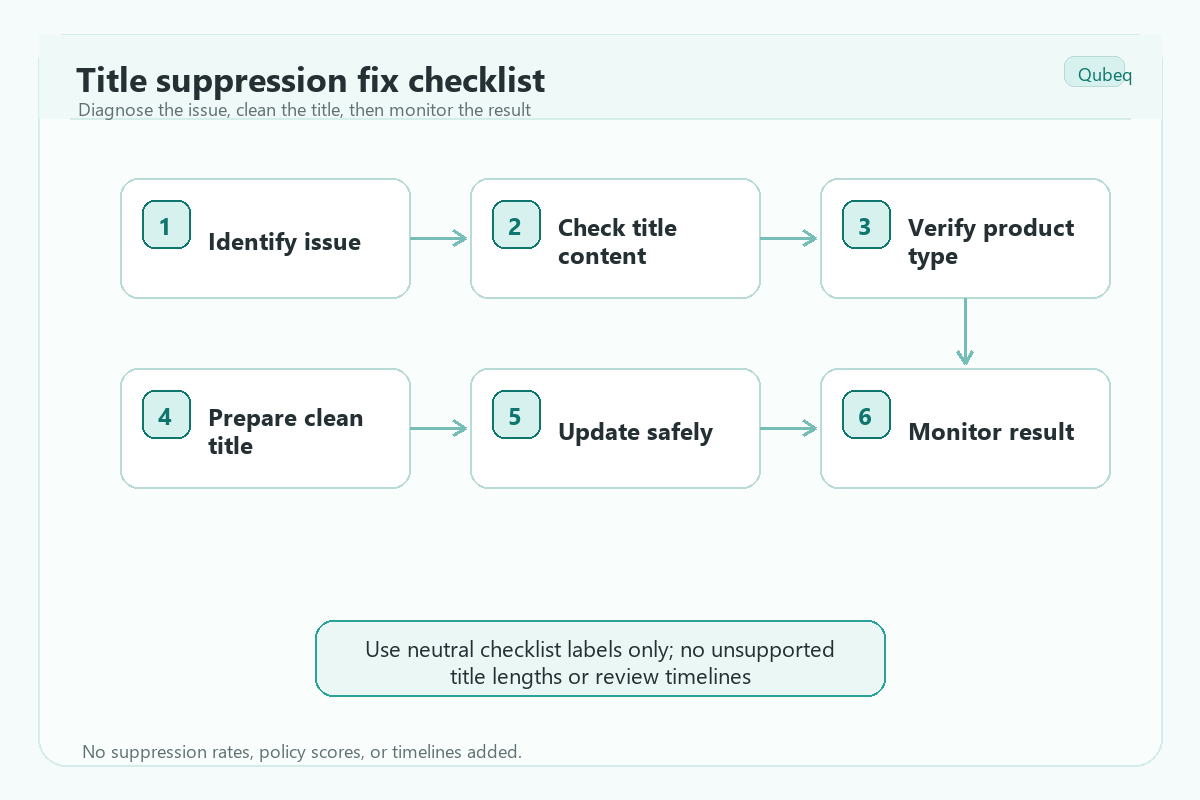
Title suppression fixes should be controlled, documented, and verified.
Use this checklist:
- Save the current title and affected ASIN list.
- Record the exact suppression message or title warning.
- Remove restricted characters or promotional terms.
- Cut repeated words unless the repetition is genuinely required.
- Shorten the title to fit the current category requirement.
- Confirm brand, product type, quantity, color, and size are accurate.
- Match title claims to product packaging and product detail evidence.
- Update a small test group first.
- Check whether the title change applies live.
- Confirm the suppression clears before scaling changes.
Do not change titles across hundreds of ASINs without testing. A bulk cleanup can create a new wave of rejections if the rule interpretation is wrong.
When Title Suppression Is Actually a Catalog Authority Problem
Sometimes the title is fine, but Amazon will not accept the seller's title contribution.
This can happen when:
- Another contributor controls the title.
- Brand Registry data conflicts with the seller's update.
- Amazon locked the attribute after a catalog review.
- The product type or brand field is inconsistent.
- The seller is trying to update the wrong ASIN or child variation.
In these cases, rewriting the title again will not solve the issue. The seller needs evidence and a clear Seller Central case.
Useful evidence may include:
- Product packaging photo
- Manufacturer website or product document
- UPC or GTIN evidence
- Brand Registry evidence, if applicable
- Current live title and requested title
- Explanation of why the current title is inaccurate
The support request should ask for a specific correction. Avoid broad language like "fix my listing." Use a clear request such as: "Please review the product title contribution for ASIN [ASIN]. The current title is inaccurate because [reason]. The requested title is [title], supported by [evidence]."
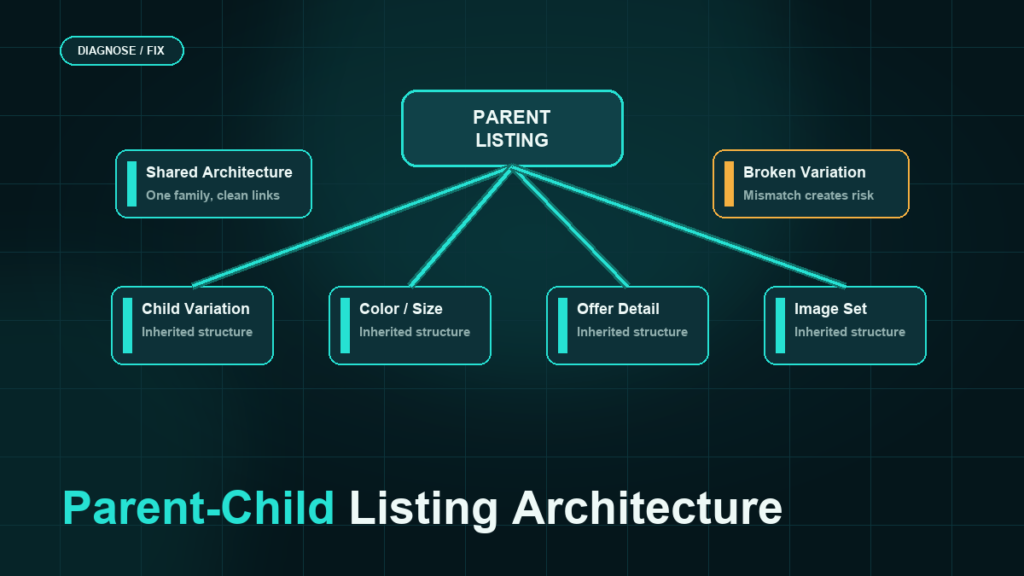
Title Suppression and Parent-Child Variations
Title suppression can spread confusion across a variation family if parent and child titles are inconsistent.
For variation listings, check:
- Parent title is broad enough to describe the family.
- Child titles include accurate variation attributes when required.
- Size, color, flavor, or count values match the child attributes.
- The title does not claim a feature that only one child has.
- The same child is not attached to conflicting parent structures.
If one child ASIN is suppressed, do not assume every child needs the same title change. Diagnose the child attribute, product type, and variation theme first.
Mini-Scenario: The Title Fix That Did Not Apply
A brand cleans up 40 titles after seeing listing quality warnings. The new titles are concise, accurate, and under the visible length limit. After the update, 15 titles apply, 20 stay unchanged, and five return errors.
The team first assumes Seller Central is delayed. A deeper review shows three different issues: some titles were blocked by contribution authority, some failed because the product type had stricter requirements, and some child ASINs had variation attribute mismatches.
The fix is to separate the ASINs by failure type. Clean titles are only one part of the correction. The catalog evidence and product type rules decide how each group should be handled.
FAQ
Does Amazon title suppression remove my listing?
Not always. Title suppression may reduce search visibility or create listing quality issues while the offer remains active. The exact impact depends on the warning and account context.
What is the safest Amazon title length?
The safest title length depends on the category and current Amazon requirements. Amazon has communicated a 200-character limit for most categories in its 2025 title requirement update, but sellers should verify current category rules before publishing changes.
Can I repeat a keyword in an Amazon title?
Repeated words can trigger title problems under Amazon's updated requirements, with exceptions for certain common words. Keep titles readable and avoid repeating the same keyword for ranking manipulation.
Why did Amazon change my title automatically?
Amazon may use catalog rules, contribution authority, brand data, or listing quality workflows to change or reject title updates. The seller should compare the live title, submitted title, and contribution evidence.
Should I add more keywords after title suppression clears?
No. Fix the compliance and clarity issue first. If the title is readable and accurate, use bullets, backend search terms, and content quality to support SEO without making the title risky again.
Fix the Title, Then Protect the Catalog
Amazon title suppression is not just a copywriting problem. It is a catalog quality problem that can involve policy rules, product type, contribution authority, and variation structure.
If your team is dealing with title suppression, title overwrites, or listing quality warnings across multiple ASINs, Qubeq can audit the catalog and separate copy issues from deeper catalog authority problems before your team makes bulk edits.