Amazon's AI shopping assistant, which Amazon has been developing under the Rufus name and is positioning as Alexa for Shopping, pulls answers to shopper questions directly from product content. Sellers whose listings can't deliver a clear, direct answer to a natural-language shopping query get passed over, not because of keyword ranking gaps, but because the content isn't structured to answer the question at all. Alexa for shopping product content readiness is a different discipline from standard listing SEO, and the checklist looks different.
Key Takeaways
- Amazon's AI shopping assistant (referred to here as Alexa for Shopping, previously known as Rufus) draws answers from product titles, bullets, descriptions, A+ Content, structured attributes, Q&A, and reviews.
- Standard listing SEO optimizes for keyword match and search rank. AI shopping readiness optimizes for answer confidence: can the assistant extract a direct, accurate response to a shopper's spoken or typed question?
- Bullets written as vague marketing statements fail AI queries. Bullets written as direct answers to real shopping questions pass.
- Structured attributes are the primary source for comparison and filter queries. Incomplete attributes leave the assistant without usable data for those queries.
- Q&A, review content, and image coverage all function as answer signals. They fill gaps when listing copy is thin or ambiguous.
- Verify the current official name and feature scope of Amazon's AI shopping assistant before publishing any seller-facing content, as Amazon has been active in evolving both.
What Is Alexa for Shopping and Why Does It Change the Listing Problem?
Alexa for Shopping is Amazon's AI-powered shopping assistant. Amazon developed the assistant under the Rufus name beginning in 2023 and has described a direction toward integrating it more broadly under the Alexa brand. Based on current Amazon coverage, the assistant is designed to help shoppers research products, compare options, and make purchasing decisions through a conversational interface, within the Amazon app and on Amazon's website.
The shift this creates for sellers is specific. Traditional Amazon search works on keyword match: the algorithm looks for alignment between what a shopper typed and the text in the listing. Sellers optimized for that model by loading titles and bullets with high-volume search terms.
AI shopping works differently. A shopper might ask: "What's a good protein powder that mixes well and doesn't have a chalky texture?" The assistant needs to identify products that match that description and explain why. If the listing says "premium quality protein with great taste," the assistant has nothing to work with. If the listing says "mixes completely in 30 seconds with no clumping, tested in water and milk," the assistant has something it can use.
This is the core distinction. Listing SEO asks: does this content contain the right keywords? AI shopping readiness asks: does this content contain the right answers?
Both matter. But the content decisions are different, and sellers who treat AI shopping readiness as the same task as keyword optimization will underperform on both.
Note: Verify the current official name of the assistant and the surfaces it operates on before publishing. Amazon has been active in naming and feature changes, and any claims about specific capabilities should be confirmed against current Amazon About Amazon posts or Seller Central guidance.
What Data Does the AI Shopping Assistant Draw From?
Based on current Amazon coverage, the AI shopping assistant draws from the product content sellers provide in their listings, as well as customer-generated signals.
The primary content sources are:
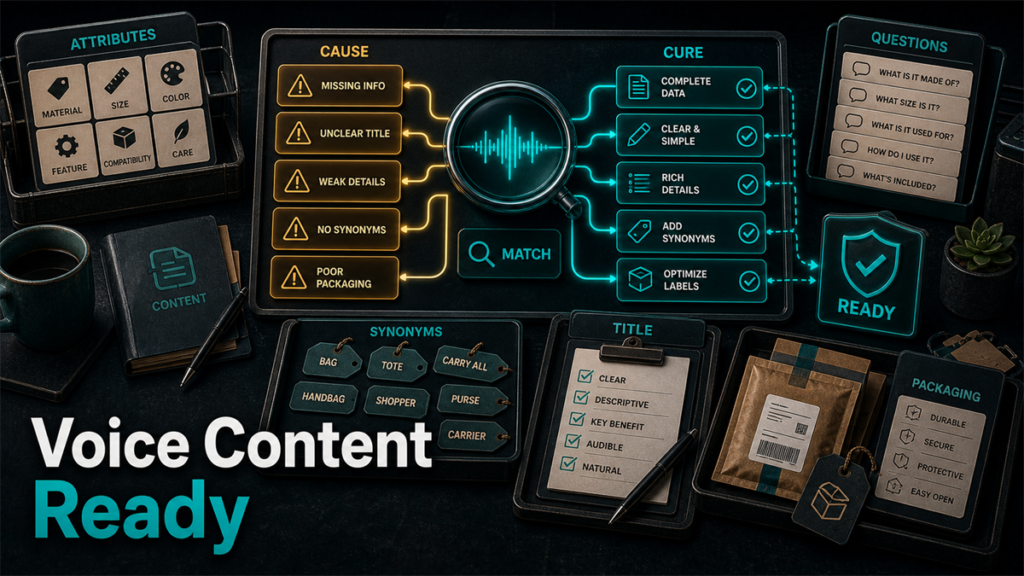
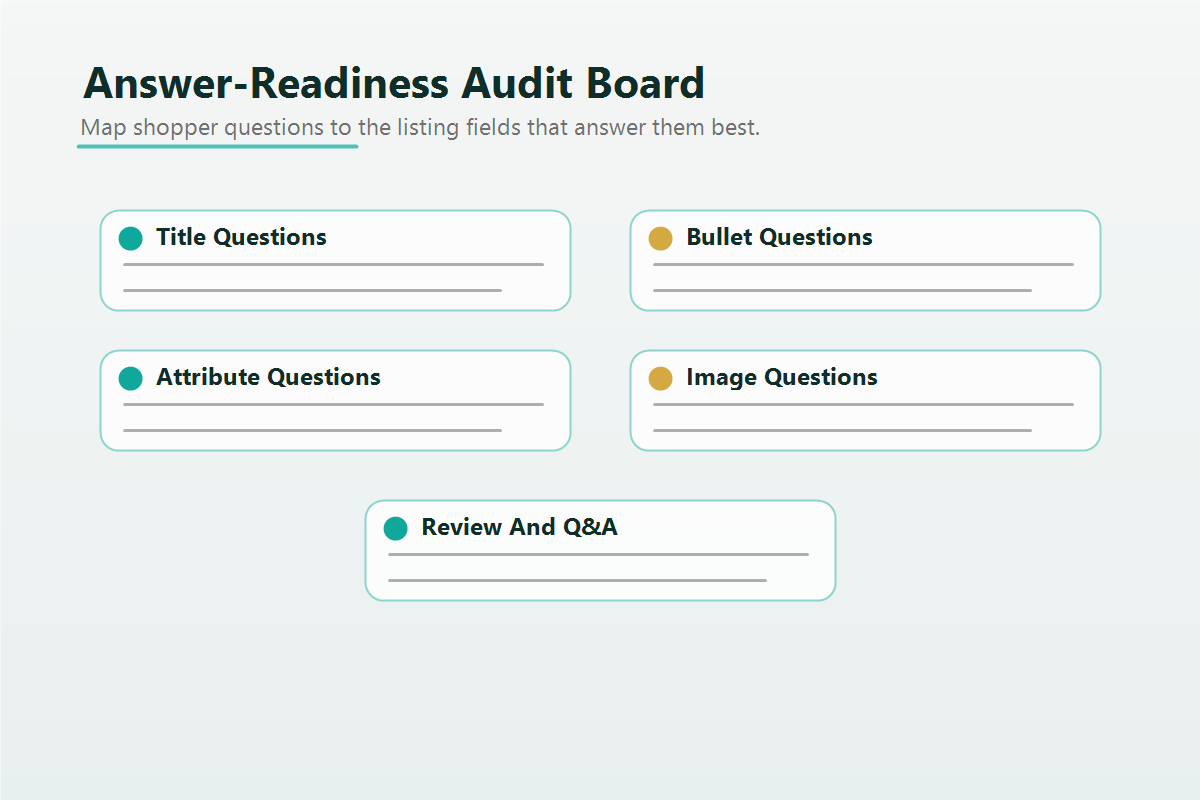
Product title. The title is the first signal. It needs to be accurate and complete, not keyword-stuffed. A title that reads clearly tells the assistant what the product is at a basic level.
Bullet points. Bullets are where most of the answer potential sits. Amazon has indicated that the assistant pulls from bullet content when answering questions about product features, use cases, and compatibility. The way bullets are written determines whether that content is usable.
Product description. The description provides context the bullets don't cover: usage guidance, detailed specs, background on the product.
A+ Content. Amazon has indicated that A+ Content is indexed and visible to the assistant. Sellers who have invested in comparison modules, spec charts, and detailed feature sections in A+ Content are building an additional answer layer.
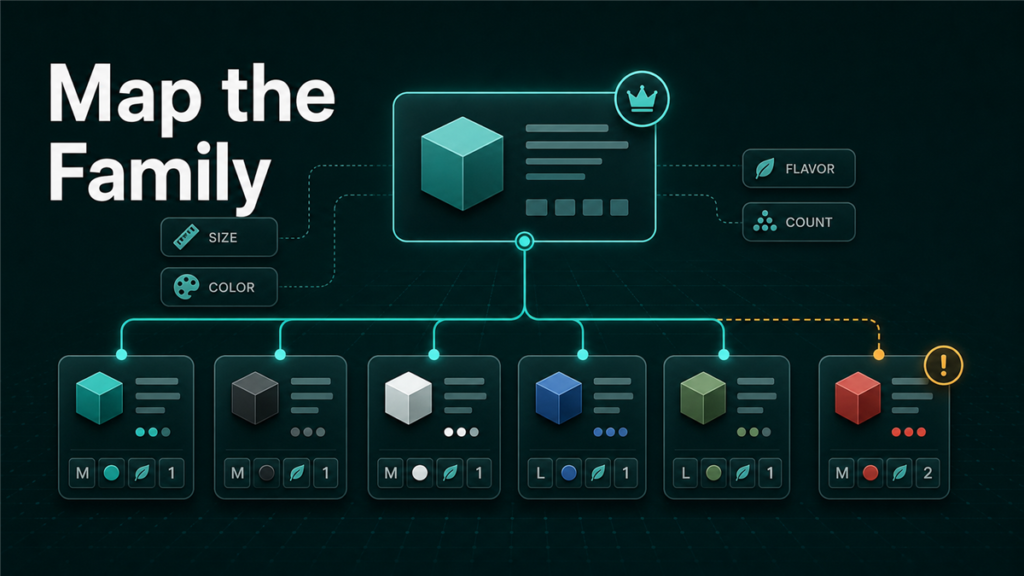
Structured attributes and product type data. Structured attributes, the backend fields in a listing like material type, compatible devices, item dimensions, age range, and similar fields, are the primary source for comparison queries. When a shopper asks "compare these two products on battery life," the assistant needs structured data to give a useful answer.
Customer questions and answers. The Q&A section is an active answer signal. Questions that customers have already asked, and answers from the brand or other customers, provide the assistant with resolved queries it can reference.
Customer reviews. Reviews feed sentiment and specific detail signals. If reviews repeatedly mention that a product is easy to assemble or that a sizing runs small, those patterns become part of the product's answer profile.
Sellers who leave any of these layers thin are reducing the surface area of usable answers the assistant can return.
How AI-Answer-Ready Bullets Differ From Keyword Bullets
This is the most practical content change sellers can make.
Keyword-optimized bullets typically look like this:
> Premium stainless steel water bottle | BPA-free | Perfect for gym, hiking, travel | Wide mouth design | 32 oz capacity
That content includes the primary keywords. It will support traditional search rank. But if a shopper asks the AI assistant "does this bottle fit in a car cup holder," the assistant has nothing to work with.
An AI-answer-ready version of the same bullet addresses real shopping questions directly:
> Fits standard car cup holders and most gym bag side pockets. The 3.5-inch base diameter clears the 3.3-inch cup holder standard in most US vehicle models. Lid included, no separate purchase needed.
The second version contains specific dimensions. It answers a question a real shopper would ask. It also contains the keyword signals naturally because the answer requires specific language.
The process for rewriting bullets this way starts with the actual questions shoppers ask. Look at:
- The product's Q&A section for questions that keep coming up.
- The "Customers also ask" section on the product page.
- Reviews that mention confusion or comparisons.
- The questions that come into customer service.
Take the top five to eight questions for each product and confirm that at least one bullet in the listing provides a direct, extractable answer to each question. If a question has no answer anywhere in the listing content, either add a bullet or add a Q&A entry.
Why Structured Attributes Are the AI's Comparison Layer
Structured attributes are the backend data fields assigned to a product listing through Seller Central or a flat file. For most product types, Amazon provides dozens of optional attribute fields beyond the required minimum. Many sellers fill only the required fields and leave the optional attributes blank.
For AI shopping, this is a significant gap. When a shopper asks the assistant to help compare products, or asks a filtering question ("show me waterproof options under $40 in size medium"), the assistant's primary source is structured attribute data, not bullet text.
Consider a shopper asking: "Which of these backpacks has a laptop sleeve that fits a 15-inch MacBook?" If the laptop compatibility attribute in the listing is blank, the assistant cannot answer that question. The answer might be in the bullets, but structured extraction from free-form bullet text is less reliable than a direct attribute value.
The practical fix is an attribute audit. Pull the current listing data in a flat file and identify which optional attributes are blank for each product type. Fill in every relevant optional attribute with accurate data. Pay particular attention to:
- Dimensional data (height, width, depth, weight)
- Material, fabric, or component specifications
- Compatibility fields (device type, vehicle fit, age range, size range)
- Certifications (food-safe, child-safe, waterproof rating)
- Pack quantity and unit configuration
- Color and finish specifications beyond the primary color field
Complete attribute coverage does not guarantee AI shopping placement, but incomplete attributes remove the product from consideration for the filter and comparison queries where attributes are the direct input.
Images, Q&A, and Reviews as Answer Signals
Three content layers that sellers sometimes treat as secondary are direct answer contributors.
Images. The AI shopping assistant operates in a visual product environment. While the assistant processes text content to generate answers, shoppers using the assistant are also evaluating images. Images that show the product in use, demonstrate scale, reveal packaging details, and clarify fit or compatibility reduce the questions shoppers need to ask. An image showing a water bottle next to a car cup holder answers a question that might otherwise go unanswered in the listing copy.
For AI shopping readiness, the image set should cover: the product alone on white, the product in use in its primary context, a scale reference image, a detail or callout image for key features, and a comparison or spec callout image if the product has differentiating specs.
Q&A. Sellers who actively manage the Q&A section are building a structured FAQ that the AI assistant can reference. Answer every unanswered customer question. Flag repeat questions as candidates for bullet point updates. Seed the Q&A section with questions that cover the most common shopping decisions for the product category.
Reviews. Sellers cannot write reviews, but they can respond to reviews and use review patterns to identify content gaps. If multiple reviews mention that buyers were confused about compatibility, that is a direct signal that the listing needs a more specific compatibility answer. Reviews that describe specific use cases or mention specific product details in positive terms confirm that those details are meaningful to buyers.
A Practical Readiness Checklist: Eight Steps to Audit a Listing for AI Shopping
Run this checklist for each product that represents significant revenue or category competition.
- Pull the live listing and flat file. Confirm the current state of the title, bullets, description, A+ Content status, and structured attribute completeness.
- Read the Q&A section. List every question that has no answer or has only a thin answer. Mark questions that a bullet should answer but currently doesn't.
- Read the 20 most recent reviews. Note any confusion, comparison requests, or missed expectations that point to content gaps.
- Check each bullet against the question test. For each bullet, ask: what customer question does this answer? If no question maps to it, the bullet is decoration. Rewrite it to answer a real question.
- Audit structured attributes. Export the flat file for the product type. Identify blank optional fields. Fill every relevant one with accurate data.
- Review the image set. Confirm you have: clean product image, in-context use image, scale reference, detail or feature callout, spec or comparison callout if applicable. Flag gaps.
- Check A+ Content. If A+ Content exists, confirm that the comparison module and spec section cover the same questions identified in steps 2 and 3. If A+ Content does not exist, note it as a gap.
- Add Q&A entries for unanswered questions. Post brand answers to any unanswered questions identified in step 2. For high-volume products, seed additional questions covering the most common category shopping decisions.
What This Looks Like in Practice
A kitchenware brand managing roughly 40 SKUs across knife sets, cutting boards, and cookware sets ran a content review after noticing that customer questions about material safety, compatibility with induction cooktops, and dishwasher safety were coming in repeatedly through customer service. When the team audited the listings, the questions were not answered in the bullets. The bullets described the products in general marketing terms: "professional-grade quality," "ideal for everyday cooking," "beautiful design."
The team rewrote the bullets for the top 15 SKUs to answer the five most common pre-purchase questions directly. They also filled in material, safe-temperature, and compatibility attributes that had been left blank on most SKUs. Q&A entries were added for each unanswered question identified in the review.
No revenue claim is attached to this scenario. The point is structural: the gap between how the listing was written and what a shopper asking a direct question needed was large, and it was entirely fixable through content edits and attribute completion.
FAQ
Is AI shopping content readiness the same as standard Amazon listing SEO?
No. Standard listing SEO focuses on keyword match and search rank within Amazon's traditional search algorithm. AI shopping readiness focuses on whether the assistant can extract a direct, confident answer from the product content when a shopper asks a natural-language question. The two disciplines overlap because accurate, detailed content helps both, but the writing approach and audit priorities are different. Keyword-heavy bullets that don't answer real questions will underperform for AI shopping even if they rank well in traditional search.
Which part of a listing matters most for AI shopping readiness?
Structured attributes and bullets are the highest-leverage areas. Structured attributes power comparison and filter queries. Bullets are the primary source for feature and use-case questions. Q&A provides a direct FAQ layer that the assistant can reference. None of these replaces the others; all four layers (attributes, bullets, Q&A, and A+ Content where available) contribute to full answer coverage.
Does A+ Content help with AI shopping?
Based on current Amazon coverage, A+ Content is indexed and available to the AI shopping assistant. Comparison modules and detailed spec sections in A+ Content create an additional answer layer beyond the bullets and attributes in the base listing. Sellers who have not built A+ Content for competitive products are leaving that layer empty.
Should sellers write bullets specifically for the AI assistant and not for search?
No. The goal is bullets that do both. A bullet that directly answers a common shopper question in specific language also contains the natural keyword variants that support search rank. The error to avoid is writing bullets that contain keywords but answer no real question. Rewriting bullets for direct-answer clarity typically improves both traditional search relevance and AI shopping signal quality.
How often should sellers re-audit listings for AI shopping readiness?
Amazon is actively developing the AI shopping assistant, and the surfaces it operates on and the data it draws from may change. A full audit at least once every six months is reasonable for high-revenue SKUs. Monitor the Q&A section and customer service contacts continuously because they are real-time signals of unanswered buyer questions.
What is the current official name of Amazon's AI shopping assistant?
Amazon has referred to the assistant as Rufus and has indicated a direction toward integrating it as Alexa for Shopping. Verify the current official name and feature scope against Amazon's About Amazon blog or current Seller Central guidance before publishing any seller-facing content, as this has been an active area of change.
Get the Content Layer Right Before AI Shopping Becomes the Default Interface
Amazon's AI shopping assistant is already active in the app and on the site. Shoppers are using it to ask questions that your product content either answers or doesn't. The listings that answer those questions clearly, through direct-answer bullets, complete structured attributes, covered Q&A, and strong image sets, are the ones the assistant can use confidently.
If your catalog has listing content that was written for keyword density rather than direct-answer quality, or has large gaps in structured attributes across the product type, those are the first two areas to address.
Qubeq works on exactly this layer: catalog content accuracy, structured attribute completeness, and listing quality at scale across complex product catalogs. If the content audit is something your team needs help running systematically, we can review the catalog and identify the gaps. If the creative layer, A+ Content, images, and copy, needs to be rebuilt for AI-answer readiness, that's a separate service we run as well.