TikTok Shop can be a powerful sales channel, but not every product can be listed freely. Some products are prohibited entirely. Others are restricted, meaning they may be allowed only if the seller meets qualification requirements and provides the right documentation.
The important word is before. Sellers should not wait for a listing rejection to learn whether their product needs approval. A restricted-product review belongs in the product launch process.
Freshness note: Prohibited and restricted product rules plus qualification paths should be checked in current TikTok Shop policy before listing, and documentation should be ready before upload.
Key Takeaways
- Prohibited products and restricted products are not the same thing.
- Restricted products may require category-level, product-level, or invite-only qualification.
- TikTok Shop can request documentation before or after a product is live.
- Sellers should confirm category, claims, documentation, and approval status before building a campaign plan.
- A product that sells elsewhere is not automatically allowed on TikTok Shop.
Prohibited Versus Restricted Products
Source note: Sellers should check the current TikTok Shop restricted and prohibited product guidance before listing, because restricted-product qualification can depend on category, product type, documentation, marketplace, and current platform review rules.
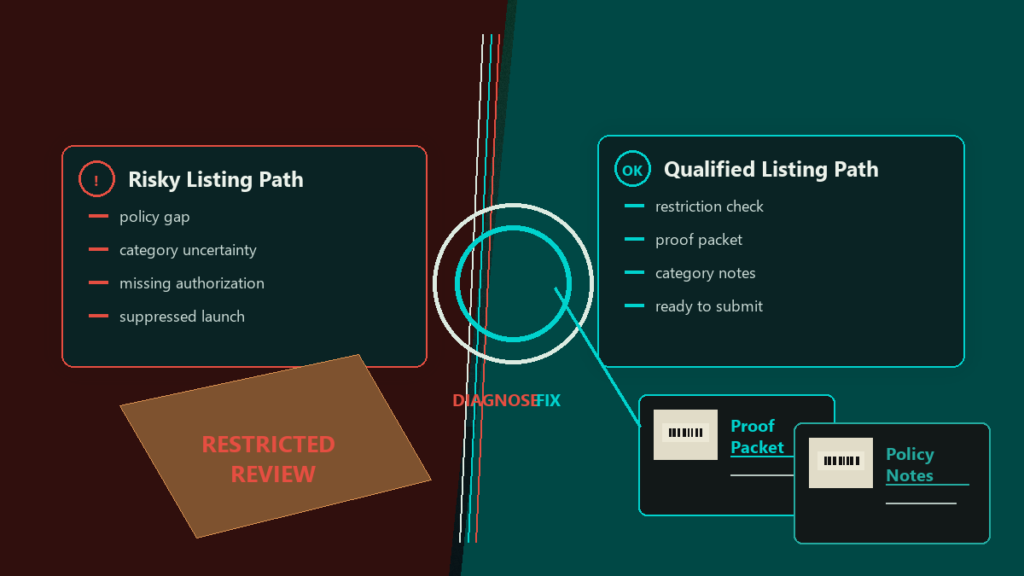
Prohibited products cannot be sold on TikTok Shop. Restricted products may be sellable, but only if the seller qualifies. This difference matters because some sellers assume a product rejection means the item is impossible to sell. In reality, it may need a category or product approval path.
The opposite mistake is more dangerous: assuming a restricted item is fine because competitors appear to sell similar products. Your listing still needs to meet current TikTok Shop requirements.
The Three Qualification Paths
TikTok Shop's restricted product policy describes different qualification levels. Category-level qualification means the seller may need approval to sell within a product category. Product-level qualification means documentation may be needed for each product. Invite-only qualification means access is limited to qualified sellers invited into that area.
For operators, the practical question is simple: does this product require permission before listing? If yes, what evidence is needed?
What Sellers Should Prepare
Start with product classification. Identify the most accurate category, not the easiest category. Misclassification can lead to rejection or enforcement.
Next, collect documents. Depending on the product, that may include brand authorization, safety documents, certificates, testing records, labels, product images, ingredient information, or other proof. Do not assume the same document works for every marketplace.
Then review product claims. Health, safety, beauty, baby, electronics, supplement, and similar claims can increase review sensitivity. Make sure the listing title, images, video scripts, and description all stay within approved language.
Operational Checklist
Before listing, ask:
FAQ
What is a restricted product on TikTok Shop?
A restricted product is not automatically treated the same as a prohibited product. It may require category, product-level, or invite-only qualification before the seller can list or keep it active.
What should sellers prepare before listing a restricted product?
Sellers should prepare product classification notes, required documentation, supplier or brand evidence when relevant, compliant listing content, and a plan to respond if TikTok Shop requests more information during review.
Can restricted-product rules vary by category?
Yes. Qualification expectations can vary by product category, documentation type, and current TikTok Shop policy. Sellers should avoid assuming that approval for one product means every similar item is cleared.
Bottom Line
TikTok Shop restricted-product qualification is not just a compliance detail. It is a launch-readiness gate. Sellers who classify products early, gather documents, and separate prohibited from restricted items reduce listing delays and avoid building demand around products that cannot safely go live.