Every Etsy listing has a shelf life, and when it ends you either renew it or let it expire. That single recurring decision quietly shapes both your fee bill and your visibility, and a lot of sellers handle it on autopilot in the literal sense, paying to renew listings whether or not the renewal does anything for them. This guide sorts out auto-renew versus manual, what renewal does and does not do for search, how to recover expired listings, and a routine that keeps listings live without burning money.
Key Takeaways
- Listings expire after a set active period; renewing restarts that clock and incurs a listing fee each time.
- Auto-renew keeps listings continuously live with no manual effort; manual renew gives you control over timing and spend but risks accidental expiry.
- Renewal is often discussed as a "freshness" lever, but its effect on ranking is modest and easy to overpay for; do not treat renewing as an SEO strategy on its own.
- Expired listings are recoverable: you can renew them back to active without rebuilding from scratch.
- The right approach scales with catalog size and margin per item, not with what worked for someone else's shop.
How Etsy Renewal Works
An Etsy listing stays active for a fixed period after it is published or renewed. When that period ends, the listing expires and stops showing to shoppers until it is renewed. Renewing restarts the active clock and charges a listing fee. The fee amount and the length of the active period are set by Etsy and can change, so confirm the current figures in your shop before building budget around them.
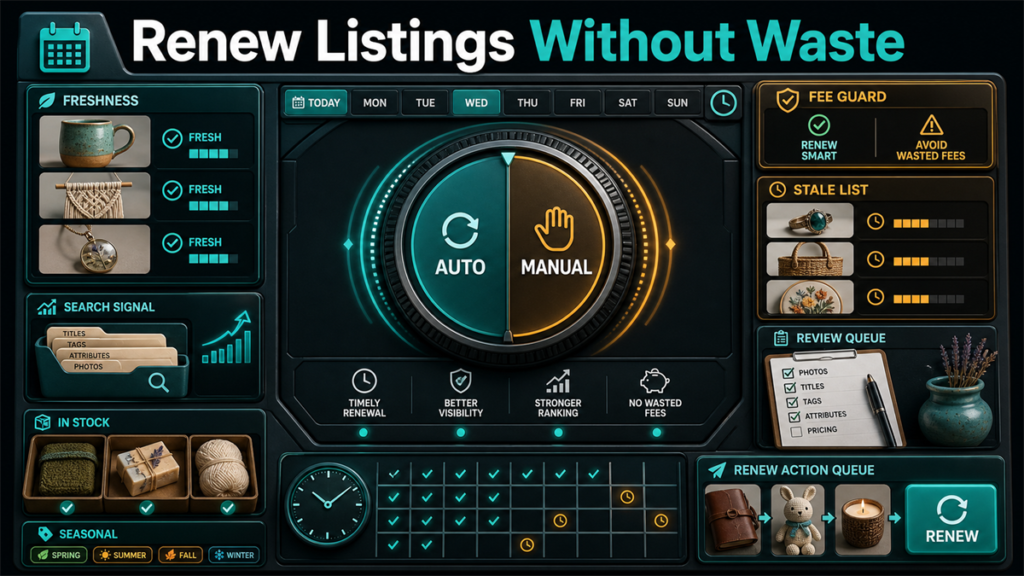
There are two ways the clock gets reset:
Both incur the same per-renewal fee. The difference is who pulls the trigger and when.
The Freshness Question, Honestly
The most common reason sellers obsess over renewals is the belief that renewing makes a listing "fresh" and boosts it in search. Be careful here. Etsy's ranking weighs many factors, and recency or listing quality may play some role, but renewing a listing purely to appear fresh is an expensive lever with an unreliable payoff. Etsy's own guidance has generally steered sellers away from renewing for ranking alone.
The practical stance: renew to stay live and to keep selling, not as a search tactic. If a listing is genuinely underperforming, your money is far better spent on the title, tags, photos, and price than on repeated renewals. Treat algorithm-and-fee specifics as things to verify against Etsy's current documentation rather than fixed rules.
Auto-Renew vs Manual: Which Fits You
Choose auto-renew when
Choose manual renew when
Many shops run a hybrid: auto-renew on proven sellers and core catalog, manual on seasonal, experimental, or low-margin listings. That captures the convenience where it pays and the control where it matters.
Recovering Expired Listings
An expired listing is not lost. It moves to your expired or inactive section and can be renewed back to active, keeping its history, reviews, and stats. So letting something expire is reversible, which is exactly why manual renew is safe if you check your shop regularly. The risk is not permanent loss; it is unnoticed downtime, where a listing sits expired and invisible while you assume it is selling.
A Renewal Routine That Does Not Waste Money
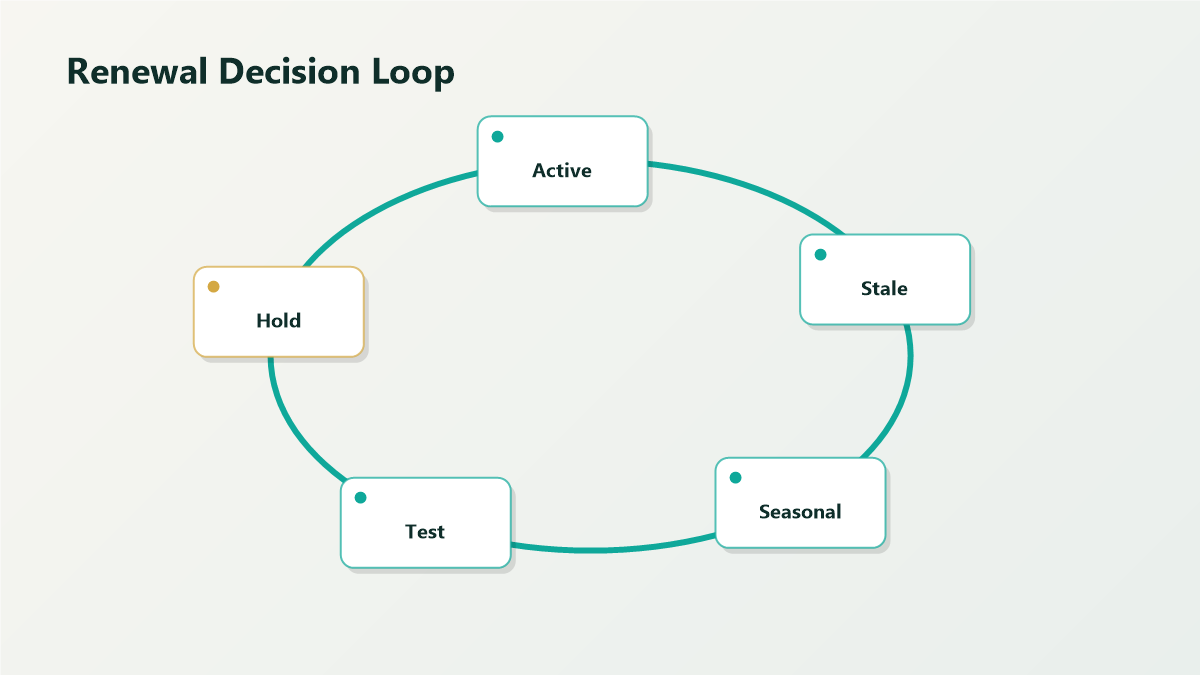
- Tag every listing as core, seasonal, or trial. This decides its renewal treatment.
- Put core, proven sellers on auto-renew so they never go dark.
- Keep seasonal and trial listings on manual, and review them on a set cadence.
- Once a month, review what auto-renewed and what it earned. Any listing that has renewed repeatedly without selling is a candidate to fix, deactivate, or move to manual.
- Before renewing a slow mover by hand, ask whether the fee is better spent improving the listing or retiring it.
- Sweep your expired section so nothing valuable sits dark by accident.
What "good" looks like: every live listing is live on purpose, your recurring renewal spend is concentrated on items that actually sell, and nothing important is sitting expired without you knowing.
Mini-Scenario: The Quietly Renewing Dead Stock
A jewelry shop with a few hundred listings ran everything on auto-renew and treated the listing fees as fixed overhead. A monthly review told a different story: roughly a fifth of the catalog had auto-renewed multiple times without a single sale, steadily charging fees for invisibility nobody was buying anyway. The owner moved those slow movers to manual, deactivated the genuinely dead ones, and reinvested a few hours into improving the photos and tags on the borderline listings. Total renewal spend dropped, and the shop's sales held, because the cuts came from listings that were not selling to begin with. The fix was not turning off auto-renew everywhere; it was knowing which listings deserved it.
FAQ
Does renewing an Etsy listing boost it in search?
Any effect is modest and unreliable, and renewing purely for ranking is an expensive bet. Improving the listing's title, tags, photos, and price is a far better use of the same money. Verify Etsy's current guidance on how recency factors in.
What happens when an Etsy listing expires?
It stops showing to shoppers and moves to your expired section. It is not deleted; you can renew it back to active and keep its history and reviews.
Is auto-renew or manual renew cheaper?
Per renewal, the fee is the same either way. The savings come from not renewing listings that do not sell, which manual renew makes easier to control. Auto-renew can quietly cost more by renewing dead stock.
How much does it cost to renew an Etsy listing?
Etsy sets the listing fee and it can change, so confirm the current amount in your shop. Budget around your own confirmed figure rather than a number you read elsewhere.
Should a new shop use auto-renew?
A small new shop usually benefits from manual renew because the catalog is small enough to manage and you want to learn which listings earn their fee before committing to automatic renewal.
Renew on Purpose, Not on Autopilot
Renewal is a small recurring decision that adds up. Keep your proven sellers continuously live, keep control over the slow movers, and review what your fees are actually buying. If you want your renewal settings and catalog audited so spend lands only where it sells, Qubeq can review your Etsy shop and set up a renewal routine matched to your margins and your catalog size.