
The fastest way to lose money across channels is to set one price everywhere and assume it works. It does not, because every channel takes a different cut. A price that earns a healthy margin on your own store can be break-even on a high-fee marketplace and a loss after a promotion. But the opposite mistake, wildly different prices per channel, invites price-suppression flags and erodes buyer trust when shoppers compare. The job is to price each channel for its real economics while staying inside the lines that keep you visible and trusted. Here is how to do that without a spreadsheet meltdown.
Key Takeaways
- Each channel has a different fee and cost structure, so one flat price produces different and often unacceptable margins across channels.
- Start from a target margin and work backward to a per-channel price that covers that channel's specific fees, fulfillment, and overhead.
- Price-parity expectations and MAP policies constrain how far prices can differ; ignore them and you risk suppression on marketplaces and conflict with brands.
- Large, visible price gaps across channels erode buyer trust; small, defensible differences tied to real cost differences are fine.
- Build a repeatable per-channel pricing model so prices stay correct as fees, costs, and promotions change.
Why One Price Cannot Work
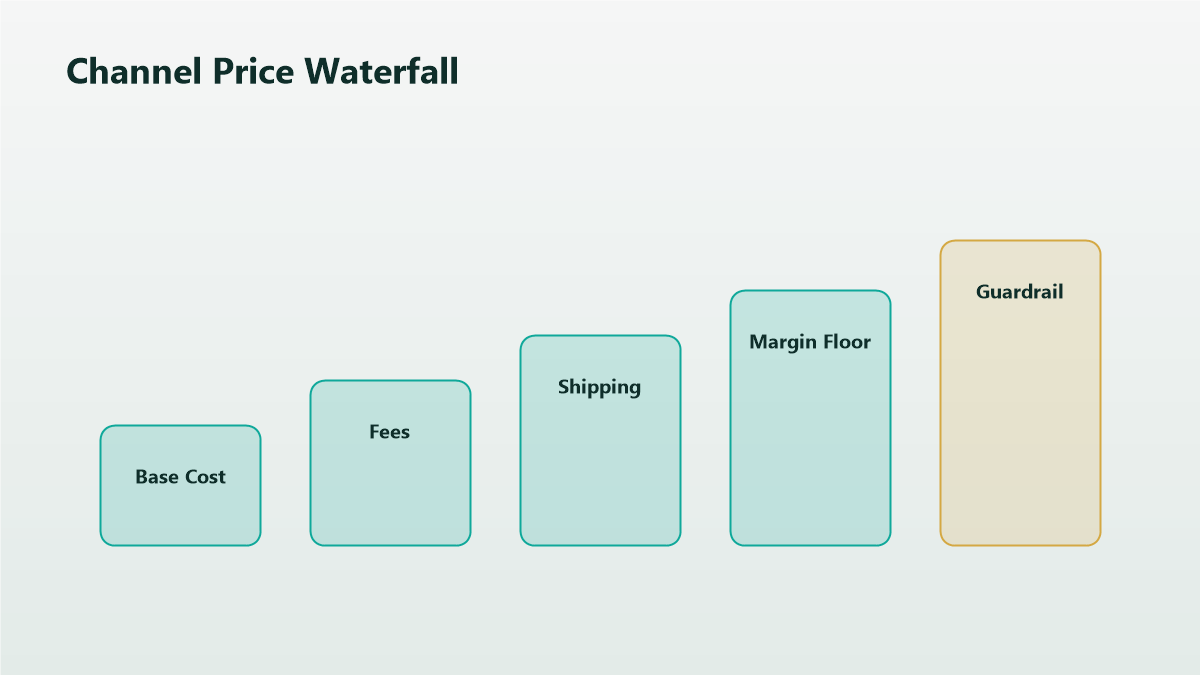
A single product carries a different all-in cost on each channel because the channel deducts different things: referral or final-value fees, fulfillment fees, payment processing, ad costs, and sometimes subscription overhead. A marketplace with high referral and fulfillment fees might consume a large share of the sale; your own store might cost you mostly payment processing plus the traffic you paid to acquire. Set the same number everywhere and you are accepting whatever margin is left over after each channel's cut, which means some channels quietly run thin or negative.
The fix is to flip the logic. Do not start with a price and accept the margin. Start with the margin you require and derive the price each channel needs to deliver it.
Build the Margin-Up Model
For each channel, you need the same handful of inputs:
- Product landed cost (what the unit costs you, delivered).
- Channel fees as a percentage and any fixed per-item fees.
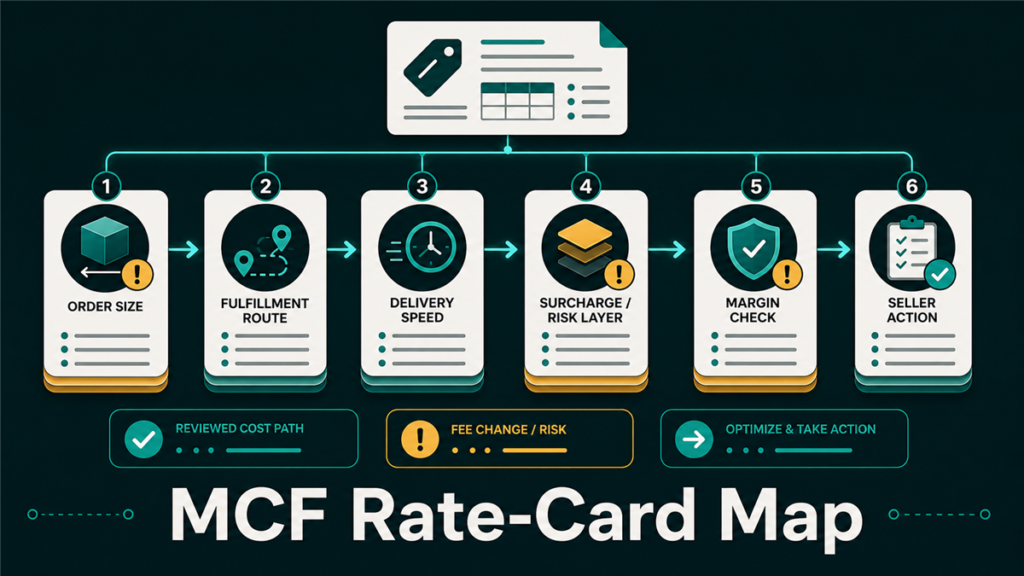
- Fulfillment cost on that channel (your shipping, or the marketplace's fulfillment fee).
- Payment processing where it applies.
- An allocation for advertising and overhead, if you fund those per sale.
- Your target margin.
Add cost, fees, fulfillment, processing, and overhead, then add your target margin, and you have the price that channel needs. Run it for every channel and you get a set of channel-specific prices, each defensible because each is built from that channel's real economics. This is the backbone of the whole strategy; everything else is constraint and adjustment.
The Two Guardrails: Parity and MAP
The margin-up model tells you what you would charge. Two guardrails tell you what you may charge.
Price parity and suppression
Some marketplaces watch whether your price on their channel is competitive with the same item elsewhere, and a price that looks too high relative to other sellers or other channels can lose visibility or the featured placement. The practical effect is that your highest-fee channel often cannot simply pass its full cost to the buyer without going uncompetitive. You manage this by deciding which channel absorbs more of the cost and which carries the premium, rather than letting the model push one channel out of range. Treat the specifics of any one marketplace's price expectations as something to confirm against its current policies.
MAP (minimum advertised price)
If you sell brands that set a minimum advertised price, that floor overrides your model on the low side: you cannot advertise below it regardless of what the math suggests. MAP protects the brand and keeps channels from racing each other to the bottom. Respect it, and build your margin-up prices to sit at or above the floor, never below.
Setting Channel-Specific Prices Without Breaking Trust
The reconciliation between the model and the guardrails is the actual strategy. A few working rules:
- Keep visible differences small and explainable. A modest gap that reflects real cost differences is normal and rarely noticed; a large, arbitrary gap reads as the buyer being overcharged somewhere.
- Let your own store carry the leanest price where it is lowest-cost, and let high-fee marketplaces carry a modest premium, but only as far as parity expectations allow.
- Use promotions and channel-specific value (bundles, faster shipping, loyalty perks) rather than raw price to differentiate, which protects both margin and trust.
- Never price below MAP or below your true cost on any channel to chase a sale; a sale that loses money is not a win.
- Watch for suppression signals on marketplaces; a suppressed or unfeatured listing usually means your price has drifted out of the competitive band, and the fix is a price review, not more ads.
What "good" looks like: every channel hits or beats your target margin, no channel is suppressed for price, no brand floor is violated, and the differences a comparing shopper sees are small and explainable.
Mini-Scenario: The Flat Price That Hid a Loss
A housewares seller priced one bestseller identically across their own store, a couple of marketplaces, and a high-fee marketplace, proud of the simplicity. A margin review by channel was sobering: the product earned a healthy margin on their own store, a thin one on the mid-fee marketplace, and an outright loss on the high-fee one after fulfillment and a running promotion. The flat price had been quietly subsidizing the most expensive channel with profits from the cheapest. They rebuilt prices margin-up per channel, nudged the high-fee channel up to the edge of what parity allowed, and dropped a promotion that channel could not afford. Total profit rose without any change in units, simply because each price finally reflected its channel's real cost.
FAQ
Should I charge the same price on every channel?
No. Each channel has different fees and fulfillment costs, so a single price delivers different margins, often unacceptable on the high-fee channels. Price each channel from its own economics while keeping visible differences small and within parity and MAP limits.
Will different prices across channels get my listing suppressed?
It can, if a marketplace judges your price uncompetitive against the same item elsewhere. Keep your price on each channel within its competitive band, and absorb cost differences through which channel carries the premium rather than letting one drift out of range.
What is MAP and how does it affect my pricing?
MAP is a minimum advertised price set by a brand. Where it applies, you cannot advertise below it, so it acts as a floor your channel prices must sit at or above, regardless of what your cost math suggests.
How do I protect margin on high-fee channels without overpricing?
Build prices margin-up from each channel's real costs, then let high-fee channels carry as much premium as parity allows and differentiate with bundles, shipping, or perks rather than deep discounts. If a channel cannot clear your margin within parity limits, reconsider whether to run promotions there.
How often should I revisit channel pricing?
Whenever fees, landed costs, or promotions change, and on a regular cadence regardless. Channel fees and your costs both drift, so prices set once will quietly fall out of margin over time.
Price Each Channel for What It Actually Costs
One flat price is simple and usually wrong. Build prices up from each channel's real economics, respect parity and MAP, and keep the differences a shopper sees small and defensible. Do that and every channel earns its margin instead of subsidizing another. If you want a per-channel pricing model built for your catalog, with margins, fees, and parity limits accounted for, Qubeq can construct it and keep it current as fees and costs move.