A policy warning lands in your notifications and the instinct is to either panic-appeal everything or ignore it and hope. Both are wrong. A warning is a fork in the road: Amazon is telling you a specific thing it believes you did, and your job in the first hours is to read that thing precisely, decide whether to contest it or fix it, and act in a way that does not push the case toward suspension. This is the response workflow, not an explainer on warnings versus violations.
Key Takeaways
- Read the exact violation text before doing anything; the wrong response to a misread warning can make things worse.
- A warning is a decision point: appeal (you believe it is wrong) or correct (it is right or partly right), and the two paths look very different.
- Preserve evidence immediately, including the notification, listing state, order records, and any messages, before anything changes.
- Stop the bleeding: if a specific listing or behavior triggered the warning, address that exposure first so you do not collect repeat hits.
- Respond calmly and specifically; over-promising, arguing, or sending a generic template can escalate rather than resolve.
Hour 0 to 4: Read It Exactly
Open the actual notification and the account health or performance area where it is logged. Identify, in the platform's own words:
Do not respond to your memory of the email. Respond to the precise language on the record. Misreading a listing-content warning as an authenticity complaint, or the reverse, sends you down the wrong path entirely.
Hour 0 to 4: Preserve Evidence
Before you change a single listing or message a buyer, capture the current state:
If your fix involves editing a listing, you want a record of what it looked like when the warning fired. Evidence preserved early is worth far more than evidence reconstructed later.
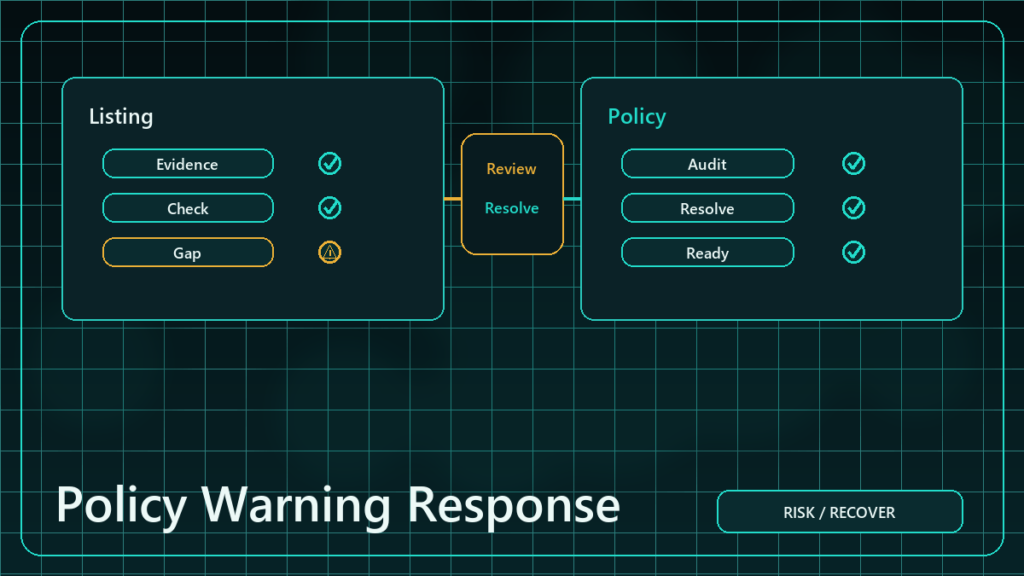
The Fork: Appeal or Correct?
This is the central decision.
Choose correct when
The warning is right, or right enough. You did have the issue, or you can see how the listing or behavior triggered it. Correcting means fixing the underlying cause: editing the listing, removing the offending content, pulling the at-risk ASIN, tightening a process, and where appropriate acknowledging and describing the fix. Correcting is usually faster and lower-risk than contesting.
Choose appeal when
You genuinely believe the warning is mistaken, the product is authentic and you can prove it, or the cited behavior was not yours. Appealing means assembling evidence and making a specific, factual case, not an emotional one. Keep the language non-promissory and precise; you are demonstrating a fact, not begging for leniency.
When it is both
Often the cleanest path is to correct the genuine part immediately and contest only the part you can actually disprove. Do not contest things you cannot evidence; it weakens the credible part of your response.
Stop the Bleeding
While you decide, reduce ongoing exposure:
The goal is to ensure the same warning cannot fire again tomorrow while you work the response.
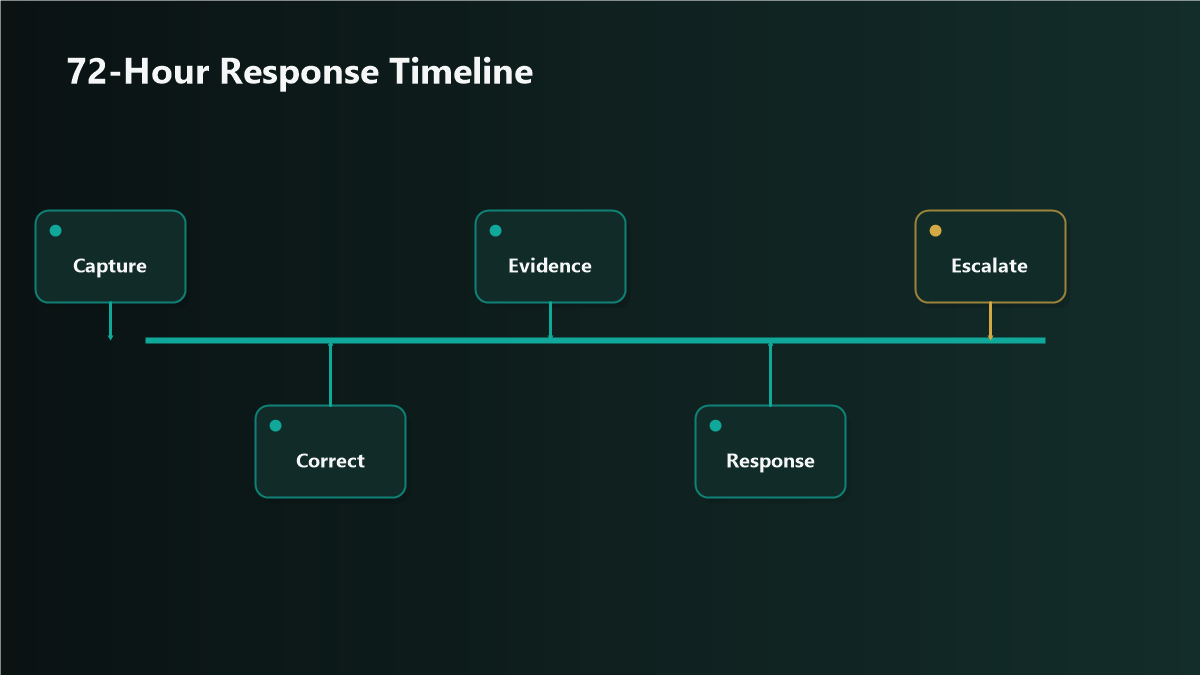
Hour 4 to 72: Respond Without Escalating
- Draft a response that names the specific issue, states what you found, and what you did or why you believe it is mistaken.
- Attach the evidence you preserved; reference IDs and dates.
- Keep it factual and non-promissory. Avoid arguing, avoid blanket apologies for things you did not do, avoid promises you cannot keep.
- Submit through the channel the notification specifies and record the case ID.
- Track for a response and do not flood the case with repeat submissions, which can reset or muddy review.
A warning handled cleanly often closes at the warning stage. A warning handled with a generic template, an argument, or silence is the kind that escalates.
Mini-Scenario: The Warning That Almost Became a Suspension
A seller received an authenticity-related warning on one ASIN. Their first reaction was to fire off a long, defensive message insisting they had done nothing wrong. Before sending, they re-read the actual notification: it cited a specific order and asked for proof of sourcing. They paused that ASIN, pulled the supplier invoices for the named order, saved the listing state, and replied with a short factual response and the documents attached. They contested only the authenticity claim, which they could evidence, and said nothing about unrelated matters. The warning closed without escalation. The defensive message they almost sent would have argued points the case had never raised.
FAQ
Should I appeal every Amazon policy warning?
No. Appeal only when you genuinely believe the warning is mistaken and can evidence it. When the warning is right, correcting the underlying cause is faster and lower-risk than contesting.
How long do I have to respond to a policy warning?
Windows vary by issue type and change over time. Treat any stated timeframe as the outer edge, act quickly, and verify the current window against the notification and official guidance rather than assuming a fixed number.
Will a single warning suspend my account?
Not usually on its own, but warnings are signals and repeat or unresolved issues raise risk. The point of a clean first response is to keep a warning from becoming a pattern.
What evidence should I keep after a warning?
The full notification and case ID, the named listing's state, relevant order and buyer records, supplier or authenticity documents, and timestamps, all captured before you change anything.
Can responding badly make it worse?
Yes. Arguing, sending generic templates, over-promising, or flooding the case with repeat messages can escalate review. Specific, factual, non-promissory responses resolve more cleanly.
Handle the First 72 Hours With a Steady Hand
A warning is the moment the outcome is most in your control. Read it exactly, choose appeal or correct deliberately, preserve evidence, and respond without escalating. If the warning is serious or the right path is not obvious, Qubeq can review the exact notification, help you decide appeal versus correct, and shape a response that does not put the account at further risk.