

Amazon Shop Direct is a program that shows products from external merchant stores inside Amazon's search results and shopping experience. When a customer searches for a product that is not currently sold in Amazon's store, Shop Direct can surface it from a participating merchant's catalog, giving the customer two options: visit the merchant's website directly, or use Amazon's Buy for Me feature to have Amazon complete the purchase on their behalf.
For brand owners, this creates a new discovery channel, but also raises questions about catalog control, pricing consistency, attribution, and customer experience. This guide explains how the program works, what the feed requirements look like, and what brand owners should verify before participating.
Key Takeaways
- Shop Direct surfaces products from external stores within Amazon's search results and Rufus AI assistant. Merchants connect through third-party feed syndicators like Feedonomics, Salsify, and CEDCommerce.
- The program now includes over 100 million products from more than 400,000 merchants, with tens of millions available through Buy for Me.
- Customers see two options: "Shop Direct" to visit the merchant's site, or "Buy for Me" to have Amazon's AI agent complete the purchase using the customer's Amazon payment and shipping details.
- Brand owners need to evaluate feed quality, pricing consistency, landing page readiness, and attribution before participating.
- This is distinct from selling on Amazon's marketplace. Shop Direct merchants are not Amazon sellers in the traditional sense: they maintain their own stores, fulfillment, returns, and customer service.
How Shop Direct Works
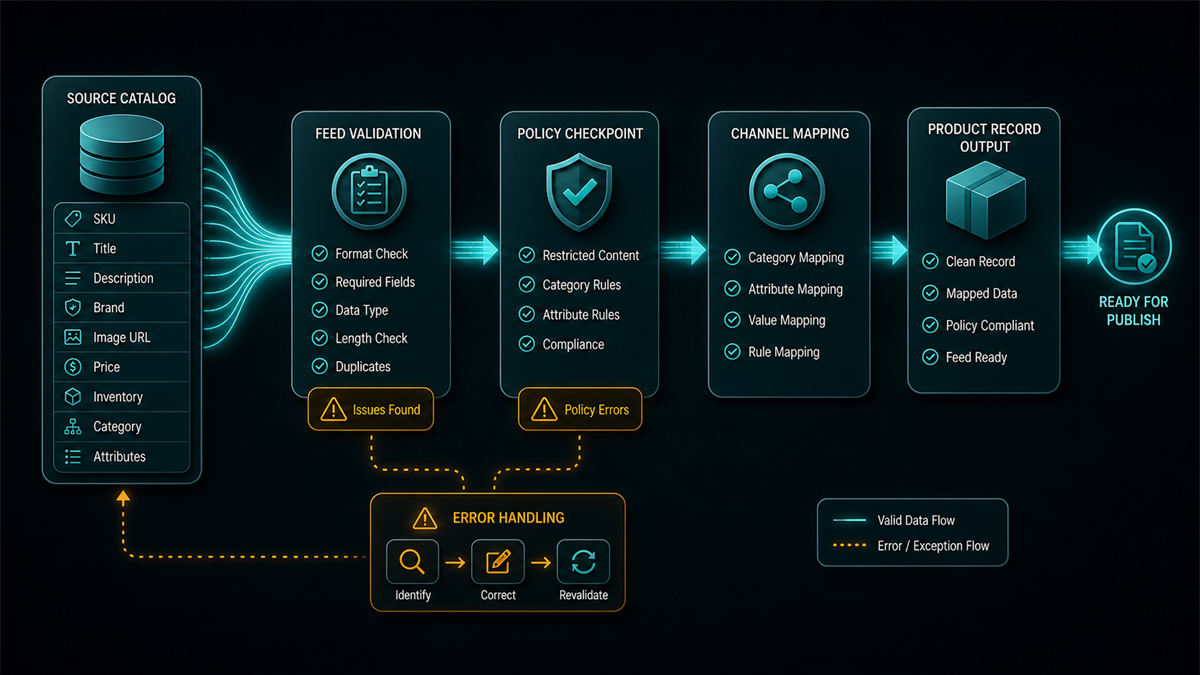
The program operates through product data feeds. Merchants provide their catalog, pricing, and inventory data through a feed syndicator, and Amazon ingests that data to display products in search results, category browsing, and Rufus responses.
When a customer finds a Shop Direct product, the merchant's store name is displayed clearly. If the customer clicks "Shop Direct," they are redirected to the merchant's website with a notification that they are leaving Amazon. If the customer clicks "Buy for Me" on an eligible product, Amazon's agentic AI navigates to the merchant's website and completes the purchase using the customer's encrypted Amazon payment and shipping information.
The merchant handles fulfillment, returns, exchanges, and customer service. The customer can track their order through Amazon's Your Orders page under a Buy for Me tab.
Feed syndicators
Merchants connect through established feed partners: Feedonomics, Salsify, and CEDCommerce. Additional syndicators and an Amazon merchant portal with a direct feed option are planned. If your current syndicator is not participating, Amazon has published a contact address for discussing other options.
The feeds sync catalog, pricing, and inventory data in real time, which means any discrepancy between your feed and your actual store, such as out-of-stock items, incorrect pricing, or discontinued products, will surface in the Amazon experience.
What Brand Owners Should Evaluate
Shop Direct is not a marketplace listing. It is a discovery and referral channel. That distinction matters for how you evaluate the opportunity.
Feed quality and catalog consistency
Your product feed is the only representation of your catalog that Amazon sees. If the feed contains outdated titles, incorrect pricing, missing images, or discontinued SKUs, that is what appears in Amazon's search results next to your brand name.
Before connecting a feed, audit it for accuracy: every product title, description, price, image, and inventory status should match your live store. If your feed is shared across multiple channels and contains channel-specific pricing or descriptions, verify that the Amazon-facing version is correct.
Pricing consistency
Shop Direct surfaces your product alongside Amazon marketplace results. If your DTC price is significantly higher than the same product sold by a third-party seller on Amazon's marketplace, the comparison is visible and unfavorable. If your DTC price is lower, you may be undercutting your own Amazon channel, which creates a different problem.
Before participating, map your DTC pricing against your Amazon marketplace pricing for any overlapping SKUs. Decide whether the discovery benefit outweighs the pricing visibility risk.
Landing page readiness
When a customer clicks "Shop Direct," they land on your website. If that page loads slowly, has a confusing checkout flow, does not match the product they expected, or is not mobile-optimized, the traffic Amazon sends will not convert.
For Buy for Me transactions, the AI agent navigates your checkout process automatically. If your checkout has unusual form fields, multi-step verification, pop-ups, or non-standard cart behavior, the AI may fail to complete the purchase, which creates a poor customer experience tied to your brand.
Attribution and measurement
Amazon reports that it has referred customers millions of times to merchant stores. However, the specifics of attribution, reporting, and traffic data available to merchants have not been detailed in the public announcement.
Before participating, clarify what reporting you will receive: how many impressions your products get in Amazon search, how many Shop Direct clicks and Buy for Me purchases occur, and whether you can tie that data back to your own analytics. Without clear attribution, you cannot evaluate whether the program is driving incremental revenue or simply adding a channel that you cannot measure.
Customer experience and returns
For Shop Direct (redirect) purchases, the customer experience is entirely yours. For Buy for Me purchases, the customer interacts with Amazon's checkout experience but your post-purchase experience: fulfillment speed, packaging, return process, and customer service. If your return policy or fulfillment timeline differs significantly from what Amazon customers expect, that gap will surface in customer satisfaction.
Who This Program Is For
Shop Direct is most relevant for two types of merchants.
The first is brands that do not sell on Amazon's marketplace at all. For these merchants, Shop Direct provides discovery on Amazon without requiring a seller account, FBA enrollment, or marketplace listing management. The trade-off is less control over the shopping experience and unclear attribution.
The second is brands with a strong DTC presence that want incremental discovery without listing on Amazon's marketplace. If you sell a product that is not available in Amazon's store and customers search for it there, Shop Direct puts your store in front of that demand.
For brands already selling on Amazon's marketplace, Shop Direct creates potential channel conflict. Your marketplace listing and your Shop Direct listing could appear in the same search results at different prices, with different fulfillment timelines, and different customer experiences. That is manageable with careful pricing strategy, but it needs to be planned, not discovered after enrollment.
Who Should Wait
Merchants should hold off if their product feed is not clean and current, their DTC checkout has conversion issues or non-standard flows, they cannot maintain pricing consistency across channels, they have no way to measure attribution from Amazon referral traffic, or their fulfillment and return experience does not meet the expectations of Amazon-habituated customers.
Fixing these issues first will produce better results than rushing to participate and creating a poor first impression on a discovery channel that reaches hundreds of millions of customers.
Mini-Scenario: The Feed That Was Not Ready
A DTC kitchenware brand connected their product feed through a syndicator to participate in Shop Direct. The feed was originally built for a different channel and contained wholesale pricing on 30 products that should have shown retail pricing. Within a week, customers were seeing the brand's products in Amazon search results at prices 25% below the brand's own website, creating confusion when the checkout page showed the correct retail price. The brand pulled the feed, corrected the pricing layer, and reconnected with clean data. The lesson: the feed is the product. Whatever it says is what Amazon shows.
FAQ
Is Amazon Shop Direct the same as selling on Amazon?
No. Shop Direct merchants are not Amazon marketplace sellers. They do not create listings in Seller Central, do not use FBA, and maintain their own fulfillment, returns, and customer service. Amazon surfaces their products through data feeds and refers customers to the merchant's store.
Does Shop Direct cost anything?
The public announcement does not detail a fee structure for merchants. Clarify current costs, referral fees, or revenue share terms directly with Amazon or your feed syndicator before enrolling.
Can I opt out of Buy for Me?
The announcement mentions that merchants can visit the Shop Direct Merchant page to learn about the program, including opting out. Verify current opt-out options and any restrictions before enrolling.
How do customers know they are buying from my store, not Amazon?
Merchant store names are clearly displayed on Shop Direct products. Customers clicking "Shop Direct" receive a notification that they are leaving Amazon. For Buy for Me purchases, the merchant's information is shown during checkout and in order tracking.
Does Shop Direct work with Rufus?
Yes. Products from Shop Direct feeds appear in Rufus AI shopping assistant responses, as well as in traditional search results and the Amazon Shopping app.
Participating With Eyes Open
Amazon Shop Direct is a real discovery channel with real scale: over 100 million products, 400,000+ merchants, and access to Amazon's customer base. For brands with clean catalogs, consistent pricing, and strong DTC operations, it offers incremental discovery without the operational overhead of marketplace selling.
For brands with messy feeds, inconsistent pricing, or weak checkout experiences, it offers a fast way to make a bad impression at scale.
If your catalog spans Amazon marketplace and DTC channels and you need to evaluate whether Shop Direct fits your channel strategy without creating pricing conflicts or attribution gaps, Qubeq can audit the catalog positioning and help you plan the feed, pricing, and measurement framework before you connect.