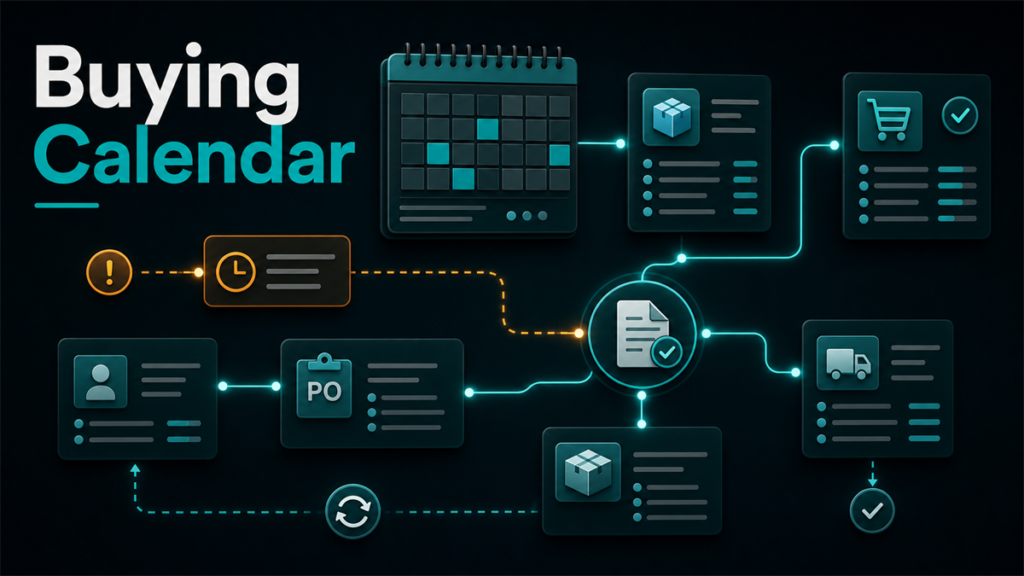
Wholesale planning usually starts earlier than DTC or Amazon-first teams expect. By the time shoppers are buying for a season, retailers have often already been researching, shortlisting, and ordering. That is why the Faire buying calendar matters. It helps brands think in buyer lead time instead of only consumer demand timing.
Key Takeaways
- Faire's buying-calendar content shows that wholesale demand builds ahead of the selling season, not at the same moment consumers start shopping.
- Brands need to align inventory, lead times, and seasonal assortment work to those earlier retail-buying windows.
- Late planning creates two familiar problems: missed wholesale demand and rushed inventory decisions that hurt other channels.
- Accurate lead times on Faire matter because retailers are planning with timing in mind, not just product taste.
- The best use of the calendar is not prediction perfection. It is earlier operational preparation.
Why the Buying Calendar Matters
When a brand comes from Amazon, the habit is often to focus on sell-through moments: Prime-driven demand, Q4 spikes, stockout pressure, and replenishment rhythm tied to consumer orders. Wholesale works differently. Retail buyers place orders in advance so they can receive, merchandise, and sell later.
That changes the planning clock.
If your team waits until the consumer season feels close, your best wholesale window may already be narrowing. Faire's own buying-calendar guidance is useful because it helps brands see when retailer attention begins to build, not just when consumer demand peaks.
The Real Planning Shift: Sell-Through Calendar vs Buying Calendar
A sell-through calendar answers: when do shoppers buy?
A buying calendar answers: when do retailers need to choose, commit, and place inventory orders?
Those are not the same date.
For brands, that difference changes:
This is why wholesale planning feels harder at first. You are not just planning for demand. You are planning for someone else's planning process.
How to Use the Faire Calendar as a Brand
The buying calendar is most useful when it changes workflow, not just awareness.
1. Build seasonal assortment earlier
If buyers are researching before the peak season, your seasonal assortment should not still be half-finished. Product selection, pack structure, imagery, and seasonal messaging need to be in place while the retailer is still making decisions.
2. Review lead times before the busy window
Faire's own help guidance stresses the importance of accurate lead times. This matters even more in wholesale because retailers are planning deliveries around events, in-store calendars, and open-to-buy budgets. A stale lead-time setting creates mistrust quickly.
3. Separate wholesale inventory from DTC wishful thinking
Many brands carry one blended inventory view in their heads. The danger is that wholesale orders look exciting until they collide with Amazon or DTC commitments. A better approach is to define how much stock can safely support wholesale timing without starving your main retail channels.
4. Use market season as an operational checkpoint
Faire's brand-facing market-season checklist makes the right point: buyers prepare early, and storefront readiness matters before the market surge. That means market season is not just a merchandising event. It is a planning checkpoint.
The Most Common Planning Mistakes
Waiting for consumer season signals
By then, wholesale buyers may already be narrowing choices.
Leaving lead times untouched
An inaccurate lead time can quietly weaken retailer confidence even if your product itself is strong.
Treating wholesale as overflow inventory
Brands often try to push leftover inventory into wholesale logic instead of planning wholesale as a real channel.
Not preparing seasonal collections clearly enough
Retail buyers do not want to decode what is seasonal, timely, or ready. Make it obvious.
Forgetting that wholesale orders can change stock pressure elsewhere
One meaningful order can affect Amazon, Shopify, or event inventory if planning is not coordinated.
A Simple Faire Planning Routine
Use a recurring pre-season review:
- Identify the next major wholesale buying window.
- Confirm which seasonal collections or core replenishment lines need to be ready.
- Review on-hand inventory and production timing.
- Update lead times if fulfillment reality has shifted.
- Check imagery, assortment clarity, and storefront readiness before market momentum rises.
- Reserve inventory intentionally instead of assuming future production will solve every gap.
This routine helps brands move from reactive selling to planned participation.
Scenario: The Brand That Was Always One Season Late
A small lifestyle brand sold well on Amazon and through its own site. The team assumed that adding Faire would mostly mean uploading products and waiting for discovery. It did get some early retailer interest, but the bigger problem was timing.
Seasonal collections were usually still being finalized when wholesale buyers were already shopping. Lead times looked cleaner on the storefront than they did in real operations. A few promising retailer conversations did not convert because the inventory plan was still too close to consumer-season timing.
Once the team started planning from the buying window instead of the end-customer window, the channel became easier to manage. The products were ready earlier, lead-time settings became more realistic, and wholesale inventory decisions stopped colliding so often with other channels.
FAQ
Is the Faire buying calendar a guarantee of demand?
No. It is directional planning guidance, not a promise of sales.
Why do lead times matter so much on Faire?
Retail buyers plan ahead. If your lead-time setting is unrealistic, it affects confidence and order timing.
Should wholesale inventory be separate from Amazon inventory?
It should at least be planned intentionally. Even if the physical stock pool overlaps, the channel commitments should be visible.
Does this only matter for seasonal brands?
No. Seasonal categories feel it most strongly, but timing still matters for core assortments and market-season visibility.
What is the first improvement most brands should make?
Usually it is earlier assortment preparation plus a more honest lead-time review.
Better Timing Creates Better Wholesale Decisions
The Faire buying calendar is useful because it shifts your planning lens. Instead of asking when shoppers will buy, it asks when retailers will decide. Brands that answer that question earlier tend to make calmer inventory decisions, present cleaner seasonal assortments, and create a healthier wholesale channel.
If your team is expanding beyond Amazon into wholesale or other marketplaces, the work is rarely just "open another channel." It is a planning-system question. Qubeq helps brands think through that kind of other marketplace operations. If you want help pressure-testing inventory and channel timing before the next season, contact us here.