Keepa vs CamelCamelCamel comes down to who you are: CamelCamelCamel is a free price-drop tracker built mainly for shoppers, while Keepa is a paid research tool whose historical data most Amazon sellers treat as part of their sourcing workflow. Both track Amazon price history; they differ in data depth, alerting, and how far beyond price each one goes.
A note on scope: both are price-history and alert tools. Neither replaces a full product research suite, and neither tool's data should be treated as a guaranteed measure of sales volume.
Key Takeaways
- CamelCamelCamel is free and covers the core shopper use case: price history charts and price-drop alerts.
- Keepa's paid tier adds seller-oriented data, including sales rank history and offer-level detail, which is why sellers usually choose it.
- Price-history charts inform decisions; they do not prove sales volume. Treat estimates as estimates.
- For sourcing decisions, data depth matters more than price. For deal hunting, free is usually enough.
- Verify current pricing and feature lists on both tools' official sites before deciding; both change over time.
What Each Tool Is
CamelCamelCamel
CamelCamelCamel is a long-running free Amazon price tracker. Its core features are price-history charts for Amazon products and email alerts when a price drops below a target you set. A browser extension shows the chart while browsing Amazon. The tool is funded through affiliate links rather than subscriptions, and its design center is the shopper who wants to buy at the right time.
Keepa
Keepa is a price tracker that grew into a seller research tool. Alongside price history, the paid subscription adds data sellers rely on: sales rank history, offer and Buy Box detail, stock signals, and a searchable product database with filters. Its browser extension overlays charts directly on Amazon product pages. Keepa operates across many Amazon marketplaces, which matters for sellers working internationally.
Where the Tools Differ
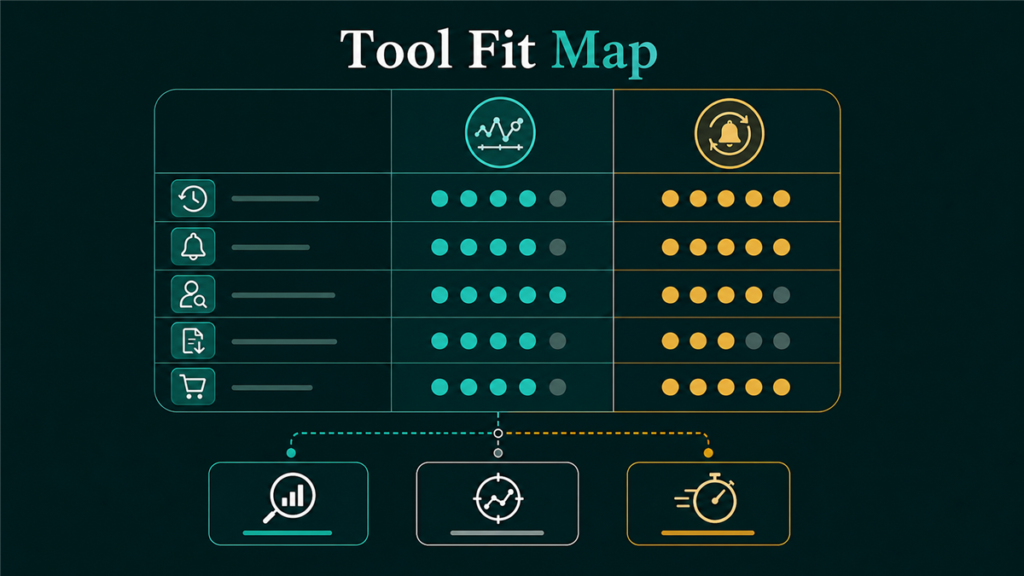
| Dimension | CamelCamelCamel | Keepa |
| Cost | Free | Free tier plus paid subscription for seller data |
| Built for | Shoppers | Sellers and researchers |
| Price history | Yes | Yes |
| Sales rank history | No | Yes (paid) |
| Offer/Buy Box detail | Limited | Yes (paid) |
| Product database search | No | Yes (paid) |
| Alerts | Price drops | Price, and broader data alerts |
| Marketplace coverage | A few major marketplaces | Many Amazon marketplaces |
Feature sets and plans change on both sides, so confirm current details on the official sites before committing to a workflow around either tool.
Which Tool for Which Job
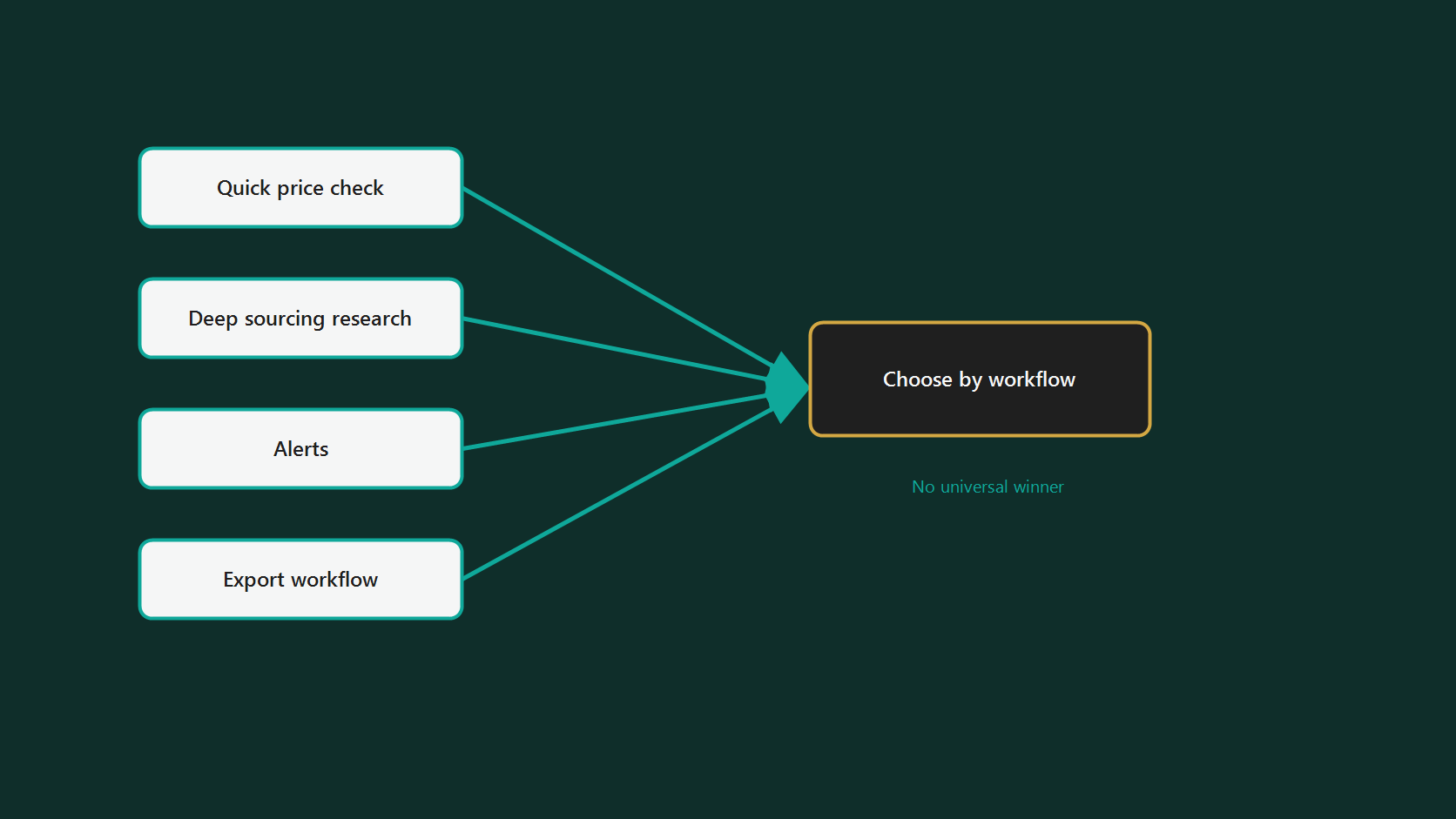
- Tracking a product you want to buy cheaper: CamelCamelCamel does this well at no cost.
- Checking a product's price stability before sourcing it: Keepa's longer data view and rank history give a fuller picture.
- Estimating demand patterns and seasonality: Keepa's sales rank history is the relevant dataset, used as an estimate rather than a fact.
- Watching competitor pricing behavior over time: Keepa's offer-level data is built for this; CamelCamelCamel is not.
- Casual browsing with price context: either extension works; CamelCamelCamel wins on price, Keepa on detail.
The honest summary: a shopper rarely needs Keepa, and a serious seller usually outgrows CamelCamelCamel quickly. The two tools are less competitors than answers to different questions.
How Sellers Should Read Price-History Data
Price trackers earn their keep in sourcing decisions, but the data needs careful reading:
- A stable price history suggests a product that holds value; frequent deep discounting suggests margin pressure in the niche.
- Rank improvements after price drops show price sensitivity, useful when planning your own pricing.
- Spiky, gap-filled data can reflect tracking limitations rather than market behavior. Cross-check surprising patterns before betting inventory on them.
- No price tracker proves sales volume. Rank-based sales estimates are inferences, and sourcing decisions should combine them with other evidence.
Mini-Scenario
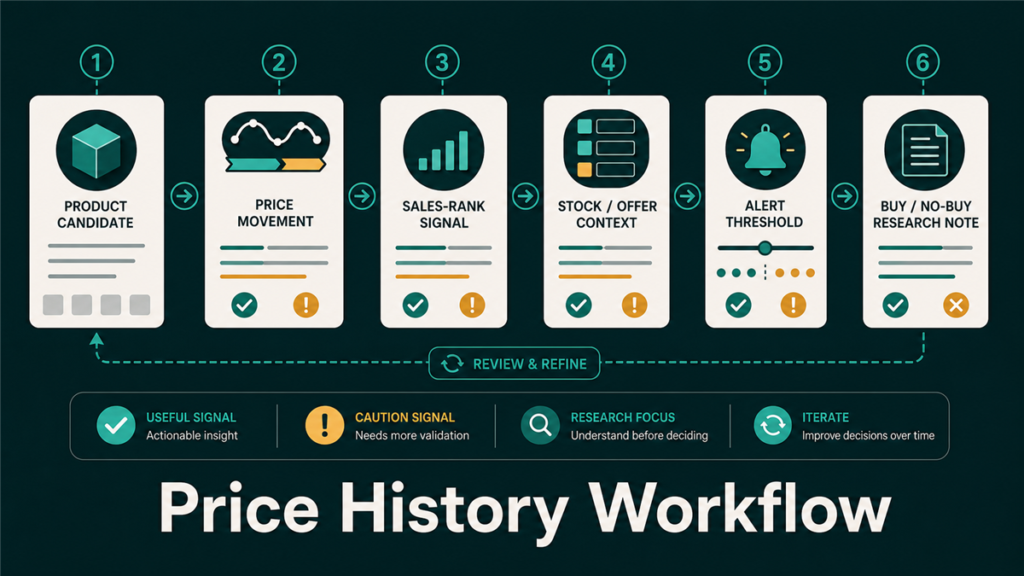
An arbitrage seller found a kitchen product with an attractive margin at a local retail price. The price history showed the Amazon price had dropped sharply twice in the past year, each time coinciding with a large seller joining the offer list. The current price was the recovery peak. The seller passed: the history suggested the price would compress again when competition returned. The tool did not make the decision, but it surfaced the pattern that informed it.
FAQ
Is Keepa worth paying for as a new seller?
If you are making sourcing decisions, the historical data usually pays for itself by preventing one bad inventory buy. If you are only tracking a handful of known products, start free and upgrade when the data gaps start costing you.
Is CamelCamelCamel really free?
Yes, it is funded by affiliate links rather than subscriptions. Confirm current details on the official site, as models can change.
Can either tool tell me exactly how many units a product sells?
No. Sales estimates derived from rank history are estimates. Treat them as directional evidence, not as verified volume.
Do these tools work outside the US marketplace?
Keepa covers many Amazon marketplaces. CamelCamelCamel covers a smaller set. Check current marketplace lists on each official site if you sell internationally.
Do I still need a full research suite if I have Keepa?
They overlap but serve different jobs. Price trackers go deep on price and rank history; research suites add keyword, listing, and market analysis. Many sellers run one of each.
Choose the Tool for Your Question
CamelCamelCamel answers "when should I buy this?" Keepa answers "should I sell this, and at what price?" If your team is building a sourcing workflow and wants help turning price-history data into actual buying rules, Qubeq's account management team works with sellers on exactly these decisions.