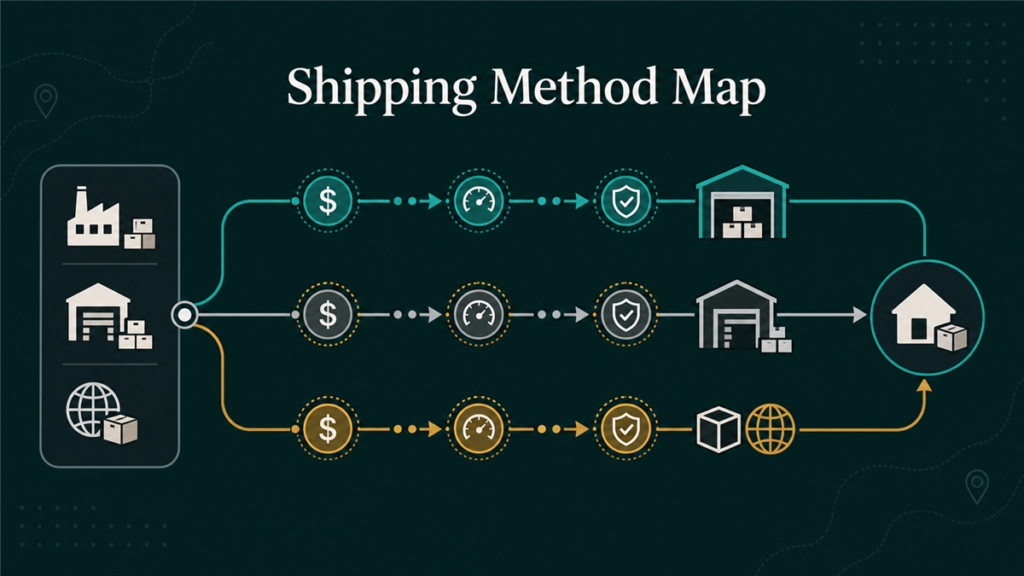
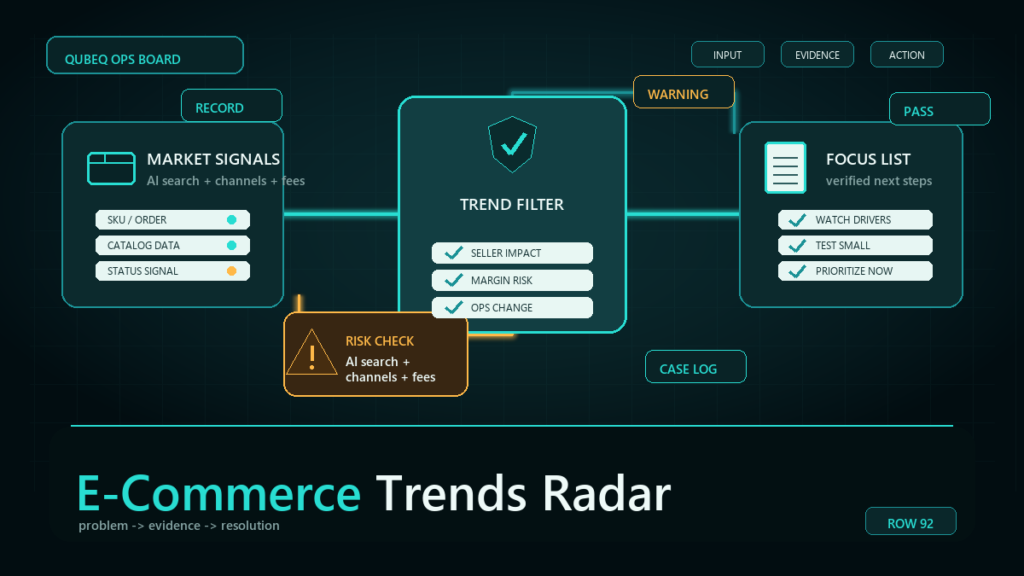
Most trend articles make e-commerce feel like a parade of buzzwords. That is not very useful for sellers. The e-commerce trends for Amazon sellers that matter in 2026 are the ones that change how you fulfill orders, protect account health, manage multiple channels, use workflow automation, and defend margin when costs stack up.
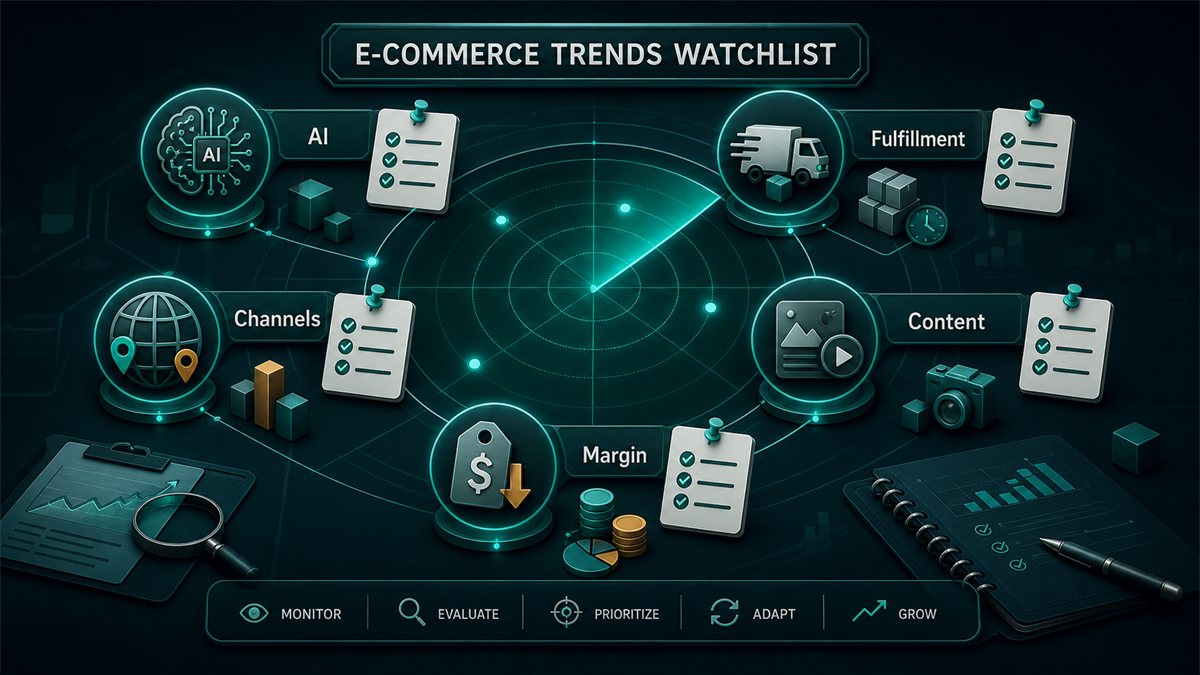
In other words, the real trends are operational. They show up in the tools Amazon is building, the logistics choices sellers now have to make, the way shipping execution affects claims and support outcomes, and the growing expectation that a serious brand can run Amazon alongside other channels without losing control of inventory and data.
This article stays in that practical lane. It is not a macro forecast deck. It is a seller-operations brief built around the platform direction Amazon is publicly signaling.
Key Takeaways
- Fulfillment strategy is getting more layered. Sellers increasingly have to choose between or combine FBA, FBM, Seller Fulfilled Prime, Buy Shipping, and multichannel tools.
- Shipping execution is closer to account protection than it used to be. Label choice, delivery performance, and workflow discipline now affect claims, support, and operating risk more directly.
- Multichannel selling is becoming more normal, but it punishes weak inventory and catalog systems fast.
- AI and workflow automation are becoming more visible in seller tooling, but they help only when the underlying catalog and process data are clean.
- Margin discipline still decides whether any trend matters. New tools do not rescue weak unit economics.
What Counts as a Real E-Commerce Trend for Amazon Sellers?
A real trend is not just something people are posting about. A real trend changes what the seller has to do differently.
For Amazon operators, that usually means a trend should affect one or more of these areas:
- fulfillment choices
- shipping execution
- inventory planning
- account-health protection
- ad efficiency
- multichannel coordination
If a trend does not change one of those, it may be interesting, but it is probably not urgent.
That is the filter to use throughout this piece. The goal is not to name every trend. The goal is to separate what changes seller operations from what mostly changes conference-slide language.
Trend 1: Fulfillment Strategy Is Becoming More Layered
For a long time, many sellers treated fulfillment like a binary choice: use FBA or do not. That model is less useful now. Amazon's own seller-facing materials point toward a more layered logistics environment.
Sellers now have more fulfillment paths to evaluate:
- FBA for Amazon-heavy volume and Prime-speed infrastructure
- FBM for specialty, bulky, regulated, fragile, or operationally unusual products
- Seller Fulfilled Prime for eligible operators who can hold high delivery standards
- Buy Shipping for shipping workflow and claim-protection support
- multichannel software and service layers for brands that sell beyond Amazon
That does not mean every seller should use every path. It means fulfillment is now more of a portfolio decision than a one-program decision.
The operational question becomes: which products belong in which fulfillment path, and where do the costs and control points actually sit?
This is a real trend because Amazon itself is publicly presenting a broader logistics ecosystem, not just a single fulfillment program.
Trend 2: Shipping Execution Is Closer to Account Health
Shipping used to be treated as a backend task. More and more, it functions like a risk-control layer.
Amazon's public Buy Shipping framing supports this shift. Shipping tools are no longer just about getting a label. They now sit closer to:
- delivery-claim protection
- rate selection
- tracking quality
- workflow consistency
That matters because shipping mistakes do not stay confined to the warehouse. They can become customer-service problems, support problems, late-delivery problems, and account-health problems.
For FBM operators especially, shipping execution is not just a cost center. It is part of account defense. Even for FBA-heavy brands, outbound and non-Amazon shipping workflows still matter when the business expands across channels.
This is why the better operating question is not "what is the cheapest label?" It is "what shipping process reduces avoidable claim, support, and delivery risk while staying margin-aware?"
Trend 3: Multichannel Operations Are Becoming Normal
Multichannel used to sound like a future-state ambition. For many sellers, it is now a normal operating expectation.
That does not mean every brand should rush onto every platform. It means more brands are being pushed toward:
- Amazon plus Walmart
- Amazon plus Shopify
- Amazon plus social or website orders
- Amazon inventory serving multiple order streams
Amazon's own tooling direction supports this trend, especially where shipping and inventory software overlap with cross-channel operations. Veeqo and multichannel-friendly logistics messaging make it harder to pretend Amazon must be managed in total isolation.
But multichannel only helps when the underlying system is disciplined. Weak catalog data, poor inventory visibility, and inconsistent fulfillment rules become much more expensive once one SKU exists across several channels.
So the trend is not just "sell everywhere." The real trend is that sellers need to operate with cleaner source-of-truth data, clearer inventory ownership, and better channel rules.
Trend 4: AI and Workflow Automation Are Moving Into Seller Operations
AI is a real trend, but not in the lazy sense people often use it. The useful version for Amazon sellers is workflow assistance, not magic replacement.
AI and automation are becoming more relevant in areas like:
- content drafting and cleanup
- catalog normalization
- workflow summaries
- case triage
- data interpretation
- repetitive operations support
Amazon is also publicly signaling a more automation-friendly seller environment overall, with tooling and operational support becoming more software-assisted.
But AI only helps when the inputs are trustworthy. If the catalog is messy, the variation structure is broken, or the product data is inconsistent, automation can spread the mess faster.
So the practical trend is not "AI will replace seller teams." It is "teams that already run a cleaner system can use automation to move faster and reduce repetitive work."
That makes AI a leverage trend, not a rescue trend.
Trend 5: Margin Discipline Is Still the Deciding Skill
This is the least flashy trend, but it may be the most important one. More logistics choices, more ad complexity, more channel options, and more tooling only help when the business still understands its margins clearly.
Margin discipline matters because sellers now have to manage compounding cost layers:
- fulfillment
- shipping
- storage
- inbound handling
- returns
- ad spend
- software and workflow overhead
A trend is only useful if it improves the business after those layers are counted.
That is why trend adoption should always be filtered through unit economics. If a seller expands channels, adds tools, or changes fulfillment without understanding margin impact, the operation can look more sophisticated while becoming less healthy.
The trend here is not that margins matter more than before. It is that operational complexity makes weak margin discipline more dangerous than before.
How to Decide Which Trends Matter for Your Business
Sellers do not need to act on every trend at once. They need a sorting method.
Start with three questions:
- Does this trend change how we fulfill, ship, or protect orders?
- Does this trend expose a current weakness in our catalog, inventory, or channel process?
- Does this trend improve margin or just add more moving parts?
Those questions usually make the next step clearer.
Example: A seller with strong Amazon volume but weak multichannel control
If a seller is doing well on Amazon but wants to expand into Walmart or direct orders, the first trend that matters is not AI. It is multichannel operating discipline. The business needs inventory visibility, order-routing clarity, and clean catalog data before expansion.
Example: A seller with unstable shipping performance
If order fulfillment is inconsistent, shipping is the trend to treat as urgent. Better label workflow, better dispatch discipline, and better process control matter more than adding a new sales channel.
Example: A seller already stretched by fees
If the business is already margin-tight, the most important trend may be simple cost discipline. More complexity without better economics is usually a trap.
FAQ
What is the biggest e-commerce trend for Amazon sellers right now?
The most practical trend is fulfillment complexity. Sellers increasingly need to choose among several logistics paths instead of assuming one model fits every SKU or channel.
Is AI the most important trend in e-commerce?
Not for most Amazon sellers. AI is useful when it improves workflow speed or clarity, but it does not replace clean catalog data, solid fulfillment, or margin discipline.
Should every Amazon seller go multichannel?
No. Multichannel expansion helps only when the current catalog, inventory process, and fulfillment system are stable enough to support it.
Why does shipping matter more now?
Because shipping quality affects delivery outcomes, claims, support, and operating risk more directly. For FBM sellers especially, shipping execution is part of account protection.
Are these trends only relevant for large brands?
No. Smaller sellers may feel them differently, but fulfillment choices, shipping discipline, and margin clarity matter at every scale.
The Trend Filter That Actually Helps
The most useful way to read e-commerce trends is to ignore the dramatic language and ask what changes the operating system of the business.
For Amazon sellers, that usually comes back to the same few areas: fulfillment choices, shipping discipline, multichannel readiness, workflow automation, and margin control. Those are the trends that create or destroy leverage because they change what the team has to execute every week.
If a brand is chasing trend language while inventory, catalog structure, and shipping execution are still messy, the business does not need another trend report. It needs cleaner operations. That is where Qubeq spends its time: making the seller backend strong enough that the right trends become useful instead of distracting.