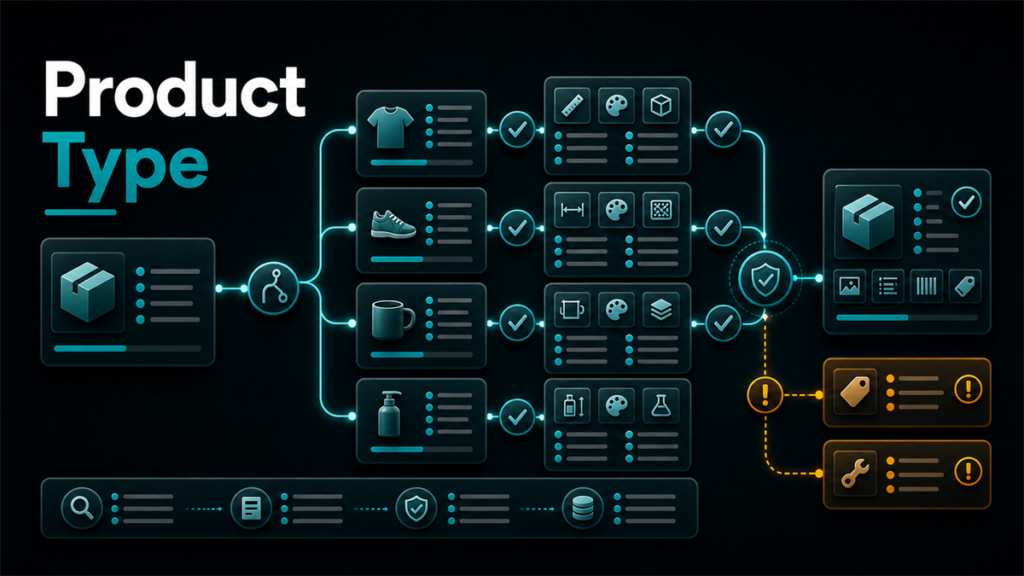
On Walmart, product type and attributes are not small setup details. They shape how the item is understood, where it belongs, and how much cleanup the seller may need later. If the wrong product type is chosen or the attributes stay too generic, the listing can become harder to manage and less useful to shoppers.
Key Takeaways
- Product type determines which attributes appear and how the item is structured.
- Walmart's Item Spec is designed to make attributes more relevant and more granular, which means weak early choices become more visible later.
- Sellers often create future cleanup by treating product type like a box to click through quickly.
- Better attribute depth helps both setup quality and product discoverability.
- The safest workflow is choose product type carefully, then fill the structured attributes completely enough to support the category.
Why Product Type Matters So Much
Many sellers treat product type as a quick administrative choice. On Walmart, it is more important than that. Product type helps define the attribute logic surrounding the listing. It influences which fields become available, what structured data the item carries, and how the product can appear in navigation and discovery.
That means the wrong choice can create trouble in two directions:
Walmart's own Item Spec positioning makes this point clearly. The platform emphasizes better attribute relevance, more structured text, and more precise item attribution. Sellers benefit from that only if they actually use the structure well.
The Attribute Problem Sellers Usually Create Themselves
The most common issue is not that Walmart asks for too much data. It is that sellers bring weak data into a more structured environment.
That usually looks like:
The listing may still go live. But it becomes a weaker foundation for discoverability and future edits.
What Good Attribute Depth Looks Like
Good attribute depth does not mean filling every field mechanically. It means filling the fields that actually help Walmart understand the item correctly.
That usually includes:
The goal is not to satisfy a spreadsheet. The goal is to create a better product record.
Why Generic Data Creates Cleanup Later
Generic data can feel efficient because it speeds up the first upload. But that speed is often borrowed from the future.
Later, sellers run into:
This is one reason Walmart's newer Item Spec framing matters. More structured and more relevant attributes are helpful only if the underlying source data is disciplined enough to use them.
A Better Setup Routine
1. Choose product type carefully
Do not treat it like a throwaway choice. Review the actual product and choose the most accurate match.
2. Build from verified product data
Use real product specs, packaging details, and material data rather than recycled marketplace copy whenever possible.
3. Fill the category-specific fields that actually matter
If the field helps define how the product is understood or filtered, it deserves more attention than a placeholder answer.
4. Review consistency across similar items
If your catalog has product families or repeat product lines, weak consistency becomes expensive.
5. Recheck before scaling
A small attribute mistake across one listing is manageable. Across a large catalog, it becomes a maintenance problem.
The Amazon-First Mistake
Amazon-first teams often assume the work is mostly about titles, bullets, and image polish. That experience is useful, but Walmart's item setup pushes more directly on structured attribute quality. Sellers who ignore that difference create friction for themselves.
The right shift is simple: stop thinking only about how the listing looks, and think more about how the product record is built.
Scenario: The Listing That Was Live but Still Weak
A seller uploaded a line of home-organization products to Walmart and saw that the listings were technically live. At first, that looked like success. A later review showed the product type choices had been rushed, several useful attributes were still generic, and some physical details were copied from older sheets without verification.
Nothing dramatic failed at once. But the catalog became harder to maintain, and discoverability stayed weaker than expected.
The seller eventually rebuilt the setup with cleaner product types and stronger attribute depth. The main lesson was not that Walmart was harder. It was that Walmart exposed the cost of generic setup habits more clearly.
FAQ
Does product type really affect discoverability?
Yes. It helps determine which structured attributes the listing carries and how the item is understood.
Should I fill every attribute I can?
Focus on accurate, relevant fields. The goal is useful structure, not random completeness.
Is this only important for large catalogs?
No. Small catalogs benefit too, and bad setup habits are easier to fix early.
Can I fix weak attributes later?
Often yes, but post-upload cleanup is usually slower than getting the structure right the first time.
Is this the same as Walmart listing quality?
Related, but not identical. This page is about building the product record correctly at setup.
Better Product Records Make Better Listings
Walmart product type and attributes matter because they shape the listing before performance work even begins. Sellers who slow down enough to choose the right structure usually save themselves rework later and give the catalog a stronger foundation from the start.
If your Walmart catalog is growing and the setup work is getting harder to trust, Qubeq can help with the structure behind the listing through broader other marketplace operations. If you want help pressure-testing your Walmart item setup before it scales, contact us here.