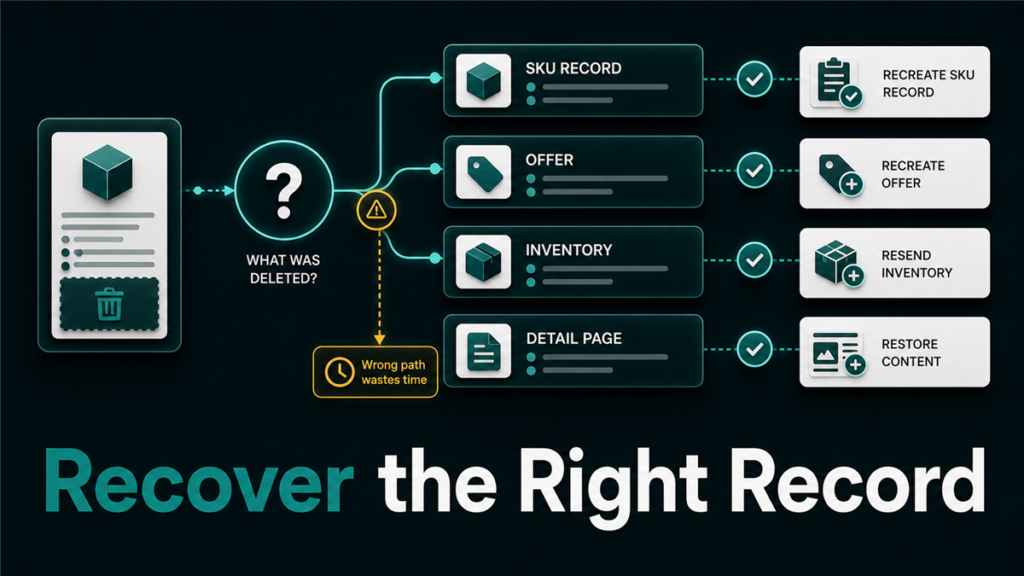
A deleted SKU is not always a deleted ASIN. To recover deleted Amazon listing access, first identify whether the seller offer, SKU record, product detail page, inventory status, or catalog record is affected.
Key Takeaways
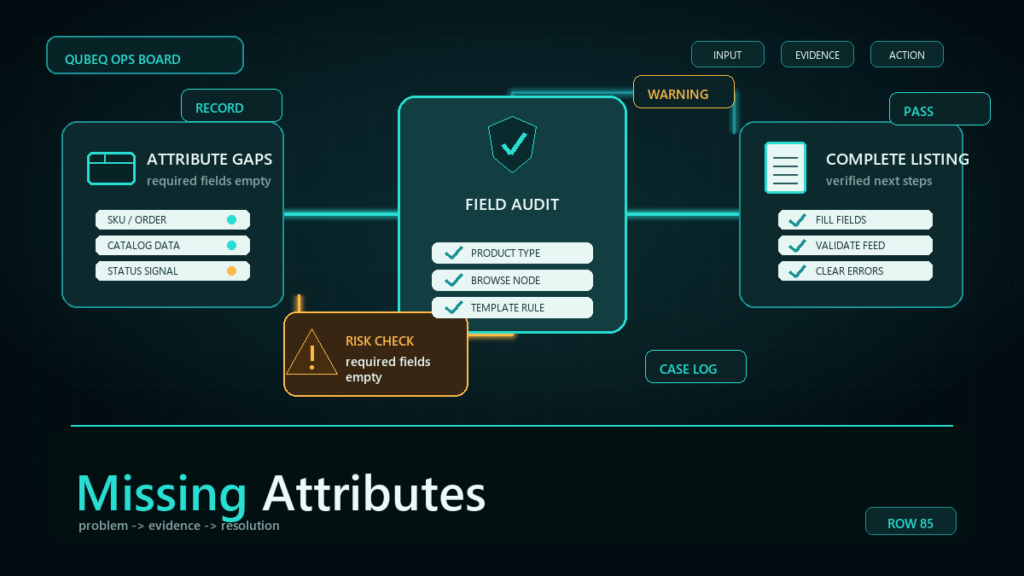
- A missing listing can mean a deleted SKU, inactive offer, suppressed listing, stranded inventory, or unavailable detail page.
- Recreating a SKU can help in some cases, but it can also create duplicate work if the ASIN or catalog record has a deeper issue.
- Sellers should check inventory, suppression, stranded inventory, and catalog status before opening a case.
- Amazon Product Detail Page Rules matter because sellers should not create duplicate detail pages for the same product.
- A strong recovery case includes ASIN, SKU, screenshots, feed history, inventory status, and a clear explanation of what changed.
What Does a Deleted Amazon Listing Mean?
A deleted Amazon listing usually means the seller-side SKU or offer is no longer active in the account, not that Amazon removed the entire product from the catalog. The ASIN may still exist, the detail page may still exist, and other sellers may still be attached to the same product.
This difference matters because each problem has a different fix. A deleted SKU may be recreated. A suppressed listing needs a content or compliance correction. Stranded inventory needs inventory reconciliation. An unavailable detail page may need catalog support. A removed offer may require Account Health or policy review.
| What the seller sees | Likely meaning | First check |
| SKU missing from Manage Inventory | Deleted or closed seller SKU | Inventory history and feed submissions |
| Listing inactive or suppressed | Offer exists but cannot show live | Suppression reason and listing quality alerts |
| FBA units stranded | Inventory exists without a sellable offer | Stranded inventory view |
| Detail page not available | ASIN page may be unavailable, merged, or restricted | ASIN status and catalog case history |
| Offer removed after a warning | Account Health or policy issue | Account Health notice |
How to Diagnose Before You Recreate the SKU
The safest recovery path starts with diagnosis, not reuploading the same SKU repeatedly. Repeated uploads can make the catalog trail harder to read and may hide the real issue.
- Search the ASIN on Amazon and inside Seller Central.
- Check whether the SKU exists in Manage Inventory.
- Review inactive, suppressed, and stranded inventory views.
- Check recent flat file uploads, feed processing reports, and manual edits.
- Review Account Health for ASIN-level or offer-level notices.
- Confirm whether the detail page exists and matches the product.
- Gather evidence before opening a Seller Central case.
If the ASIN exists and only the SKU is gone, a controlled SKU recreation may be enough. If the ASIN page is unavailable, merged, restricted, or connected to a policy notice, a simple SKU recreation will not solve the core problem.
When Is Recreating a Deleted SKU Safe?
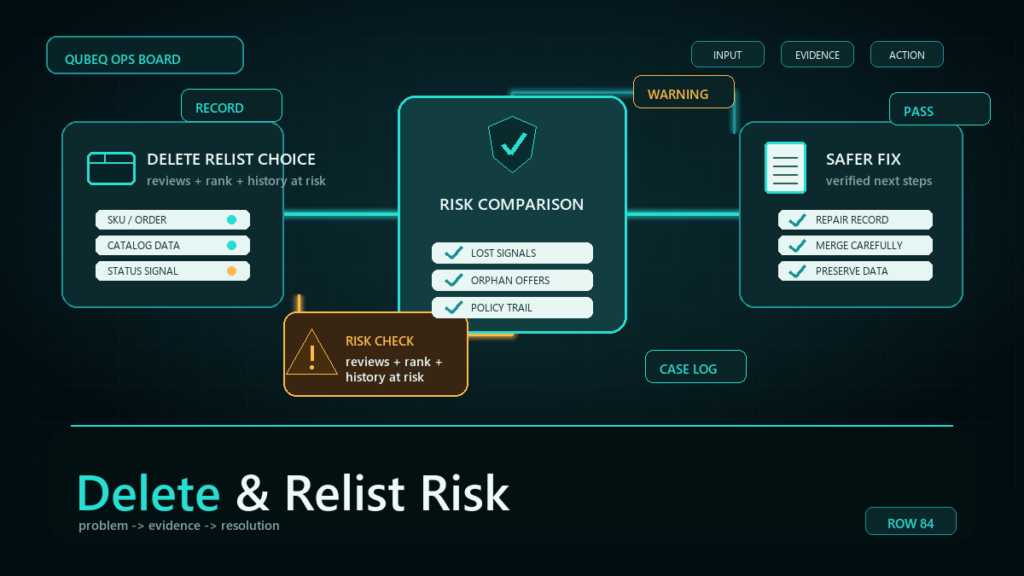
Recreating a deleted SKU is usually safest when the ASIN still exists, the product detail page is accurate, the offer was removed by seller action, and there is no open policy or catalog conflict. In that situation, the seller may be restoring a seller-controlled offer relationship.
Recreating the SKU is riskier when the product page is inaccurate, the offer was removed after a complaint, the catalog has duplicate ASINs, or FBA inventory is stranded under a different SKU. The operations team should map the current account state before pushing new data.
What Evidence Should You Gather for Listing Recovery?
A useful listing recovery file should make the issue easy for Amazon support to understand. Do not send a vague message that says "my listing disappeared." Send a concise case with proof.
Use this evidence checklist:
- ASIN and SKU affected.
- Date the listing disappeared or changed.
- Current Manage Inventory status.
- Suppression or stranded inventory screenshot if available.
- Feed batch ID or processing report for recent uploads.
- Product title, brand, UPC or GTIN if relevant.
- FBA shipment or inventory status if units are affected.
- Any Account Health notice tied to the ASIN.
- Clear requested action, such as restore offer, investigate unavailable detail page, or confirm stranded inventory path.
Mini-Scenario
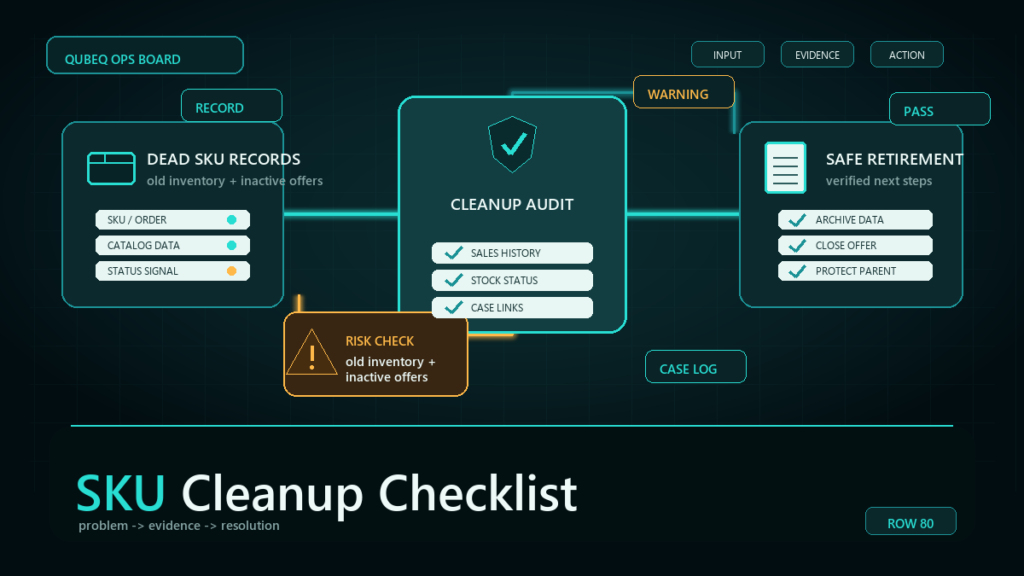
A seller deletes an old SKU after a catalog cleanup, then notices FBA units are no longer attached to an active offer. The team first tries to recreate the SKU, but the inventory remains stranded because the fulfillment-side record still points to the old setup. The better path is to confirm the stranded inventory reason, match the ASIN and FNSKU trail, then open a case with the exact inventory evidence instead of creating new duplicate SKUs.
FAQ
Can Amazon restore a deleted listing?
Amazon may help restore access depending on whether the issue is a seller-side SKU, offer status, detail page problem, inventory problem, or policy issue. There is no universal restoration path.
Is a deleted SKU the same as a deleted ASIN?
No. A deleted SKU belongs to the seller account. An ASIN is the catalog product record. A seller can lose a SKU while the ASIN still exists.
Should I create a new ASIN if my listing disappeared?
Usually no. Creating a duplicate ASIN for a product already in Amazon's catalog can create catalog problems. Check the existing ASIN and Product Detail Page Rules first.
Why is my FBA inventory stranded after deleting a listing?
FBA inventory can become stranded when inventory exists without an active, sellable offer. The exact fix depends on the stranded inventory reason shown in Seller Central.
When should I open a Seller Central case?
Open a case after you identify whether the issue is SKU deletion, suppression, stranded inventory, unavailable detail page, or a policy notice. A focused case is easier to resolve.
Need Help Recovering a Listing?
If your team is dealing with missing SKUs, stranded inventory, unavailable detail pages, or repeated catalog recovery cases, Qubeq can review the account state and identify the cleanest recovery path before more listings are affected.