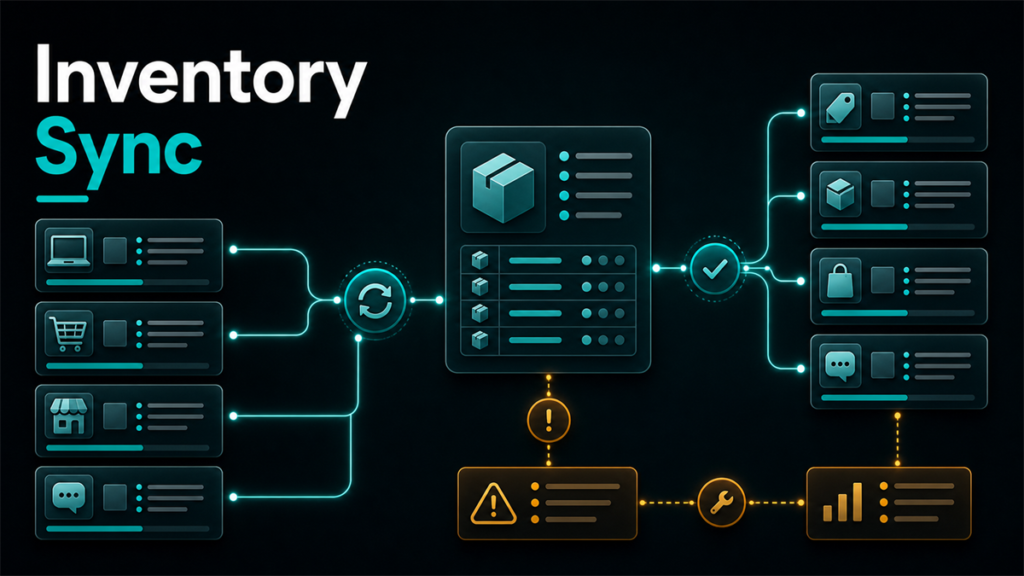
Inventory reconciliation is important, but it is not the whole system. Before a seller can reconcile anything well, the business needs a design for how stock is supposed to move, where truth lives, and how different locations and channels should consume that stock.
Key Takeaways
- Multi-channel inventory management is a systems problem before it is a reporting problem.
- Shopify location logic, marketplace sync tools, and channel demand patterns all need to fit one clear stock model.
- If the team does not know which system is the source of truth, every sync becomes less trustworthy.
- Transfers, channel priority, and stock reservation logic matter as much as visible quantity.
- Better inventory management prevents many reconciliation problems from happening in the first place.
Why Reconciliation Alone Is Not Enough
A seller can run weekly reconciliation and still stay fragile if the system design is weak. That happens when:
Reconciliation helps find drift. Inventory management design helps prevent drift.
The Three Design Questions That Come First
1. Where does truth live?
One system needs to be trusted most. If one team member thinks truth lives in Shopify, another in Amazon, and another in a spreadsheet, the process is already unstable.
2. How are locations handled?
Shopify's own multi-location guidance makes an important point: inventory at each location is independent. That matters because many businesses still talk about inventory like it is one simple pool even when warehouse, store, and fulfillment-app logic are different.
3. Which channel gets priority?
If stock gets tight, does Amazon keep selling first? Does Shopify protect direct orders? Does Walmart get reduced availability sooner? A system without channel-priority rules becomes reactive fast.
Where Multi-Channel Inventory Usually Breaks
Transfers are treated casually
Inventory moving between locations is not the same as inventory ready to sell at the destination. Shopify's transfer guidance makes that distinction explicit, and sellers should too.
Marketplace connectors are trusted too blindly
Shopify Marketplace Connect and similar tools can reduce manual work, but they do not eliminate the need for stock logic and review.
Locations and channels are mixed together mentally
The business knows the goods exist somewhere, so people assume they are equally usable everywhere. That is often false.
One channel's urgency dominates the whole system
If Amazon or another channel always gets first attention, other channels quietly become less reliable over time.
A Stronger Inventory Management Model
The healthiest multi-channel operators usually define:
That does not make the business rigid. It makes the business understandable.
A Practical Operating Routine
Each week, the team should review:
- stock by source-of-truth system
- location availability and transfer status
- channel allocations or priority pressure
- products at risk of oversell or under-allocation
- changes in demand caused by promotions, repricing, or content pushes
This routine prevents the classic problem of finding out too late that one channel was living on stock that had already been committed elsewhere.
Scenario: The Team That Had Great Reconciliation and Poor Design
A brand sold through Amazon, Walmart, and Shopify. The operations manager ran regular reconciliation reports and could often explain where mismatches came from. But the problems kept returning.
The deeper issue was that the system design was weak. Locations were not treated consistently, one channel always took priority informally, and transfers were mentally counted as sellable too early. Reconciliation was finding problems the operating model kept recreating.
Once the team defined a clearer source-of-truth system, transfer handling, and channel-priority logic, the same catalog became easier to manage.
FAQ
Is multi-channel inventory management the same as reconciliation?
No. Reconciliation checks what happened. Inventory management defines how the system should work.
Why do locations matter so much?
Because stock in one location is not automatically available for every order path at the same time.
Does Shopify solve multi-channel inventory by itself?
No. It provides strong location and transfer tools, but the operating model still needs to be designed.
Should one channel get priority?
Often yes, but that should be explicit rather than accidental.
What is the most important first step?
Decide where truth lives and make sure the team agrees on it.
Better Inventory Management Starts Before the Weekly Review
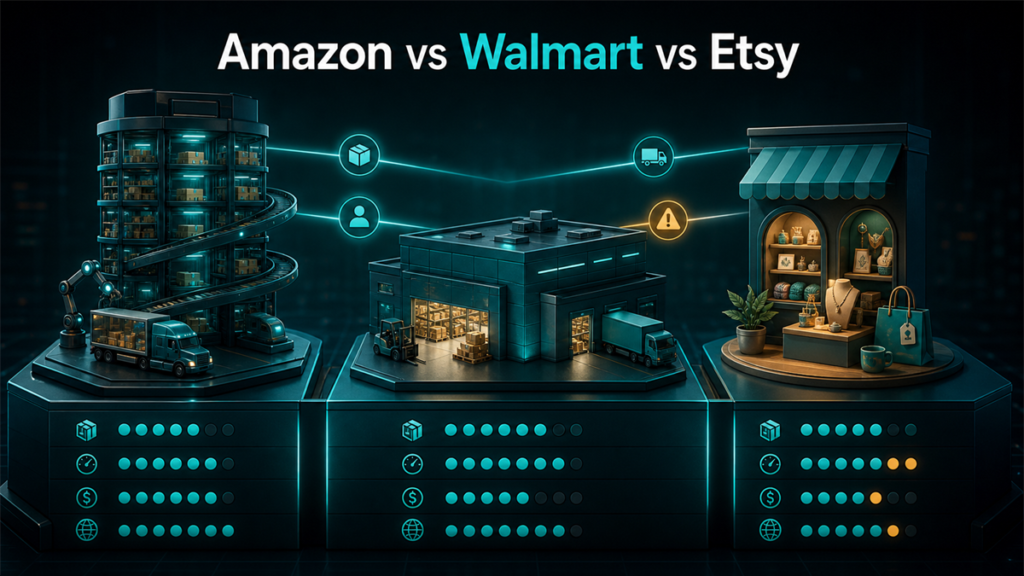
The cleanest multi-channel systems are not the ones with the most dashboards. They are the ones with the clearest rules. Once source of truth, location logic, transfers, and channel priority are defined, the whole stock system becomes easier to trust.
If your business is trying to scale across Amazon, Walmart, and Shopify without losing inventory control, Qubeq can help think through those broader other marketplace operations. If you want help pressure-testing the stock model behind the syncs, contact us here.