You can list products on Amazon without a GTIN or UPC if Amazon grants a GTIN exemption for your brand and category combination. The exemption fits cases like private-label products you manufacture, handmade goods, bundles, and parts without identifiers. It is not a shortcut for reselling branded products that already have valid barcodes, and it does not remove FBA labeling or other catalog requirements. This guide covers when the exemption applies, how the application works, and the mistakes that get it denied.
Key Takeaways
- GTIN is the umbrella term for product identifiers like UPC, EAN, ISBN, and JAN. Amazon usually asks for one when you create a new listing.
- A GTIN exemption lets eligible sellers create listings without entering a product ID, approved per brand and category combination.
- If a product already has a valid manufacturer GTIN, use it. The exemption path is for products that legitimately lack identifiers, not for avoiding them.
- Never use recycled or third-party barcodes. If you need a real UPC, GS1 is the official issuer, and mismatched codes create catalog conflicts and compliance risk.
- An exemption changes listing creation only. FBA barcode requirements, brand consistency rules, and category restrictions still apply.
What Is a GTIN and When Does Amazon Ask for One?
A GTIN (Global Trade Item Number) is the standardized product identifier family that includes the UPC common in the US, the EAN common in Europe, the ISBN for books, and the JAN for Japan. GS1, the global standards organization, issues them. Amazon uses GTINs to match new listings against existing catalog entries, so one product maps to one detail page.
When you add a product that already exists in Amazon's catalog, you list against the existing ASIN and the identifier question mostly disappears. When you create a new listing, Amazon generally asks for a product ID. That is the moment the exemption question matters: products that genuinely have no GTIN need an approved path into the catalog.
One distinction worth keeping clean: a GTIN identifies the product globally; an FNSKU is Amazon's fulfillment barcode tying FBA inventory to your account. An exemption affects the first, not the second. Products listed under an exemption still follow current FBA barcode requirements if you fulfill through FBA.
Who Qualifies for a GTIN Exemption?
Amazon describes the exemption as applying in limited cases. The common qualifying situations:
- Private-label products you manufacture or have manufactured, where no GTIN was assigned.
- Handmade and custom products.
- Bundles you assemble, such as a multi-product gift set you define.
- Parts and accessories that ship without identifiers.
- Generic, unbranded products, listed as generic rather than under an invented brand.
The common disqualifier: reselling another brand's product that already carries a valid manufacturer barcode. In that case the correct path is using the manufacturer's GTIN to list against the existing catalog entry. Some brands also require a GTIN regardless of seller intent, and eligibility is evaluated per brand and category, so an approval in one category does not cover another.
Eligibility rules and the application workflow change over time. The eligibility check inside the current Seller Central application is the authority, not any static list.
How to Apply for a GTIN Exemption
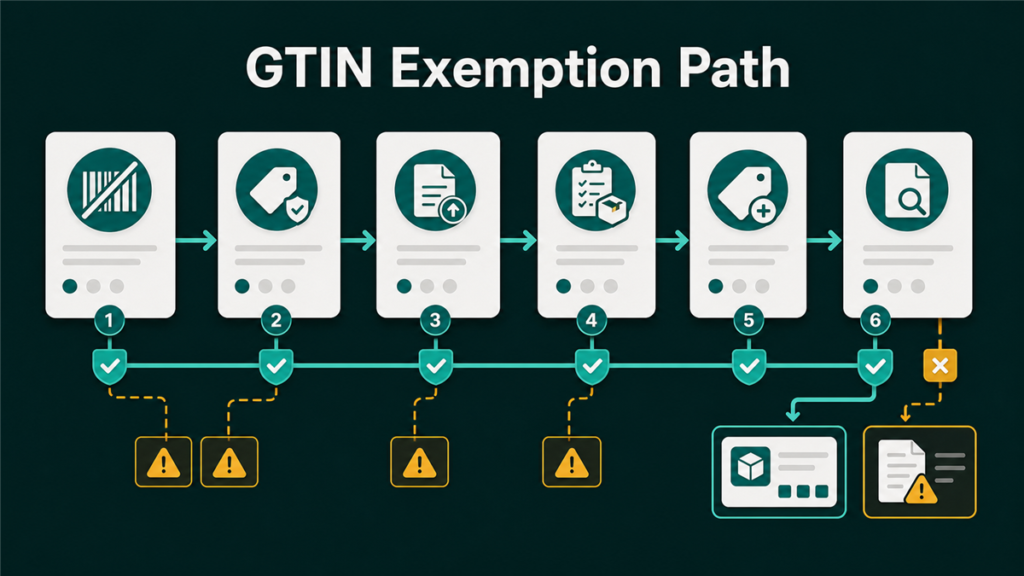
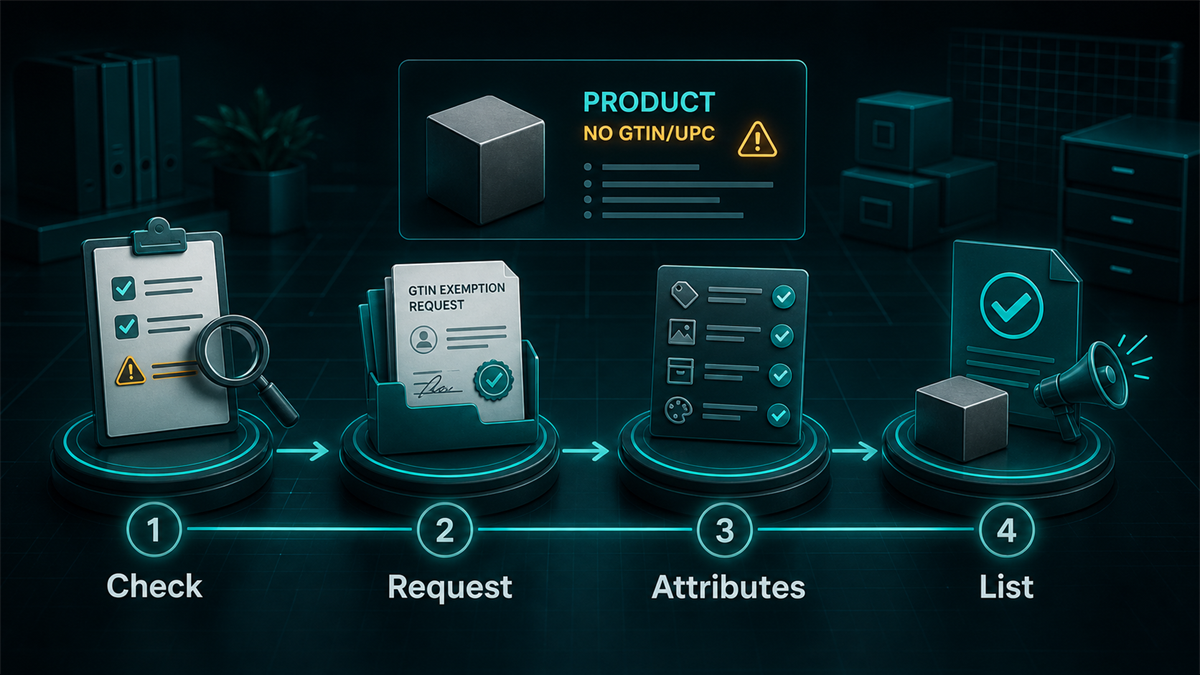
The workflow runs inside Seller Central and follows this shape. Labels and steps shift, so treat the current interface as controlling:
- Open the GTIN exemption application. It is reachable through Seller Central help or the Add Products workflow when a product ID is requested.
- Select the category and enter the brand name. For unbranded products, the brand is typically entered as Generic. For branded products, the name must match how the brand appears on the product and packaging, exactly.
- Run the eligibility check. Amazon indicates whether the brand and category combination qualifies. If it does not, the answer is a valid GTIN, not a workaround.
- Provide evidence where requested. Applications commonly involve real photos of the product and packaging showing the branding, or showing the absence of a barcode, and supporting documents such as an authorization letter where you sell with a brand owner's permission. Mock-ups and renders are the classic rejection trigger; use actual photographs.
- Submit and watch the case log. Decisions can arrive quickly or take longer depending on the category and review path. Respond fast if Amazon asks for clarification.
- Create the listing after approval, using the same brand name and category the exemption covers, character for character. A mismatch between the approved brand and the listing brand quietly breaks the exemption path and produces listing errors.
Why GTIN Exemption Applications Fail
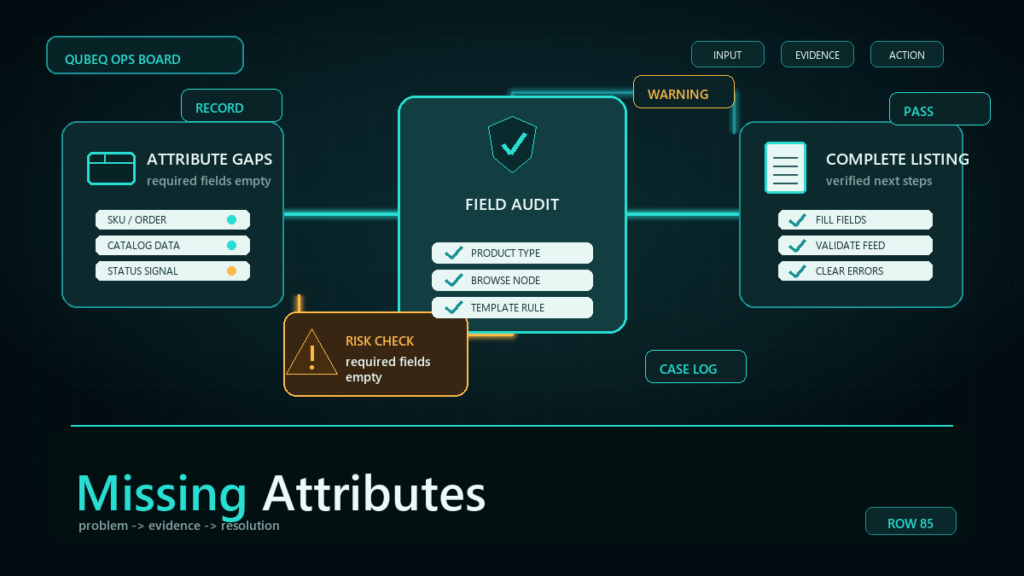
| Failure | What happened | Prevention |
| Brand name mismatch | Application says one form of the name, product photos or listing say another | One canonical brand spelling everywhere: application, packaging, listing |
| Mock-up images | Renders or digitally edited images submitted as product photos | Photograph the physical product and packaging |
| Branding not visible | Photos do not clearly show the brand on the product or packaging | Shoot the angles that show branding plainly |
| Ineligible brand or category | The combination requires a GTIN | Use a GS1-issued identifier instead |
| Wrong use case | Reselling a branded product that already has a barcode | List against the existing ASIN with the manufacturer GTIN |
| Listing created with mismatched details | Post-approval listing uses a different brand or category | Reuse the approved combination exactly |
When You Should Buy a Real GTIN Instead
An exemption is the right tool for products that legitimately lack identifiers. A GS1-issued UPC is the right tool when:
- The brand or category requires a GTIN.
- You plan to sell into retail stores or other marketplaces, where UPCs are standard infrastructure.
- You are building a long-term brand and want clean, globally consistent product identity from the start.
If you buy a UPC, buy from GS1. Cheap codes from third-party resellers are frequently recycled from other companies' prefixes, which can collide with existing catalog records and create listing errors and compliance problems. The identifier on your product should trace to your company, not to whoever owned the prefix a decade ago. A product ID is also generally locked once a listing is created, so an identifier mistake at creation is expensive to unwind; this behavior should be verified in current Seller Central guidance, but the operational rule stands either way: get the identifier right the first time.
After the Exemption: What Still Applies
The exemption answers one question, the product ID field. Everything else about catalog compliance still applies:
- FBA barcodes. Exempt products fulfilled through FBA follow the current FBA product barcode requirements, which for products without manufacturer barcodes means Amazon barcode labeling. See the FNSKU guide for the labeling workflow.
- Brand consistency. The brand on the listing, the product, the packaging, and any future Brand Registry application should be the same string. Inconsistencies here cause downstream pain well beyond the exemption.
- Category and product compliance. Restricted category approval, condition rules, and product compliance documentation are unaffected by the exemption.
- Catalog accuracy. Generic products should be listed as generic, not attached to branded ASINs, and bundle listings should accurately describe what the bundle contains.
Mini-Scenario: The Brand Name With Two Spellings
A handmade goods seller applied for a GTIN exemption under the brand name written as two words, the way it appeared on the company's website. The packaging, printed earlier, showed the name as one compound word. The application was rejected because the photos did not match the applied-for brand. The fix was choosing one canonical spelling, reprinting a small packaging batch to match, and reapplying with photos of the corrected packaging. Approval followed, and the same canonical spelling went onto the listings. The lesson generalizes: the brand string is an exact-match key across the application, the product, the listing, and any later Brand Registry enrollment. Pick one form and never improvise variants.
FAQ
Can I sell on Amazon without a UPC?
Yes, in qualifying cases. If Amazon grants a GTIN exemption for your brand and category, you can create listings without entering a product ID. If the product already has a valid manufacturer barcode, use that instead.
How long does GTIN exemption approval take?
It varies by category and review path, from quick automated checks to longer manual reviews. Clean applications with exact brand matching and real photos move fastest. Watch the case log and respond promptly to requests.
Does a GTIN exemption cover all my products?
No. Exemptions apply to the brand and category combination approved. New categories or differently branded products need their own applications.
Do I still need barcodes for FBA after an exemption?
The exemption covers listing creation, not fulfillment. FBA inventory follows Amazon's product barcode requirements, and products without manufacturer barcodes use Amazon barcode labeling. Check the shipment workflow for what your SKU requires.
Can I use a cheap UPC from a third-party site instead?
Avoid it. Non-GS1 codes are often recycled and can mismatch GS1 records, creating catalog conflicts and compliance risk. If you need a UPC, GS1 is the official source.
What if my brand or category is not eligible for exemption?
Then the listing path requires a valid GTIN. Buy a GS1-issued identifier, or if you are reselling an existing branded product, list against the existing ASIN with the manufacturer's identifier.
Getting the Identifier Decision Right Once
The product ID decision happens once per product and propagates everywhere: catalog matching, FBA labeling, brand consistency, and future Brand Registry plans. Decide deliberately, use the exemption where it genuinely applies, buy GS1 identifiers where it does not, and keep the brand string identical across every surface.
If listing creation errors, identifier conflicts, or brand inconsistencies are already tangled in your catalog, Qubeq works on exactly this kind of cleanup as part of catalog and listing management. We can review the catalog and untangle the identifier problems before they multiply.