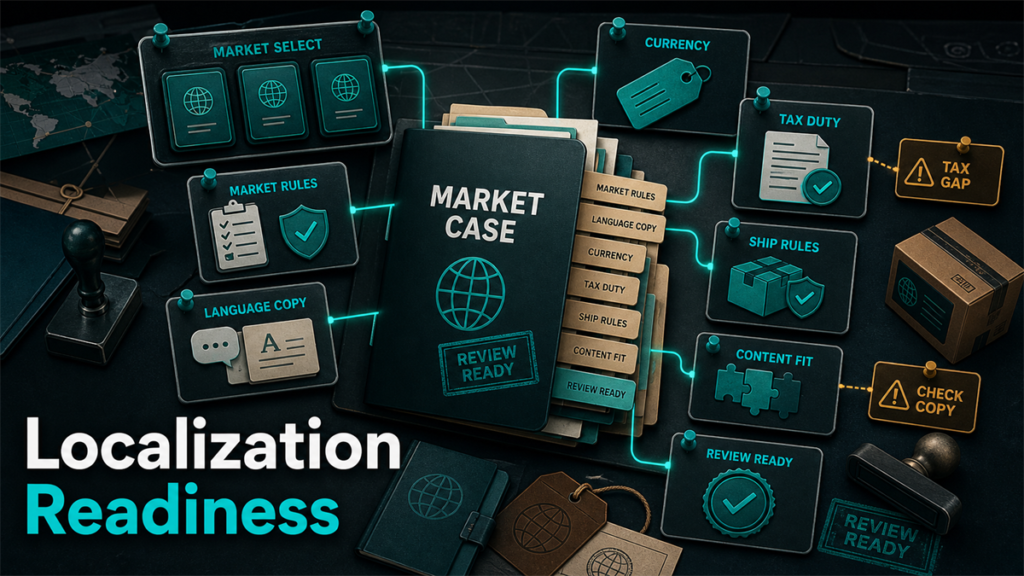
Shopify Markets localization readiness is about controlling the customer experience by market, not just translating a few pages. If domains, language, and audience logic are not aligned first, a store can look international on the surface while still feeling inconsistent underneath.
Freshness note: Shopify Markets can customize currency, language, pricing, domains, and market-level experiences, so sellers should QA selectors, URLs, language settings, and market-specific content before launch.
Key Takeaways
- Shopify Markets lets merchants shape customer experience by market conditions such as language, currency, and content.
- Localization gets cleaner when the URL structure and market logic are decided before rollout.
- Customers should land in an experience that matches the market-specific URL and content setup.
- Merchants should think of localization as experience control, not just translation work.
- The safest rollout starts with a limited market structure that the team can actually maintain.
What Localization Readiness Means In Markets
Shopify Markets gives merchants a way to define audiences and tailor their experience. That includes things like domains, language, pricing context, and theme content by market. Those decisions influence how a customer enters the store and what they see once they arrive.
That means localization readiness is not just about adding a second language. It means answering:
- How will customers be routed into the correct market?
- Which URL method will be used for market-specific experiences?
- Is the store content ready to stay consistent inside that structure?
When those answers are vague, the experience can become confusing fast.
The Three Setup Decisions That Matter Most
Market-specific URLs
Shopify supports different ways to structure market experiences, including domains, subdomains, and subfolders. The method matters because it affects how the customer lands in the experience and stays there.
Language handling
Localization should feel intentional. If the market-specific experience is only partly translated or only partly reviewed, the customer sees the seams.
Market-level content control
A localized market is not only language. It is the combination of page content, pricing context, and country or region targeting that shapes the storefront.

Where Merchants Usually Create Friction
They start with translation instead of experience logic
Translation matters, but the customer path into the market matters first.
They use a market setup the team cannot maintain
A complicated structure is not better if it becomes operationally inconsistent.
They forget that customers stay in the market-specific session flow
If a customer lands on a market-specific URL, the experience should keep making sense after that first click.
A Practical Localization Checklist
- Decide how market-specific URLs will be structured.
- Confirm the language experience matches the target market.
- Review whether pricing and content feel consistent inside that experience.
- Start with a manageable number of localized markets.
- Re-check the journey from landing page to checkout before expanding further.
Scenario: The Store Was Translated but The Market Experience Was Loose
A merchant wanted to expand internationally and moved quickly on translated content. But the store structure was still loose. Some market-specific URLs made sense, some did not, and the team had not fully decided how customers should flow between language and market experiences.
The result was not a broken store. It was a store that felt uneven. Once the merchant tightened the market structure and reviewed localization as an experience system instead of a translation project, the rollout became cleaner.
FAQ
Is localization in Shopify Markets only about translation?
No. It also includes how the customer is routed and what market-specific experience they receive.
Do domains and subfolders matter?
Yes. They shape how customers enter and stay in a market experience.
Should merchants localize every market at once?
Usually no. A smaller and maintainable structure is safer.
Does a market-specific URL guarantee a good localized experience?
No. The content and operational setup still have to match the market logic.
What is the biggest readiness mistake?
Translating content before deciding how the actual market experience will be structured and maintained.
Better International Experiences Start With Better Market Structure
Shopify Markets localization works better when the team treats it like controlled experience design rather than a quick language layer. If your store is balancing localization alongside broader channel expansion, Qubeq can help you think through those other marketplace operations. If you want help reviewing the rollout before it becomes messy, contact us here.