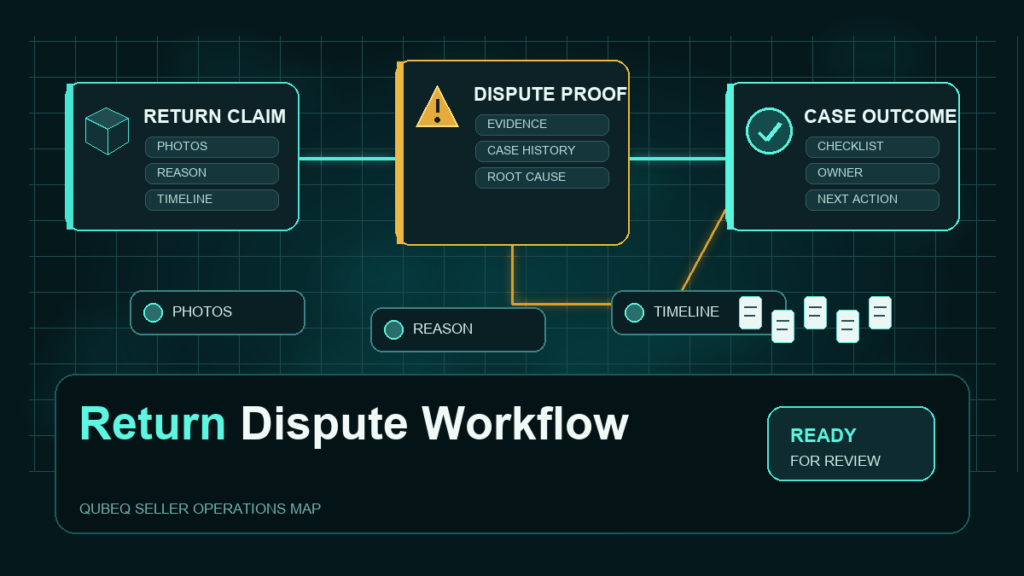
The Walmart return dispute workflow matters after a return goes wrong, not before. If sellers do not understand timing, evidence, and refund handling, they can miss the narrow window where a dispute is actually worth filing and supported well enough to review.
Key Takeaways
- Not every Walmart return should become a dispute.
- Sellers need to understand refund timing and dispute timing together.
- Evidence quality matters more than frustration or volume of complaints.
- The workflow is easier when the team reviews the return condition quickly.
- A disciplined dispute process is usually cleaner than a reactive one.
When The Dispute Workflow Matters
The dispute workflow becomes relevant when a return or refund outcome appears incorrect or unsuccessful from the seller's perspective. But that does not mean every unpleasant return should be escalated automatically.
The seller first needs to answer:
- Did the return actually fall outside the expected outcome?
- Is there enough evidence to explain why?
- Is the dispute still inside the relevant platform window?
If the answer to those questions is unclear, the team should slow down before escalating.
The Three Timing Pressures Sellers Need To Understand
Returns policy timing
Walmart's return standards set the overall framework for what the seller should expect in normal cases.
Refund timing
After a return is received, refund handling can move quickly. That makes internal review speed important.
Dispute timing
The seller still needs to know when a dispute can be filed and when that opportunity may close.
What Good Dispute Discipline Looks Like
Walmart return disputes are not one generic workflow. Seller-fulfilled return disputes, failed-delivery return refunds, WFS reimbursement disputes, and appeals can use different Seller Center paths, evidence requirements, and timing rules. Before filing, confirm the current Walmart Marketplace Learn dispute standards and the relevant Seller Center dashboard for the return type.
Review the return condition immediately
The longer the team waits, the harder it becomes to explain what actually happened.
Separate standard returns from dispute-worthy cases
Normal return friction is not the same thing as a dispute candidate.
Build the case around evidence
A dispute should explain what happened, why it is outside expectation, and what the supporting proof shows.
Where Sellers Usually Weaken Their Position
They dispute by default
That creates noise and weakens attention on the cases that really deserve review.
They miss the window
A correct argument still becomes less useful if the team waits too long.
They rely on frustration instead of documentation
Emotion does not replace evidence.
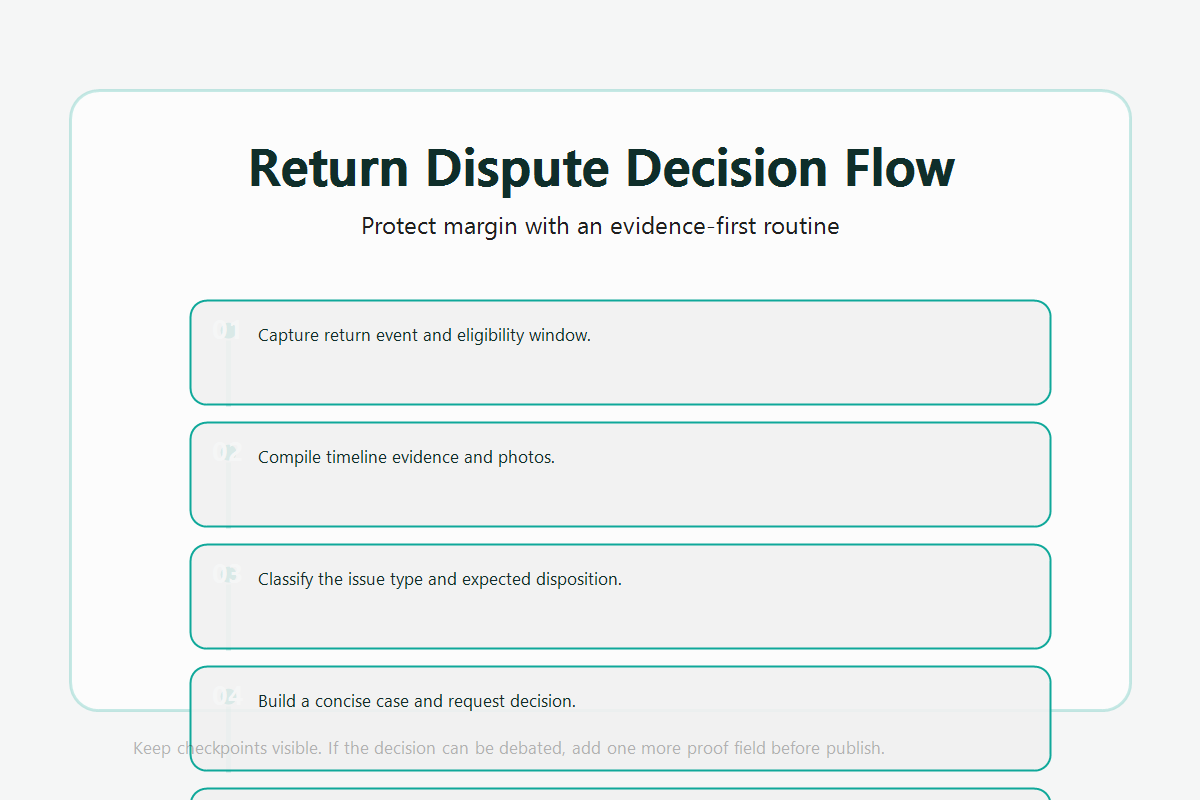
A Practical Return-Dispute Checklist
- Review the returned item or refund event as soon as possible.
- Confirm whether the scenario is genuinely outside standard expectations.
- Gather photos, timestamps, order details, and return context before filing.
- Check the current dispute window and dashboard path in Seller Center.
- Escalate only after the case narrative is clear and evidence-backed.
Scenario: The Seller Knew Something Was Wrong but Waited Too Long
A seller received a return that did not look right and assumed the issue could be handled later once the team had more time. By the time the return was reviewed carefully, the internal memory of the order was weaker and the team had less confidence in the exact timeline and condition history.
The dispute argument itself was reasonable. The workflow discipline was not. Once the team started reviewing suspicious returns much faster and documenting them immediately, the process became stronger.
FAQ
Should every return problem become a dispute?
No. Sellers should separate normal return friction from dispute-worthy exceptions.
Why does timing matter so much?
Because refunds, evidence review, and dispute windows all move quickly.
What matters more than frustration?
Documented evidence and a clear explanation of the issue.
Can a weak dispute still be technically correct?
Yes. A valid concern can still be presented poorly if the team delays or lacks evidence.
What is the biggest readiness mistake?
Waiting too long and filing a dispute before the facts are clearly documented.
Better Walmart Return Disputes Start With Faster Internal Review
The Walmart return dispute workflow works best when the seller treats it like an evidence and timing process rather than a reaction. If your team is trying to tighten returns handling across channels, Qubeq can help you think through those other marketplace operations. If you want help pressure-testing the process before disputes stack up, contact us here.