TikTok Shop brand authorization should be handled before branded listings go live, not after they get blocked. If ownership, authorization path, and proof documents are not prepared first, the seller can create avoidable compliance friction right at the product-listing stage.
Freshness note: Branded products that use trademarks need the right authorization path in Seller Center or Qualification Center, so sellers should confirm whether they are the trademark owner, an authorized seller, licensed, or co-branded before listing.
Key Takeaways
- Brand authorization is required when sellers want to list trademarked products on TikTok Shop.
- The workflow differs depending on whether the seller is the trademark owner or an authorized seller.
- Qualification Center is a compliance step, not just a formality.
- Documentation quality matters because authorization is proof based.
- The safest approach is to resolve brand rights before product creation scales.
What Brand-Authorization Readiness Means
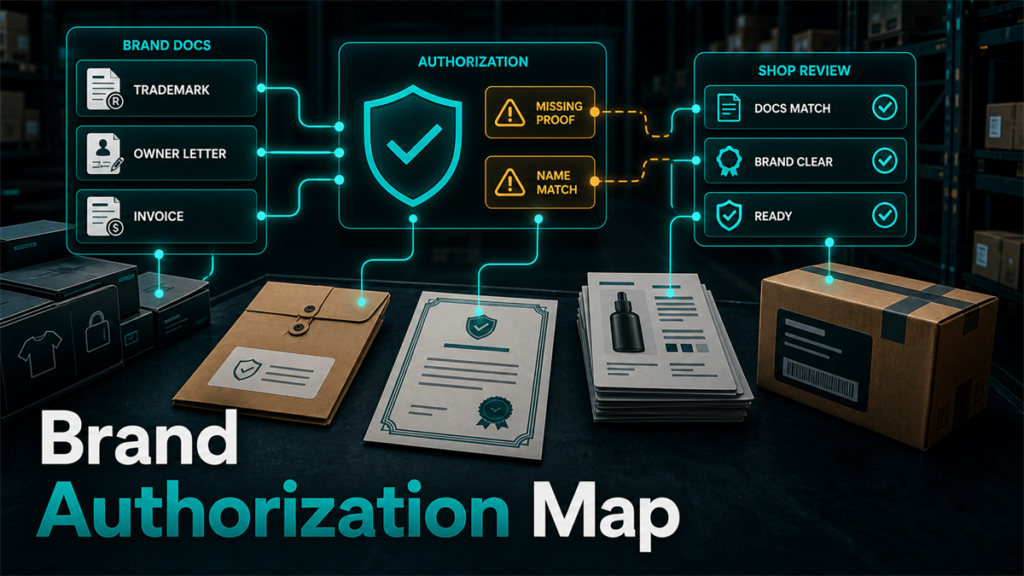
On TikTok Shop, brand authorization is the process of proving that the seller owns the trademark or has permission to list the brand's products. That makes readiness much more than a paperwork task. It is a listing-rights question.
A seller should be able to answer:
- Are we the trademark owner or an authorized seller?
- Do we have the correct proof for that path?
- Does the product branding match the documentation and storefront reality?
If those answers are incomplete, the listing path is not ready.
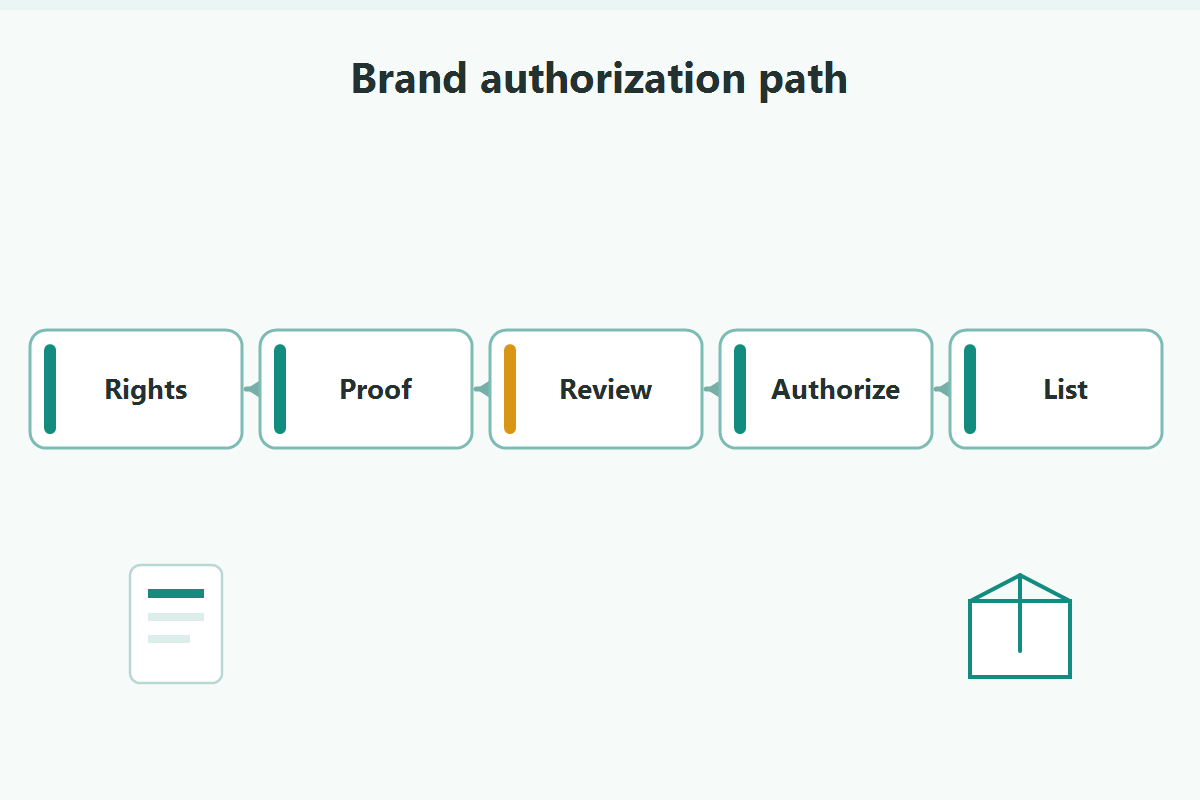
The Two Main Authorization Paths
Source note: TikTok Shop brand authorization paths and document requirements should be checked in the current TikTok Shop Academy and Seller Center Qualification Center before submitting, especially for trademark owner, first-level authorized seller, second-level authorized seller, and co-branding or licensing applications.
Trademark owner path
If the brand owns the trademark, the seller needs to follow the owner route and provide the required proof from that position.
Authorized seller path
If the brand does not own the trademark directly but has permission to sell the products, the authorization path depends on the documentation proving that right.
Where Sellers Usually Run Into Trouble
They list branded products before authorization is settled
That can create avoidable removals or restrictions.
The brand name does not match the supporting materials cleanly
If the listing, site, packaging, and proof tell different stories, trust weakens.
They guess which path fits them
Owner and authorized-seller routes are not interchangeable.
A Practical Brand-Authorization Checklist
- Confirm whether the seller is the trademark owner or an authorized seller.
- Gather the exact proof that matches that path.
- Review whether the brand naming on the product and storefront matches the documentation.
- Recheck the current Qualification Center flow before submitting.
- Resolve authorization before scaling branded-product listings.
Scenario: The Listing Team Was Ready but The Rights Layer Was Not
A seller had branded products ready to list and assumed the authorization step would be easy because the business had a real relationship with the brand. But the team had not clarified whether it was applying as the trademark owner or as an authorized seller, and the supporting materials were not organized around one path.
The products were real. The relationship was real. The issue was that the documentation was not ready to prove the right thing in the right way. Once the team clarified the path and aligned the materials, the process became easier to manage.
FAQ
Do sellers need brand authorization for trademarked products?
Yes, TikTok Shop's official guidance says authorization is required for trademarked products.
Is the workflow the same for brand owners and authorized sellers?
No. The documentation path differs depending on which role applies.
Should sellers wait until a product is removed before handling authorization?
Usually no. It is safer to prepare the rights layer first.
Does brand authorization replace other product compliance checks?
No. It is one part of listing readiness, not the whole picture.
What is the biggest readiness mistake?
Trying to list first and prove brand rights later.
Cleaner TikTok Listings Start With Clearer Rights
TikTok Shop brand authorization works better when the seller treats it like a listing-rights system, not a minor admin step. If your team is juggling compliance setup across several channels, Qubeq can help you think through those other marketplace operations. If you want help pressure-testing the documentation path before listing branded products, contact us here.