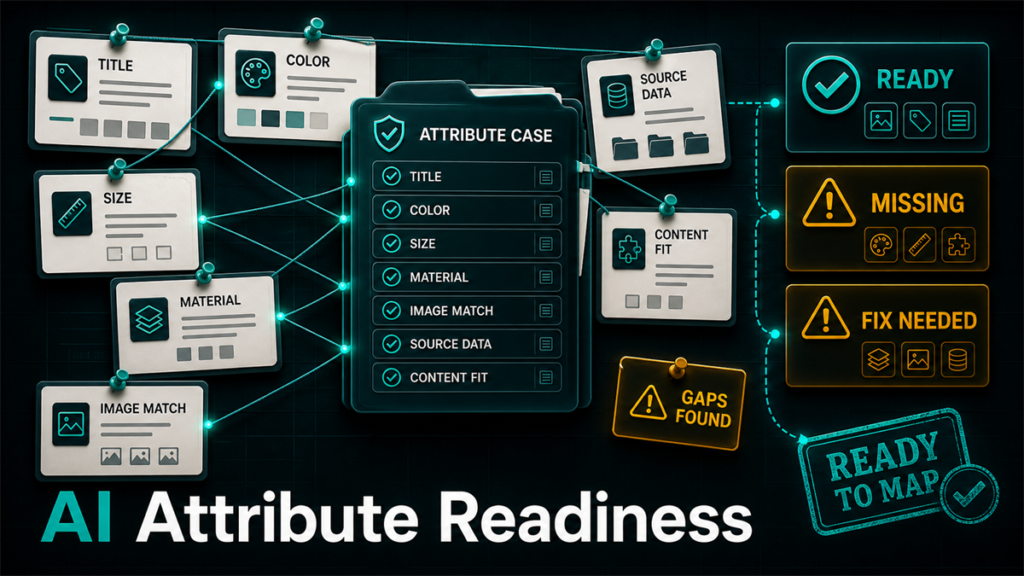
AI shopping attribute readiness starts at the product record, not at the chatbot. If titles, structured attributes, schema, and offer details are vague or inconsistent, AI-assisted shopping systems have less chance of understanding the product clearly enough to answer buyer questions well.
Freshness note: AI-shopping readiness depends on clean product attributes, product data, merchant feed fields, and structured data, so current Google product data and product structured-data guidance should be checked alongside the product record.
Key Takeaways
- AI shopping systems rely heavily on structured product data, not only on persuasive copy.
- Product attributes, schema, and category-linked details help machines interpret the product more accurately.
- Weak attribute coverage often creates weak product understanding later.
- Product detail depth matters when buyers compare features, materials, sizes, or compatibility.
- The safest readiness work starts by improving product records before chasing AI-facing features.
What Attribute Readiness Means For AI Shopping
AI shopping surfaces need interpretable product information. That usually means the product record is specific, structured, and internally consistent enough that a machine can connect the item, its variants, and its offer details without too much ambiguity.
In practical terms, the product record should answer:
- What exactly is this product?
- Which details make it different from related variants?
- What attributes help a buyer compare or evaluate it?
If those answers sit only in vague copy, the system has less structure to work with.
The Data Layers That Matter Most
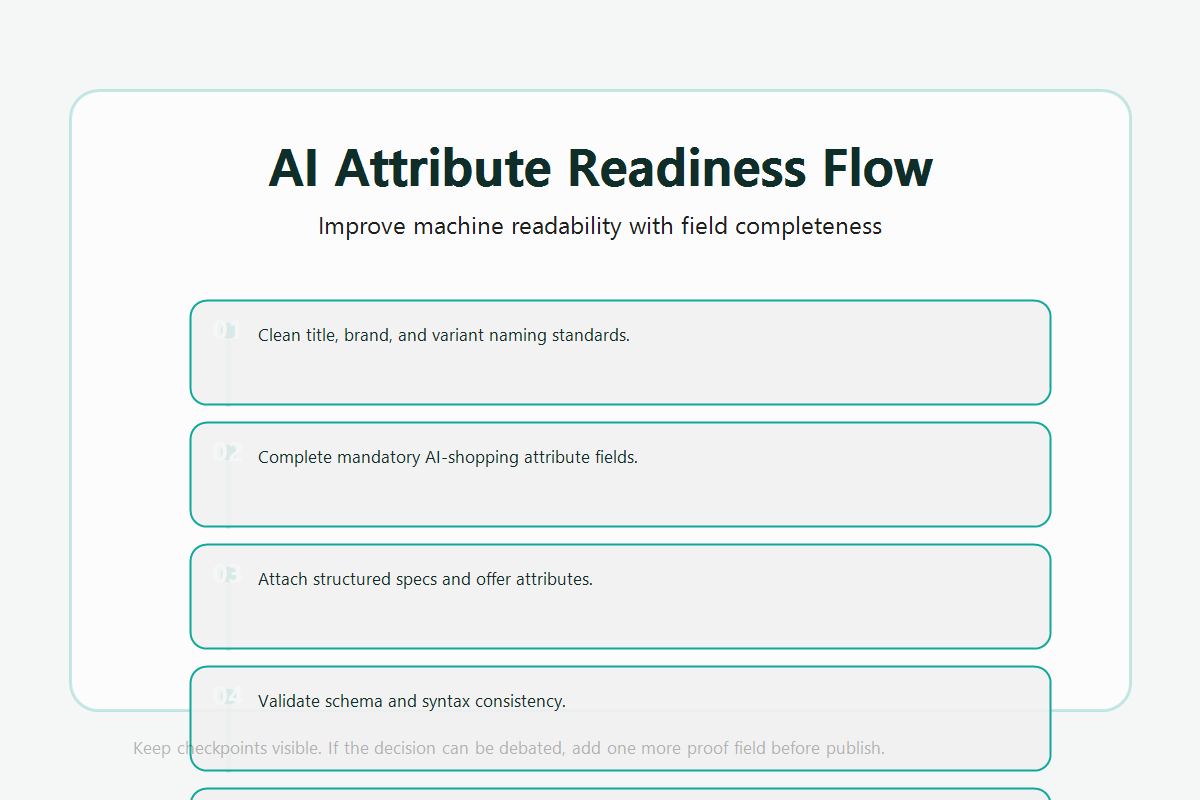
Structured attributes
Structured attributes help define the product in pieces that are easier for systems to interpret, compare, and validate.
Category-linked product details
When category structure and attributes align, the product record becomes more consistent and more useful.
Schema and merchant data alignment
If the page markup and merchant attributes disagree, product interpretation gets weaker.
Variant clarity
AI shopping systems need to understand what belongs to the product family and what differs between related items.
Where Merchants Usually Stay Too Vague
Titles and descriptions carry too much of the burden
They matter, but they should not be the only meaningful data layer.
Important specifications are missing or inconsistent
That makes product comparison harder for both buyers and systems.
Structured data and merchant data drift apart
When the product page says one thing and the structured record says another, trust weakens.
A Practical Attribute-Readiness Checklist
- Review whether core product attributes are explicitly captured in structured fields.
- Check that the category and attribute model fit the product's real function.
- Confirm that structured data and merchant data agree on the key details.
- Improve variant clarity for products with meaningful option differences.
- Start with high-value product groups before scaling the cleanup across the catalog.
Scenario: The Product Page Read Well but the Data Was Hard To Interpret
A merchant had solid-looking product pages and strong editorial copy, but the product records were still thin as structured data. Important specifications were either scattered across paragraphs or inconsistent from one product to the next. Buyers could read the page, but the product was not packaged cleanly as a machine-readable record.
The issue was not a lack of content. It was a lack of structured precision. Once the merchant improved the attribute layer, the product record became easier to interpret and compare.
FAQ
Is AI shopping readiness mainly about copywriting?
No. It depends heavily on structured product data.
Why do attributes matter so much?
Because they help systems understand, compare, and validate products more reliably.
Does schema alignment matter if the page already looks good?
Yes. Machine-readable consistency still matters.
Should every product have the same attribute depth?
Not necessarily. The right level depends on the product and its comparison needs.
What is the biggest readiness mistake?
Assuming a persuasive product page is enough even when the structured attribute layer is weak.
Better AI Shopping Results Usually Start Before The AI Layer
AI shopping attribute readiness works best when the product record is already clear, specific, and structured enough to survive machine interpretation. If your team is trying to tighten that data layer across channels, Qubeq can help you think through those other marketplace operations. If you want help pressure-testing the product record before broader AI-shopping work continues, contact us here.