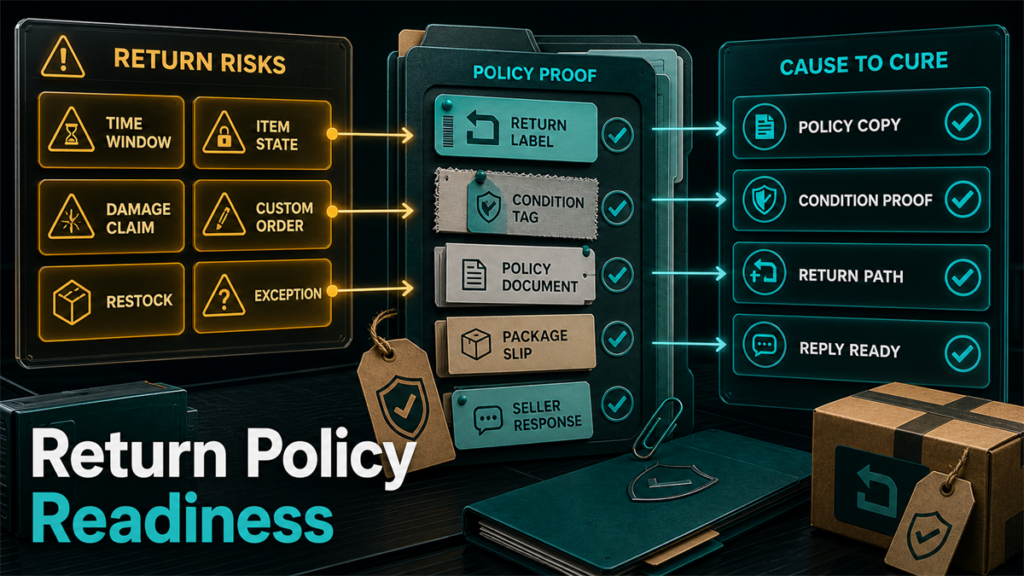
Etsy return policy readiness is mostly about expectation clarity. If return and exchange settings are vague, missing, or inconsistent across listings, sellers can create avoidable support friction before a buyer ever opens a help request.
Freshness note: Return obligations on Etsy depend on the listing and shop policy plus buyer communication, so shipping and return language should stay visible and operationally achievable.
Key Takeaways
- Etsy sellers should set clear return-policy expectations on physical listings.
- A visible policy matters even when the seller does not accept returns or exchanges.
- Listing-level return settings and broader shop-policy context should not conflict.
- Return readiness is part of buyer trust, not just a legal checkbox.
- The safest policy is the one the seller can explain and enforce consistently.
What Return-Policy Readiness Means On Etsy
On Etsy, return policy setup is part of how a listing communicates with the buyer. The goal is not only to say yes or no to returns. The goal is to make the post-purchase expectation understandable before checkout.
That means sellers should be clear about:
- whether returns are accepted
- whether exchanges are accepted
- how long the window is
- whether different physical listings need different treatment
If those answers are unclear or inconsistent, the listing becomes harder to trust.
The Policy Layers Sellers Should Review
Listing-level return settings
This is where the buyer sees what happens for the item they are viewing. It is often the most important expectation-setting layer.
Store-wide policy context
Store policies can provide broader context, but they should support the listing-level promise instead of confusing it.
Operational follow-through
A policy is only useful when the seller can actually apply it consistently once messages and returns begin.
Where Sellers Usually Create Friction
They leave the policy vague
That creates uncertainty even when the actual seller intention is reasonable.
They assume "no returns" needs no setup
A visible policy can still matter even when returns are not accepted.
They forget cross-border complexity
Different buyers and destinations can create situations that deserve extra review before publication.
A Practical Return-Policy Checklist
Source note: Etsy return-policy setup, return-label availability, and EU-specific return requirements can vary by listing type, seller location, and buyer location, so sellers should confirm the current Etsy Help guidance before publishing policy language or using it operationally.
- Confirm every physical listing has a clear return-policy setup.
- Review whether returns and exchanges are handled consistently across similar products.
- Check that the listing-level promise matches the broader shop policy context.
- Make sure the team knows how return requests will actually be handled.
- Re-read the policy as if you were the buyer seeing it for the first time.
Scenario: The Seller Knew the Policy but the Listings Did Not
A seller had a clear internal view of when returns should and should not be accepted, but that logic was not fully reflected across the listings themselves. Some items had one setup, similar items had another, and buyers needed to message the shop to understand the actual rules.
The problem was not policy intent. It was policy communication. Once the seller standardized the listing setup and aligned it with the shop's real operating approach, support conversations became easier to manage.
FAQ
Do Etsy sellers need a return policy even if they do not accept returns?
A visible policy can still matter because it helps set buyer expectations clearly.
Should every physical listing use the same return setup?
Not necessarily, but similar products should not feel randomly inconsistent.
Is this mainly a legal issue?
It is also a customer-expectation and support-workflow issue.
Can policy clarity affect buyer trust?
Yes. Buyers usually feel more confident when the expectations are explicit.
What is the biggest readiness mistake?
Assuming the seller's internal policy is obvious to buyers without making it clear on the listing.
Clearer Etsy Policies Usually Mean Cleaner Buyer Conversations
Etsy return-policy readiness matters because post-purchase friction often starts with preventable ambiguity. If your team is tightening listing operations across channels, Qubeq can help you think through those other marketplace operations. If you want help pressure-testing buyer-facing policy clarity, contact us here.