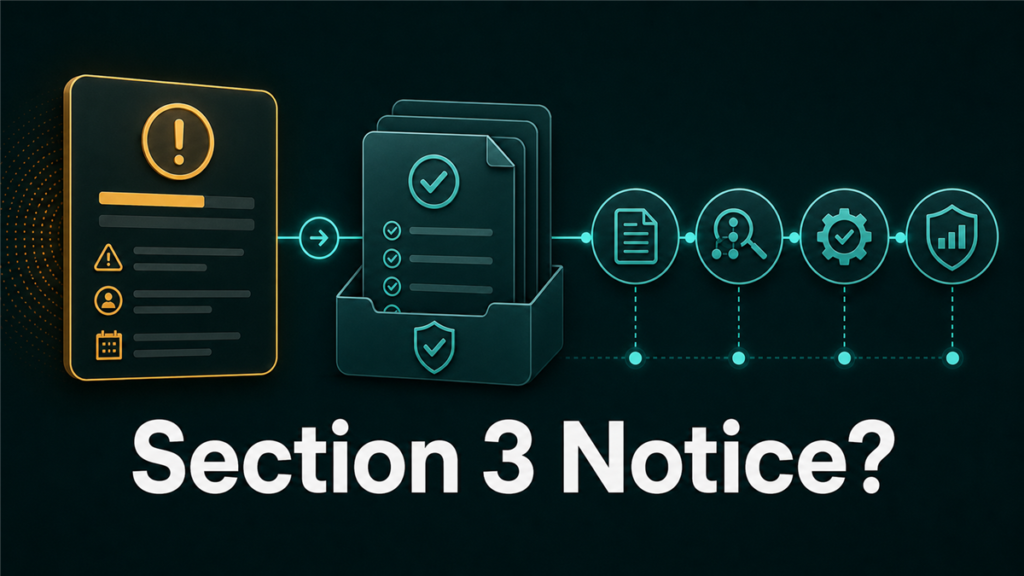
An Amazon Section 3 violation usually means Amazon is acting under the Amazon Services Business Solutions Agreement, often at the account level. Sellers should not rush a generic appeal. The safer first step is to identify what Amazon is asking for, match the notice to the account evidence, and prepare a response with documents, root cause, corrective actions, and prevention steps where required.
Key Takeaways
- Section 3 is tied to Amazon's seller agreement, so the issue can affect the entire account, not only one listing.
- Amazon notices may involve identity verification, account ownership, code of conduct concerns, related accounts, payment methods, document quality, or other compliance issues.
- The response should match the notice. Do not send a generic plan of action if Amazon is asking for specific documents.
- Sellers should preserve open order handling and buyer communication while working through the account issue.
- Repeated weak submissions can slow the path to review. Build one clean packet before responding.
What Is an Amazon Section 3 Violation?
An Amazon Section 3 violation is an account-level action connected to Amazon's Services Business Solutions Agreement. In seller notices, Amazon may say the selling account has been deactivated, listings have been removed, funds may be held, or additional documentation is required.
The exact reason depends on the notice. Some Section 3 cases are document or identity verification problems. Others involve suspected policy abuse, code of conduct concerns, related account issues, payment method concerns, or activity Amazon views as deceptive, fraudulent, or illegal. The seller's response should be based on the actual notice, not on a template found online.
Common Triggers Sellers Should Investigate
A Section 3 notice can point to different types of risk. Sellers should investigate the account record before writing a response.
| Possible trigger | What to review | Evidence to prepare |
| Identity verification | Legal entity, beneficial owner, address, tax details | Government ID, business registration, bank or utility documents |
| Payment method issue | Credit card, bank account, disbursement settings | Valid card, bank statement, account ownership proof |
| Related account concern | Shared devices, employees, agencies, old accounts | Explanation of account relationships and access controls |
| Code of conduct concern | Review abuse, buyer communication, misuse of services | Internal policy, logs, corrective action records |
| Product authenticity or supply chain concern | Supplier, invoices, authorization | Invoices, supplier details, authorization letters |
| Document quality problem | Blurry, altered, mismatched, expired documents | Clean scans with matching names and addresses |
This table is diagnostic, not a guarantee. Amazon's notice and Account Health instructions are the source of truth for what the seller should submit.
First Actions After a Section 3 Notice
The first actions should protect the account while the response is prepared. Sellers should avoid emotional replies, duplicate submissions, or incomplete documents.
- Save the full Amazon notice, including date, marketplace, and required actions.
- Check Account Health for the exact reactivation path.
- Check Performance Notifications for supporting details.
- Confirm whether Amazon is asking for documents, an explanation, a plan of action, or all three.
- Continue shipping open orders if Amazon instructs the seller to do so.
- Keep customer messages answered while access remains available.
- Stop making unrelated account changes unless Amazon requests them.
- Build a single response packet before submitting.
If the notice asks for documents only, a long appeal letter may not help. If the notice asks for a plan of action, documents alone may not answer the root cause.
How to Build the Response Packet
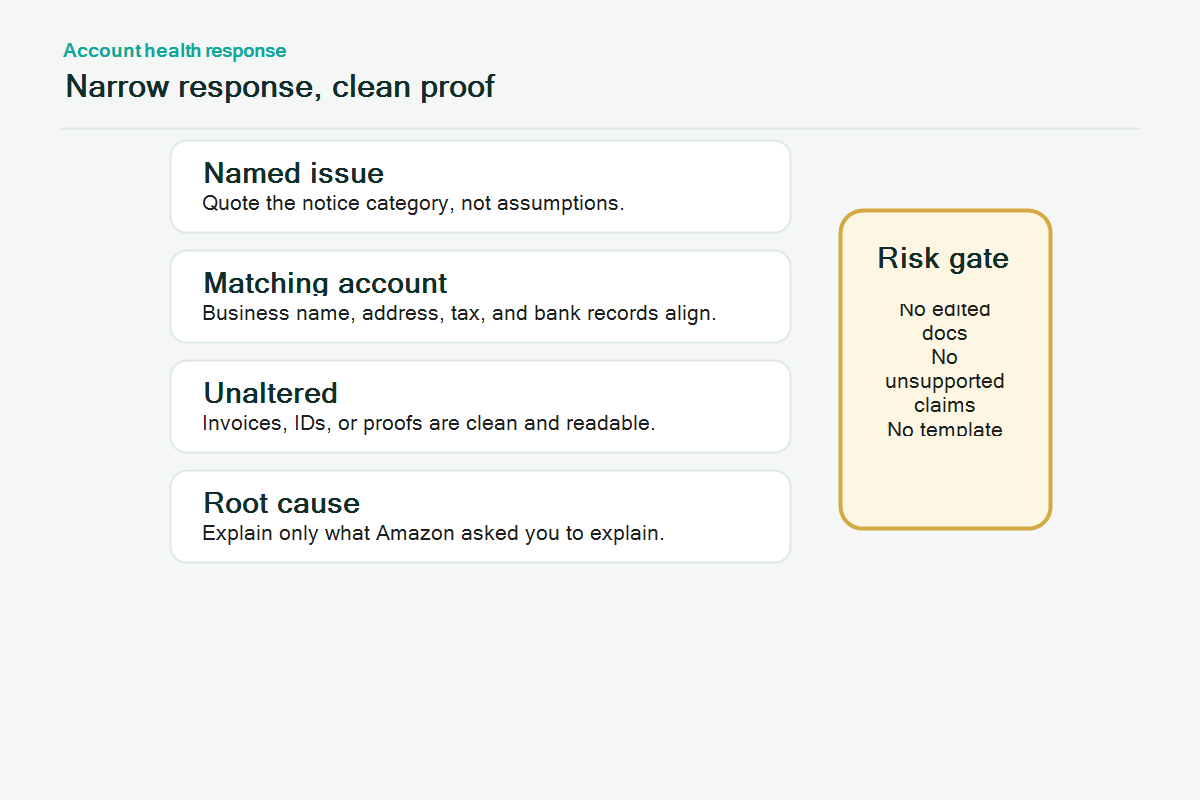
A strong Section 3 response packet is organized around the notice. It should help the reviewer connect the account, the alleged issue, the evidence, and the corrective action.
1. Identify the issue Amazon named
Use Amazon's language from the notice. If Amazon says identity verification, do not write a long explanation about listing quality. If Amazon mentions deceptive or fraudulent activity, do not answer only with a utility bill.
2. Match account data before submitting documents
Names, addresses, business entity details, bank information, and tax information should match across Seller Central and the documents. If there is a mismatch, explain it clearly and provide supporting proof.
3. Use clean, unaltered documents
Documents should be legible, complete, current, and unedited except for permitted redactions if Amazon allows them. Do not crop out required information. Do not combine unrelated files into a confusing upload.
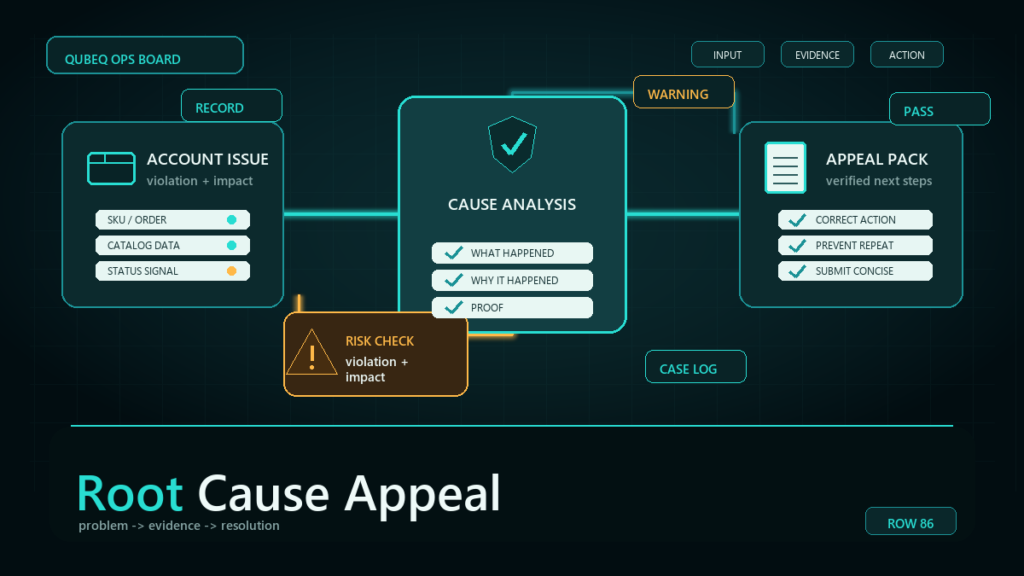
4. Explain root cause if Amazon asks for a plan
A root cause should identify what actually caused the account risk. Weak root causes include "we made a mistake" or "we did not know the policy." Stronger root causes explain the control failure, such as unverified supplier onboarding, shared account access, outdated business information, or poor document recordkeeping.
5. List corrective actions already taken
Corrective actions should be specific and completed where possible. Examples include updating account information, removing unauthorized users, documenting supplier verification, reconciling bank details, or pausing risky listings.
6. Add prevention controls
Amazon reviewers need to see that the same issue is less likely to happen again. Prevention controls can include access management, document review cadence, supplier approval checks, account change logs, and escalation rules.
What a Weak Section 3 Response Looks Like
A weak response is usually vague, emotional, or mismatched to the notice.
Avoid:
- "Please reactivate us, this is our only income."
- "We did nothing wrong" without evidence.
- Sending the same document repeatedly without explaining mismatch issues.
- Uploading blurry documents or screenshots of documents.
- Blaming Amazon, customers, employees, or suppliers without showing controls.
- Submitting many separate cases instead of one organized response.
- Copying an appeal template that does not match the notice.
The reviewer needs facts and evidence. A polite tone matters, but tone does not replace proof.
Mini-Scenario
A seller receives a Section 3 deactivation notice asking for identity verification. The first response includes a utility bill with a name that does not match the Seller Central legal entity. Amazon rejects the submission. The seller then audits the account, finds that the business address in Seller Central uses an old virtual office, updates the internal evidence packet, and submits business registration, bank statement, and a concise explanation of the address history. The revised response is stronger because it explains the mismatch instead of ignoring it.
FAQ
Is Section 3 always a fraud accusation?
No. Section 3 notices can involve different account-level issues, including verification and document requests. Sellers should read the exact notice before deciding how to respond.
Should I submit a plan of action for every Section 3 notice?
No. If Amazon asks for specific documents, provide the requested documents first. If Amazon asks for an explanation or appeal, include root cause, corrective action, and prevention controls.
Can I keep selling after a Section 3 notice?
It depends on the notice and account status. If the account is deactivated, listings may be removed. Sellers should follow Amazon's instructions for open orders and customer communication.
How many times should I resubmit?
Do not keep resubmitting the same weak packet. If Amazon rejects a response, identify what was missing, mismatched, or unclear before submitting again.
Can Qubeq guarantee reinstatement?
No. No legitimate operations partner can guarantee Amazon reinstatement. Qubeq can help organize evidence, identify weak points, and prepare a clearer response.
Need Help Organizing a Section 3 Response?
Qubeq helps sellers build practical account health response packets: documents, timeline, root cause, corrective actions, and prevention controls. If your Section 3 notice is unclear, we can help turn scattered account evidence into a cleaner submission path.